

20VC: Does Value Accrue to Incumbents or Startups in the AI Race, Why Model Size Matters More Than Data Size, Why Artificial General Intelligence is Far Away, Why Carpenters Will Be Paid More Than Software Engineers & Future of Jobs with Richard Socher
Richard Socher is the founder and CEO of You.com. Richard previously served as the Chief Scientist and EVP at Salesforce. Before that, Richard was the CEO/CTO of AI startup MetaMind, acquired by Salesforce in 2016. He is widely recognized as having brought neural networks into the field of natural language processing, inventing the most widely used word vectors, contextual vectors and prompt engineering. He has over 150,000 citations and served as an adjunct professor in the computer science department at Stanford. In Today's Episode with Richard Socher We Discuss: 1. The Decade-Long Journey to Becoming an AI OG: How did Richard first make his way into the world of AI over a decade ago? What are 1-2 of his biggest lessons from working with Marc Benioff? How did 5 years at Salesforce impact how he both thinks and operates? 2. Models: Does Size Matter: How important is model size? Is data size more important? What are the biggest misconceptions people have around models today? How does Richard respond to the suggestion that "many startups are wrappers around LLMs"? Are hallucinations a feature or a bug? 3. Where Does Value Accrue: Where does Richard believe most of the value will accrue; startup or incumbent? Which incumbents are best positioned to win? Which are the laggards and behind? What do many not see about the startup vs incumbent race in the AI war? 4. Open vs Closed: Which Wins: Does Richard favour Yann LeCun's open approach? Or is the world of AI more closed? What are the biggest challenges of an open ecosystem? What are the nuances that make both challenging? 5. Richard Socher: AMA: Why will carpenters be paid more than software engineers in 10 years? Why is AGI still way off? Are people too unrealistic? How much money does Google make off search every day? Why does that leave them vulnerable?
18 Elo 202345min
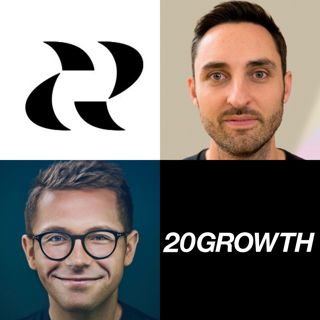
20Growth: Why Product-Market Fit is Not Enough, Revenue Does Not Create Usage, Metrics Must Be Before Strategy, Why it is Always Better to Concentrate than Diversify Marketing Channels and Secrets from Hubspot's Growth Engine with Brian Balfour @ Reforge
Brian Balfour is the Founder and CEO of Reforge. Previously, he was the VP of Growth @ HubSpot. Prior to HubSpot, he was an EIR @ Trinity Ventures and founder of Boundless Learning and Viximo. He advises companies including Blue Bottle Coffee, Gametime, Lumoid, GrabCAD, and Help Scout on growth and customer acquisition. In Today's Episode with Brian Balfour We Discuss: 1. Entry into Growth and Lessons from Hubspot: How did Brian make his entry into the world of growth? What does Brian know now about growth that he wishes he had known when he started in growth? What are 1-2 of his single biggest takeaways from his time at Hubspot that impacted his mindset? 2. The Foundations: What is growth? What is it not? What does Brian mean when he says "all growth can be boiled down to 4 things"? When is the right time to bring in your first growth person? Should the first growth person be senior or junior? Should the growth team be standalone or sit within an existing function? 3. The Importance of Product Channel Fit: What is product channel fit? How should founders approach it? How do you know when you have it? What are the single biggest mistakes founders make with regards to PCF? 4. Next Comes Channel Model Fit: What is channel model fit? How should founders approach it? What are clear indicators that you have or do not have channel model fit? What are the biggest mistakes founders make with CMF? 5. Finally, Model Market Fit: What is model market fit? How should founders approach it? What are clear indicators that you have or do not have model market fit? What are the biggest mistakes founders make with MMF? 6. Brian Balfour: AMA: Why is product market fit not enough? What does Brian mean when he says "revenue does not create usage"? What are the biggest dangers of mixing customers and users? What do Hubspot do better than anyone else to know when an existing product/strategy is dying? Is it always better to diversify marketing channels?
16 Elo 202357min
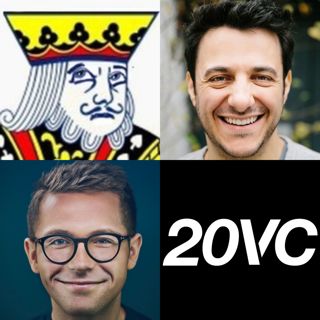
20VC: Scaling Wait But Why to 600,000 Subs; Behind the Scenes on The Research Process, How to Learn Entirely New Topics Fast, The Writing Process and Building Good Habits & The Distribution Process and the Business Behind the Blog with Tim Urban
Tim Urban is the writer/illustrator and co-founder of Wait But Why, a long-form, stick-figure-illustrated website with over 600,000 subscribers and a monthly average of half a million visitors. He has produced dozens of viral articles on a wide range of topics, from artificial intelligence to social anxiety to humans becoming a multi-planetary species. Tim's 2016 TED main stage talk is the third most-watched TED talk in history with 66 million views. In 2023, Tim published his bestselling book What's Our Problem? A Self Help Book for Societies. In Today's Episode with Tim Urban We Discuss: 1. The Founding of Wait by Why: What was the a-ha moment for Tim that Wait but Why should be his life's work and sole focus? What does Tim know now that he wishes he had known when he started? What does Tim believe he is running away from? Why is he so fearful of constraints? 2. Wait But Why: The Scaling Journey to 600,000 Subs: What was the first piece to really go viral? How did that change the trajectory? What single piece is Tim most proud of? What piece is he least proud of? What has been the hardest element of scaling Wait But Why? What was the most surprising and unexpected elements of Wait But Why's scaling? 3. Topic Selection: Choosing What To Write: What does the process look like for Tim when deciding what topic to write about? How does Tim know what his audience will want to hear about vs what they will not? What topics has Tim thought would be interesting but post initial research, are not? 4. The Writing Process: How does Tim approach the writing process? How has his changed over time? What mechanisms does Tim put in place to avoid writers block? What are some of Tim's biggest tips to aspiring writers and authors? 5. The Distribution Process: How does Tim approach distributing the content once produced? What works? What does not? Why did Tim choose newsletter, Twitter and Instagram as his channels of choice? How important has the newsletter been to the growth of the business? 6. AI: Super-Intelligence and The Future: On reviewing his pieces on AI back in 2015, what does he believe he got right? What would he change with the benefit of hindsight? Is Tim more or less positive looking forward at AI proliferating through all of society? What is Tim most concerned about in the world right now?
14 Elo 202358min
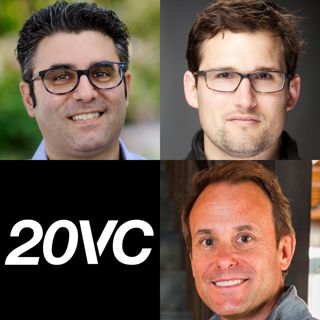
20VC Roundtable: NEW FORMAT: Why the Seed Investing Model is Broken, How to Make Money at Seed Moving Forward; Who Wins and Who Loses, Why Venture Value Add Platforms are BS and Failed and Why There Will be an IPO per Week in H2 2024
Sam Lessin is a Co-Founder and Partner @ Slow Ventures with a portfolio including the likes of Airtable, Robinhood, Slack, Solana, PillPack and many more unicorn companies. Prior to Slow, Sam was a VP Product at Facebook having sold his company to Meta. Frank Rotman is a founding partner of QED Investors, one of the leading fintech-focused venture firms investing today with a portfolio including the likes of Klarna, Kavak, Quinto Andar, Credit Karma and more. As for Frank, prior to QED, Frank was one of the earliest analysts hired into Capital One and spent almost 13 years there helping build many of the company's business units and operational areas. Jason Lemkin is the Founder @ SaaStr one of the best-performing early-stage venture funds focused on SaaS. In the past, Jason has led investments in Algolia, Pipedrive, Salesloft, TalkDesk, and RevenueCat to name a few. Prior to SaaStr, Jason was an entrepreneur, selling EchoSign to Adobe for $100M where it is now a $250M ARR product. In Today's Discussion on Why Seed is Broken We Discuss: 1. The Seed Model Was Broken and What Comes Now: Why does Sam Lessin believe the model for seed of a "factory line" was broken? What does he believe will replace it? Why does Jason Lemkin argue that this might not be the case for SaaS and enterprise? 2. Round Construction: YC, Multi-Stage Funds and Party Rounds: Why does Sam Lessin believe we have seen the end of party rounds? Why does Jason Lemkin disagree and we will see more than ever? Why does Sam Lessin believe the factory model of YC churning out companies is over? Where does Jason Lemkin believe the value lies in the YC model? Will the multi-stage funds remain in seed? How has their entrance and deployment changed the seed market? 3. VC Value Add at Seed: Is it BS? Why does Jason believe all talent arms in venture firms have failed? Why does Sam believe that no VCs provide value? Do the best founders really need help? Why do Jason and Sam disagree? 4. What Happens Now: Why does Jason believe that every manager can write off their fund from 2021? Who will be the winners in seed in the next 10 years? Why does Sam believe if you want to bet on AI, just bet on Meta or Microsoft? What will happen to the many companies with no PMF but 10 years of runway?
11 Elo 202353min
20VC: The Memo: The State of the VC Market: Why Seed Funds Can't Invest in "Hot Startups" Anymore, Why Series A & B is Terrible, Why the IPO Market Will Explode in 2024 & Why VC DD is BS & Every VC Has More Fraud in their Portfolio with Jason Lemkin
Jason Lemkin is the Founder @ SaaStr one of the best-performing early-stage venture funds focused on SaaS. In the past, Jason has led investments in Algolia, Pipedrive, Salesloft, TalkDesk, and RevenueCat to name a few. Prior to SaaStr, Jason was an entrepreneur, selling EchoSign to Adobe for $100M where it is now a $250M ARR product. In Today's Episode with Jason Lemkin We Discuss: 1. WTF is Happening At Seed Right Now: Why does Jason believe seed is more active than ever? Is the pricing of seed rounds impacted since the downturn? Why does Jason believe it is not only not the end of party rounds but just the beginning of them? Why does Jason believe you cannot fail if you have $1M in ARR and an amazing founder? Why does Jason believe that seed investors cannot participate in "hot seed rounds" anymore? 2. Is Series A a Dead Zone: How does Jason analyze the Series A and B environment today? What has changed in what investors expect and want to see in potential Series A and B investments? What happens to the many companies who raised pre-emptive Series As and have 10 years of runway but no product-market fit? Why does Jason believe founders should offer to give the money back when it is not working? What happens to the Series A and B market in the next 18 months? When does it come back? 3. Growth: People are Too Negative! Why does Jason believe that growth is more active than many are giving credit for? What are the ARR benchmarks required to get a good growth round term sheet today? Why does Jason believe that VC DD is a load of BS? Why does Jason believe that every VC has fraud in their portfolio? Will they come out? 4. Ring That Bell: IPOs and M&A: Why does Jason believe 2024 will be an amazing year for IPOs? Why does much of the IPO market rely on Stripe and Databricks? What is needed for an amazing 2024 IPO market? How does Jason evaluate the M&A market in 2024? Will regulation get in the way? 5. Jason Lemkin: AMA: Why does Jason Lemkin believe this generation of workers will never work hard again? What is the only way for seed funds to make money investing in serial entrepreneurs? What does Jason know now that he wishes he had known when he started investing?
9 Elo 20231h 9min
20VC: Vinod Khosla on How AI Impacts The Future of Healthcare, Education, Income Equality, Geo-Politics, Music and Climate Change
Vinod Khosla is the Founder of Khosla Ventures, one of the leading venture firms of the last decade with investments in OpenAI, Stripe, DoorDash, Commonwealth Fusion Systems and many more. Prior to founding Khosla, Vinod was a co-founder of Daisy Systems and founding CEO of Sun Microsystems. In Today's Episode with Vinod Khosla We Discuss: 1. The State of AI Today: Does Vinod believe we are in a bubble or is the excitement justified based on technological development? What are the single biggest lessons that Vinod has from prior bubbles? What is different about this time? What is Vinod concerned about with this AI bubble? 2. The Future of Healthcare and Music: How does Vinod evaluate the impact AI will have on the future of healthcare? How does Vinod analyse the impact AI will have on the future of music and content creation? Does Vinod believe that humans will resist these advancements? Who will be the laggards, slow to embrace it and who will be the early adopters? 3. Solving Income Inequality: Does Vinod believe AI does more to harm or to hurt income inequality? What mechanisms can be put in place to ensure that AI does not further concentrate wealth into the hands of the few? Does Vinod believe in universal basic income? What does everyone get wrong with UBI? 4. The Future of Energy, Climate and Politics: Why is forcing non-economic solutions the wrong approach to climate? What is the right approach? Why is Vinod so bullish on fusion and geothermal? How does fusion bankrupt entire industries? How does the advancements in energy and resource creation change global politics? Does Vinod believe Larry Summers was right; "China is a prison, Japan is a nursing home and Europe is a museum"? 5. Vinod Khosla: AMA: What is Vinod's single biggest investing miss? What does Vinod know now that he wishes he had known when he started investing? Why did the Taylor Swift concert have such a profound impact on him? What was Marc Andreesen like when he backed him with Netscape in 1996?
7 Elo 202343min
20VC: Why "Hire Great People and Get Out of the Way" is Total BS, Why Your Upbringing Can Make You a Worse Leader & A Bentley, Two Nissan Cubes and Becoming One of Macedonia's Largest Employers; The Story of Slice with Ilir Sela
Ilir Sela is the Founder and CEO of Slice, the all-in-one ordering and marketing tech platform for local pizzerias. Through its partnerships, Slice has driven over $1B in earnings for over 18,000 independent pizzerias nationwide. Fun fact, Slice is also one of the largest employers in Macedonia and at one point, employed so many people there, they had to start their own school to train more people. Before Slice, Ilir started Nerd Force and sold it in 2008. Huge thanks to Jeff Richards (GGV) and Ben Sun (Primary) for some amazing questions today. In Today's Discussion with Ilir Sela We Discuss: 1. From Macedonia to the Bright Lights of NYC and Bentley Buying: How Ilir made his way into the world of startups having grown up in Macedonia? How did his less affluent upbringing impact his approach to company building? How does Ilir think about the importance of money? How did he come to buy a Bentley? What does Ilir know now that he wishes he had known when he started? 2. Why Bootstrapped Was Best & The Decision to Fundraise: Why did Ilir scale the business to $4M in revenue without ever fundraising? What does Ilir believe are the benefits of scaling businesses with less money? What would Ilir have done differently had he raised money earlier? What advice does Ilir have for founders who see competitors raising more money than them? 3. Why Delegation is BS and Your Upbringing F***** You Up: Why does Ilir believe that much of our upbringing can instill principles which make us a worse leader? Why does Ilir believe it is BS to hire great people and get out of the way? What are the single biggest mistakes Ilir sees founders make in company scaling? What have been some of Ilir's biggest lessons in talent acquisition? 4. Decision-Making 101: How does Ilir analyze his decision-making framework today? Where does he need to improve as a leader today? What does he need to do to get there? What has been the single best decision he made with Slice? What did he learn from it? What has been the worst decision he has made in the scaling process? How did that change his mindset?
4 Elo 202346min
20Sales: Why The Founder Has To Be The One To Create The Sales Playbook, When To Hire Your First Rep, Why Junior is Better Than Senior, How to Manage Sales Rep Compensation, How To Onboard New Sales Reps and more with Lori Jimenez, CRO @ WorkRamp
Lori Jimenez is the Chief Revenue Officer at WorkRamp where she is responsible for sales, customer success, solutions engineering, sales development, and revenue operations. Over her 25-year career, Lori has a track record of scaling high-growth GTM teams at companies including Google, TripActions/Navan, Facebook, and Box. In Today's Episode with Lori Jimenez We Discuss: 1. From a First Sales Job at 15 Years Old to Leading Sales Teams at Google and Facebook: How Lori made her foray into the world of sales at the age of 15? What are 1-2 of Lori's biggest takeaways from her time at Google, Facebook and Box? What does Lori know now that she wishes she had known at the start of her career in sales? 2. The Sales Playbook: What, When and How: How does Lori define the "sales playbook"? What is it not? Should the founder be the one to create the sales playbook? When is the right time for founders to make their first sales hires? What is the right profile for the first sales hires? Should founders hire 2 sales reps at a time? What are the pros and cons? 3. The Hiring Process: Building the Sales Team: How does Lori structure the hiring process for all new sales hires? What are the must-ask questions to ask in every sales hiring meeting? What are the biggest red flags founders should look for when hiring for sales? What are Lori's biggest lessons on how to navigate compensation discussions with potential sales hires? What are Lori's biggest lessons on what title negotiation says about a candidate? What are the single biggest mistakes founders make when hiring for sales teams? 4. Scaling the Machine: Bringing the Dollars In: How does Lori approach discounting? When is the right time to do it? Is old-school enterprise sales and entertaining dead? How has it changed? How does Lori structure deal reviews? What is a good vs a bad reason to lose a deal? How does Lori approach multi-year deals? What is good? What is bad?
2 Elo 202351min