
Physics Mysteries, Appendix and Parkinson’s, Paralysis Treatment. Nov 2, 2018, Part 2
Science Friday2 Marras 2018

Physics Mysteries, Appendix and Parkinson’s, Paralysis Treatment. Nov 2, 2018, Part 2

Ever wondered why your dog’s back-and-forth shaking is so effective at getting you wet? Or how bugs, birds, and lizards can run across water—but we can’t? Or how about why cockroaches are so darn good at navigating in the dark? Those are just a few of the day-to-day mysteries answered in the new book How to Walk on Water and Climb Up Walls: Animal Movement and the Robots of the Future, by David Hu.

Once upon a time, there was very little hope for patients paralyzed by a spinal cord injury. The prevailing wisdom was that unless you could regenerate neurons across the spinal region of the injury these patients would never walk again. Now researchers say that perspective is based on an outdated way of thinking about the role of the spinal cord in movement. A new technique that delivers an electrical signal directly to the spinal cord has given a handful of patients the ability to move again and, as reported in a new study out this week in the journal Nature, has allowed them to walk.

You’ve probably heard that you don’t necessarily need your appendix, especially if you’ve had it removed. But the appendix does have a function and scientists are learning more about how it affects our health. The organ plays a role in regulating the immune system, microbiome, and even Parkinson’s disease. A misfolding in the protein called alpha-synuclein has been linked to the disease, and researchers found abnormal clumps of this protein in the appendix. This week, a team of scientists found more evidence for the link. Reporting in the journal Science Translational Medicine, the researchers found that, for Parkinson’s patients, there was a 3.6 year delay in onset of the disease for those who had an appendectomy.

Subscribe to this podcast. Follow our show on Instagram, TikTok, Facebook, and Bluesky @scifri and sign up for our newsletters. Got a science question that’s keeping you up at night? Call us: 877-472-4374


Hosted by Simplecast, an AdsWizz company. See pcm.adswizz.com for information about our collection and use of personal data for advertising.

Tämä jakso on lisätty Podme-palveluun avoimen RSS-syötteen kautta eikä se ole Podmen omaa tuotantoa. Siksi jakso saattaa sisältää mainontaa.

Jaksot(1379)

How do you find a ‘lost’ species?

How do you find a ‘lost’ species?

The earth is facing a biodiversity crisis, and there’s a lot of attention on species that are threatened, or at risk of dying out completely. But, there’s another critter category that’s a little more...

14 Elo 18min
What we get wrong about vaccine hesitancy

What we get wrong about vaccine hesitancy

President Trump has signed an executive order calling for a change to the childhood vaccination schedule. Specifically, he wants to separate the MMR vaccine, which protects against measles, mumps, and...

13 Elo 12min

Why this lab studies the speed of bug pee and other curiosities

Why this lab studies the speed of bug pee and other curiosities

In a lab in the Rocky Mountains, a group of scientists is hard at work trying to find answers across biology, physics, and engineering: They’re looking into things like the hydrodynamics of insect pee...

12 Elo 18min
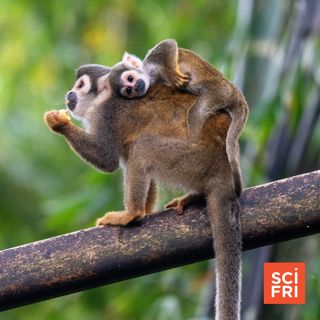
Some primates undergo even more extreme childbirth than humans

Some primates undergo even more extreme childbirth than humans

Human childbirth is often difficult and incredibly painful—just ask anyone who’s been through it. And for a long time, childbirth seemed to be uniquely difficult for humans. But a new study suggests t...

11 Elo 11min
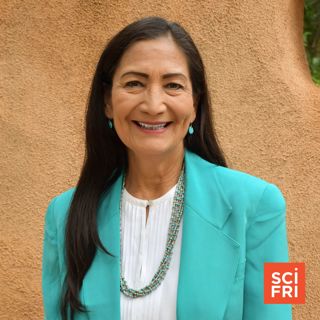
Deb Haaland is a politician, and proud of it

Deb Haaland is a politician, and proud of it

Former Interior Secretary Deb Haaland, a member of the Laguna Pueblo tribe, was the first Native person to hold a cabinet position. Now she’s running to be governor of New Mexico.  Haaland joins Host ...

10 Elo 17min
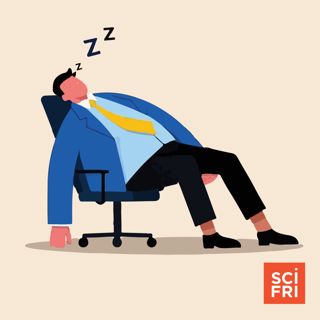
Sitting all day is terrible for us. Moving a little can help

Sitting all day is terrible for us. Moving a little can help

Keeping your butt in a seat for hours a day increases the risk of heart attacks, diabetes, psychiatric conditions, and more. But in our tech-filled world, many of us lead sedentary lives, whether beca...

7 Elo 18min

A Nagasaki survivor and physician recounts his life's work

A Nagasaki survivor and physician recounts his life's work

Dr. Masao Tomonaga was only 2 years old when the United States bombed his home city of Nagasaki. He survived, and grew up to become a physician for other survivors, known as hibakusha. He also studied...

6 Elo 18min

What do people eat? Plant and animal DNA in sewage provide clues

What do people eat? Plant and animal DNA in sewage provide clues

Imagine you wanted to get a general idea of what people are eating in a given community. You could look at grocery store sales, or do surveys, but neither can capture a complete picture.  Microbiome r...

5 Elo 12min

Suosittua kategoriassa Tiede

rss-poliisin-mieli
tiedekulma-podcast
rss-mita-tulisi-tietaa
rss-tiedetta-vai-tarinaa
docemilia
rss-duodecim-lehti
rss-radplus
utelias-mieli
hippokrateen-vastaanotolla
rss-hereilla
rss-ranskaa-raakana
rss-bios-podcast
filocast-filosofian-perusteet
rss-tervetta-skeptisyytta
mielipaivakirja
radio-antro