House Science Committee, Superbloom, Snowpack. March 22, 2019, Part 1
Science Friday22 Maalis 2019

House Science Committee, Superbloom, Snowpack. March 22, 2019, Part 1

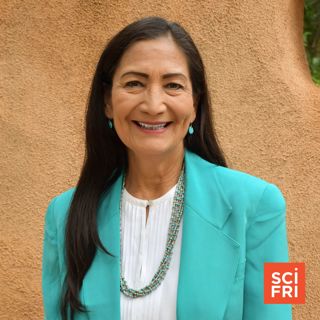
There’s been a changing of the guard in the U.S. House of Representatives. In January, Representative Eddie Bernice Johnson, a democrat from Texas, took over as chair of the House Committee for Science, Space, and Technology from her predecessor Lamar Smith. Smith was in charge of the House Science Committee for six years—an era that was defined by partisan attacks on climate science, and the issuing of congressional subpoenas to scientists. Chairwoman Johnson is looking to restore credibility to the House Science Committee, listening to the scientific consensus on climate change and aiming for bipartisan oversight of scientific programs. She joins Ira to talk about bringing science back to the committee, changes she plans to make from previous leadership, and how much progress will the new committee make when it’s up against an administration that’s been hostile to many of the agencies that conduct scientific research.

Plus: This El Niño year has been dumping rain and snow on California's Sierra Nevada mountains. But water managers don’t just eyeball how much snow they think is up there, tucked away in those high mountain basins. Snow inventories these days are high tech, involving airplanes and lasers. Tom Painter of NASA's Jet Propulsion Lab and Caltech joins Ira to explain.

The hills and deserts of the southwest have been putting on quite a show this spring—a superbloom that's better than some areas have seen in generations. Science Friday producer Christopher Intagliata headed down to Walker Canyon in Lake Elsinore, California, to check it out. See his photos and learn why superblooms aren't a regular occurrence in California.

The New Mexico state legislature has passed a bill calling for the state to transition entirely to renewable energy by 2050. Laura Paskus, environmental reporter for the New Mexico Political Project, joins Ira to explain the details.

And science journalist Annalee Newitz explains the surprising first results from Japan's Hayabusa2 mission to asteroid Ryugu in this week's News Roundup.

Subscribe to this podcast. Follow our show on Instagram, TikTok, Facebook, and Bluesky @scifri and sign up for our newsletters. Got a science question that’s keeping you up at night? Call us: 877-472-4374


Hosted by Simplecast, an AdsWizz company. See pcm.adswizz.com for information about our collection and use of personal data for advertising.

Tämä jakso on lisätty Podme-palveluun avoimen RSS-syötteen kautta eikä se ole Podmen omaa tuotantoa. Siksi jakso saattaa sisältää mainontaa.

Jaksot(1338)

Why do sports announcers talk like that?

Why do sports announcers talk like that?

If you watch sports, whether the recent NBA finals or the ongoing World Cup matches, you may have noticed that the athletes aren’t the only ones putting on a show. The announcers seem to be playing a ...

19 Kesä 13min

Swords, cannibalism, poison: inside the world of killer microbes

Swords, cannibalism, poison: inside the world of killer microbes

There is a murderous crime spree happening right under—and perhaps inside—our noses. Killer microbes armed with weapons are eviscerating, assassinating, and detonating their fellow microbes. And the n...

18 Kesä 21min

When music transports you to a different place

When music transports you to a different place

Do you ever hear a song that transports you to a specific place and time? This auditory wormhole has a name: musical daydreams. Music cognition expert Elizabeth Margulis studies why they happen, and w...

17 Kesä 18min

A vast whale graveyard + Zombie sea cucumbers

A vast whale graveyard + Zombie sea cucumbers

Researchers just published details of a massive undersea graveyard of whales deep in the Indian Ocean. Spanning about 1,200 kilometers (745 miles), it contains whale remains dating back more than 5 mi...

16 Kesä 18min

Should we bring mountain lions back to the Northeast?

Should we bring mountain lions back to the Northeast?

Big cats used to roam the entire United States. You might know them as mountain lions, pumas, cougars, or catamounts. Though they go by many names, they're actually all the same species.  Their curren...

15 Kesä 12min

Blue Origin explosion hits NASA timeline + Artemis III crew

Blue Origin explosion hits NASA timeline + Artemis III crew

When Blue Origin’s New Glenn spacecraft exploded in an enormous fireball during a ground test a couple weeks ago, it sent shockwaves not only through the air, but through NASA’s timeline for the upcom...

12 Kesä 12min

Why can I handle tequila but not rum?

Why can I handle tequila but not rum?

‘Tis the season for porch beers and happy hours, and we’re taking on listener questions about how alcohol affects us. Like, is a glass of wine at dinner really good for you? And why do sugary drinks g...

11 Kesä 21min

AI + turfgrass science in the most high-tech World Cup yet

AI + turfgrass science in the most high-tech World Cup yet

The 2026 World Cup will be the largest one yet, and FIFA is trying to make it the most high-tech, too. The federation has partnered with tech giant Lenovo to launch Football AI Pro, which is designed ...

10 Kesä 19min

Suosittua kategoriassa Tiede

rss-mita-tulisi-tietaa
utelias-mieli
rss-hereilla
rss-duodecim-lehti
rss-poliisin-mieli
rss-totuuden-liepeilla
rss-laakaripodi
rss-lihavuudesta-podcast
tiedekulma-podcast
docemilia
sotataidon-ytimessa
radio-antro
rss-totta-vai-tuubaa
rss-tiedetta-vai-tarinaa
rss-ilmasto-kriisissa
rss-jyvaskylan-yliopisto
rss-kasvikutsut