
Measles, Poetry Month, Lemur Hibernation. April 26, 2019, Part 2
Science Friday26 Huhti 2019

Measles, Poetry Month, Lemur Hibernation. April 26, 2019, Part 2

Back in 1963, before the development of the measles, mumps, and rubella (MMR) vaccine, there were 4 million cases of measles every year. It took nearly four decades, but by 2000, enough people had become vaccinated that the measles virus was eliminated in the U.S.

But since then, the ranks of unvaccinated people have grown, and the measles virus has been reintroduced into the U.S. This week, Centers for Disease Control and Prevention (CDC) officials report over 600 cases of measles across 22 states. Dr. Saad Omer, professor of Global Health, Epidemiology, and Pediatrics at Emory University joins Ira to answer questions about the current outbreak, including how much worse conditions could get.

Every year, hundreds pack Pioneer Works in Brooklyn, New York for “The Universe In Verse,” a live celebration of writing that has found inspiration from science and scientists. This year’s event, which featured readings from guests including Amanda Palmer, David Byrne, and Josh Groban, celebrated the 100th anniversary of Sir Arthur Eddington’s groundbreaking experiment to prove general relativity. The poems also honored Albert Einstein’s legacy in describing the universe as we understand it today.

Maria Popova, founder and editor of Brain Pickings, and astrophysicist Janna Levin, both writers as well, join Ira for a conversation about the enduring link between art and science, and share readings of their favorite works.

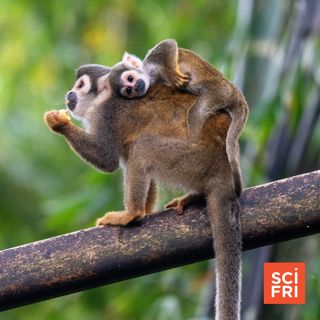
What has big eyes, a bushy tail, and is the only primate to go into hibernation six months out of the year? It’s the fat-tailed dwarf lemur, an endangered species endemic to the island of Madagascar. During their hibernation period, the lemurs enter a state of torpor, which essentially disables the animals’ internal thermostat. It turns out we humans possess the same gene that is activated when the lemur initiates torpor—we just don’t know how to activate it. Science Friday video producer Luke Groskin traveled to the only captive colony of dwarf lemurs in the world outside of Madagascar, the Duke Lemur Center in North Carolina, to investigate the sleeping cuties’ hibernation habits—and how they could apply to humans.

Subscribe to this podcast. Follow our show on Instagram, TikTok, Facebook, and Bluesky @scifri and sign up for our newsletters. Got a science question that’s keeping you up at night? Call us: 877-472-4374


Hosted by Simplecast, an AdsWizz company. See pcm.adswizz.com for information about our collection and use of personal data for advertising.

Tämä jakso on lisätty Podme-palveluun avoimen RSS-syötteen kautta eikä se ole Podmen omaa tuotantoa. Siksi jakso saattaa sisältää mainontaa.

Jaksot(1338)

Why do sports announcers talk like that?

Why do sports announcers talk like that?

If you watch sports, whether the recent NBA finals or the ongoing World Cup matches, you may have noticed that the athletes aren’t the only ones putting on a show. The announcers seem to be playing a ...

19 Kesä 13min

Swords, cannibalism, poison: inside the world of killer microbes

Swords, cannibalism, poison: inside the world of killer microbes

There is a murderous crime spree happening right under—and perhaps inside—our noses. Killer microbes armed with weapons are eviscerating, assassinating, and detonating their fellow microbes. And the n...

18 Kesä 21min

When music transports you to a different place

When music transports you to a different place

Do you ever hear a song that transports you to a specific place and time? This auditory wormhole has a name: musical daydreams. Music cognition expert Elizabeth Margulis studies why they happen, and w...

17 Kesä 18min

A vast whale graveyard + Zombie sea cucumbers

A vast whale graveyard + Zombie sea cucumbers

Researchers just published details of a massive undersea graveyard of whales deep in the Indian Ocean. Spanning about 1,200 kilometers (745 miles), it contains whale remains dating back more than 5 mi...

16 Kesä 18min

Should we bring mountain lions back to the Northeast?

Should we bring mountain lions back to the Northeast?

Big cats used to roam the entire United States. You might know them as mountain lions, pumas, cougars, or catamounts. Though they go by many names, they're actually all the same species.  Their curren...

15 Kesä 12min

Blue Origin explosion hits NASA timeline + Artemis III crew

Blue Origin explosion hits NASA timeline + Artemis III crew

When Blue Origin’s New Glenn spacecraft exploded in an enormous fireball during a ground test a couple weeks ago, it sent shockwaves not only through the air, but through NASA’s timeline for the upcom...

12 Kesä 12min

Why can I handle tequila but not rum?

Why can I handle tequila but not rum?

‘Tis the season for porch beers and happy hours, and we’re taking on listener questions about how alcohol affects us. Like, is a glass of wine at dinner really good for you? And why do sugary drinks g...

11 Kesä 21min

AI + turfgrass science in the most high-tech World Cup yet

AI + turfgrass science in the most high-tech World Cup yet

The 2026 World Cup will be the largest one yet, and FIFA is trying to make it the most high-tech, too. The federation has partnered with tech giant Lenovo to launch Football AI Pro, which is designed ...

10 Kesä 19min

Suosittua kategoriassa Tiede

rss-mita-tulisi-tietaa
utelias-mieli
rss-hereilla
rss-duodecim-lehti
rss-poliisin-mieli
rss-totuuden-liepeilla
rss-laakaripodi
rss-lihavuudesta-podcast
tiedekulma-podcast
docemilia
sotataidon-ytimessa
radio-antro
rss-totta-vai-tuubaa
rss-tiedetta-vai-tarinaa
rss-ilmasto-kriisissa
rss-jyvaskylan-yliopisto
rss-kasvikutsut