
Office Air Pollution, Tetris Decisions, Alzheimer's Update. Oct 11, 2019, Part 2
Science Friday11 Loka 2019

Office Air Pollution, Tetris Decisions, Alzheimer's Update. Oct 11, 2019, Part 2

If you live and work in an urban area, you might think about the air quality outside your home or workplace. But what about the air quality inside the office? It turns out that on average, indoor environments have higher concentrations of potentially harmful substances, such as aerosols and volatile organic compounds (VOCs). While past research has focused on chemical emissions from building materials, cleaning supplies, and even furniture, air pollution researchers are increasingly looking at another source of toxic air: us.

New research from Purdue University to be presented at the American Association for Aerosol Research conference has found that the majority of indoor VOCs may be released by a seemingly innocuous source: human beings, their lunches and coffee breaks, and anything they may wear or bring to work. And many of these compounds, such as the terpenes released by peeling an orange, or the squalene released in human skin oil, react with ozone to form even more worrisome molecules.

If you’ve ever played the classic puzzle-like computer game Tetris, you know that it starts out slowly. As the seven different pieces (called “zoids” by the initiated) descend from the top of the screen, a player has to shift the pieces horizontally and rotate them so that they fit into a gap in the stack of pieces at the bottom of the screen, or “well.” In early levels, the pieces might take 10-15 seconds to fall. The speed increases at each level.

In world champion Tetris matches, players often start play at Level 18—in which pieces are on the screen for about a second. Wayne Gray, a professor of cognitive science at Rensselaer Polytechnic University, calls it a problem of “predictive processing and predictive action.” Champion-level expert players, he says, are able to take in the state of the gameboard and react almost immediately, without going through the mental steps of figuring out how to move the piece and rotate it that a novice player requires. “They can see the problem and reach a decision at the same time,” he said.

Gray and colleagues have attended the Classic World Tetris Championship tournament for three years, collecting data from expert players using a modified version of the game that collects keystrokes and eye-tracking data. He joins Ira to discuss what the researchers are learning about expert decision-making, and what he hopes to study at this year’s upcoming Tetris tournament.

The pharmaceutical industry has been on a 30 year mission to develop a drug to treat Alzheimer’s disease. The culprits behind the disease, they thought, were the amyloid plaques that build up in the brains of these patients. For many decades removing these plaques to treat Alzheimer’s was the goal.

But then drug after drug targeting amyloid failed to improve the symptoms of Alzheimer’s—the so-called “amyloid hypothesis” wasn’t bearing out. But drug companies kept developing and testing drugs that attacked amyloid from every angle—perhaps at the expense of pursuing other avenues of treatment.

This past summer, two more high profile clinical trials of drugs to treat Alzheimer’s failed. That brings the number of successful treatments for the disease, which affects 5.8 million Americans, to zero.

George Perry, professor of biology at UT San Antonio and Derek Lower, a drug researcher and pharmaceutical industry expert join Ira to explain what led pharmaceutical companies to doggedly pursue the amyloid hypothesis for decades, and whether or not they are ready to start trying something else.

Subscribe to this podcast. Follow our show on Instagram, TikTok, Facebook, and Bluesky @scifri and sign up for our newsletters. Got a science question that’s keeping you up at night? Call us: 877-472-4374


Hosted by Simplecast, an AdsWizz company. See pcm.adswizz.com for information about our collection and use of personal data for advertising.

Tämä jakso on lisätty Podme-palveluun avoimen RSS-syötteen kautta eikä se ole Podmen omaa tuotantoa. Siksi jakso saattaa sisältää mainontaa.

Jaksot(1379)

How do you find a ‘lost’ species?

How do you find a ‘lost’ species?

The earth is facing a biodiversity crisis, and there’s a lot of attention on species that are threatened, or at risk of dying out completely. But, there’s another critter category that’s a little more...

14 Elo 18min
What we get wrong about vaccine hesitancy

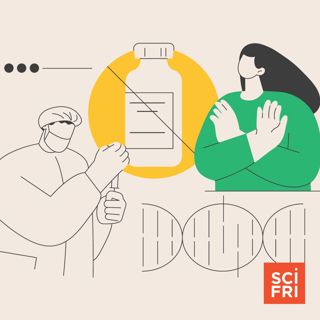
What we get wrong about vaccine hesitancy

President Trump has signed an executive order calling for a change to the childhood vaccination schedule. Specifically, he wants to separate the MMR vaccine, which protects against measles, mumps, and...

13 Elo 12min

Why this lab studies the speed of bug pee and other curiosities

Why this lab studies the speed of bug pee and other curiosities

In a lab in the Rocky Mountains, a group of scientists is hard at work trying to find answers across biology, physics, and engineering: They’re looking into things like the hydrodynamics of insect pee...

12 Elo 18min

Some primates undergo even more extreme childbirth than humans

Some primates undergo even more extreme childbirth than humans

Human childbirth is often difficult and incredibly painful—just ask anyone who’s been through it. And for a long time, childbirth seemed to be uniquely difficult for humans. But a new study suggests t...

11 Elo 11min
Deb Haaland is a politician, and proud of it

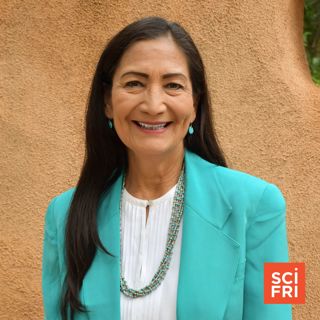
Deb Haaland is a politician, and proud of it

Former Interior Secretary Deb Haaland, a member of the Laguna Pueblo tribe, was the first Native person to hold a cabinet position. Now she’s running to be governor of New Mexico.  Haaland joins Host ...

10 Elo 17min
Sitting all day is terrible for us. Moving a little can help

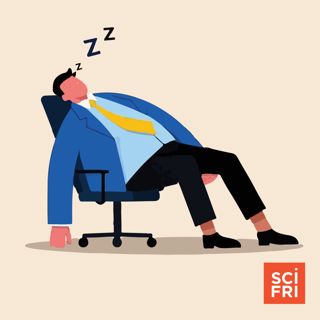
Sitting all day is terrible for us. Moving a little can help

Keeping your butt in a seat for hours a day increases the risk of heart attacks, diabetes, psychiatric conditions, and more. But in our tech-filled world, many of us lead sedentary lives, whether beca...

7 Elo 18min

A Nagasaki survivor and physician recounts his life's work

A Nagasaki survivor and physician recounts his life's work

Dr. Masao Tomonaga was only 2 years old when the United States bombed his home city of Nagasaki. He survived, and grew up to become a physician for other survivors, known as hibakusha. He also studied...

6 Elo 18min

What do people eat? Plant and animal DNA in sewage provide clues

What do people eat? Plant and animal DNA in sewage provide clues

Imagine you wanted to get a general idea of what people are eating in a given community. You could look at grocery store sales, or do surveys, but neither can capture a complete picture.  Microbiome r...

5 Elo 12min

Suosittua kategoriassa Tiede

rss-poliisin-mieli
tiedekulma-podcast
rss-mita-tulisi-tietaa
rss-tiedetta-vai-tarinaa
docemilia
rss-duodecim-lehti
utelias-mieli
rss-kasvikutsut
rss-astetta-parempi-elama-podcast
radio-antro
rss-hereilla
rss-ammamafia
rss-tervetta-skeptisyytta
hippokrateen-vastaanotolla
rss-ranskaa-raakana
rss-radplus
filocast-filosofian-perusteet
mielipaivakirja
rss-bios-podcast
rss-ylistys-elaimille