Policing And Mental Health, Ancient Clams, Moon Plan. Oct. 18, 2019, Part 2
Science Friday18 Loka 2019

Policing And Mental Health, Ancient Clams, Moon Plan. Oct. 18, 2019, Part 2

In the 1980s and 1990s, in the midst of rising crime rates and a nationally waning confidence in policing, law enforcement around the country adopted a different approach to addressing crime. Instead of just reacting to crime when it happened, officers decided they’d try to prevent it from happening in the first place, employing things like “hot spots” policing and “stop and frisk,” or “terry stops.” The strategy is what criminologists call proactive policing, and it’s now become widely used in police departments across the nation, especially in cities.

Critics and experts debate how effective these tactics are in lowering crime rates. While there’s some evidence that proactive policing does reduce crime, now public health researchers are questioning if the practice—which sometimes results in innocent people being stopped, searched, and detained—comes with other unintended physical and mental health consequences.

Samuel Walker, emeritus professor of criminology at the University of Nebraska Omaha and an expert in police accountability, reviews what led police departments to adopt a more proactive approach, while medical sociologist Alyasah Ali Sewell explains the physical and mental health impacts of stop-question-and-frisk policing.

If you live near the coasts, you may occasionally enjoy a good clam bake. Thousands of years ago, indigenous people in the Pacific Northwest were much the same, with clams forming an important part of the coastal diet and culture. In fact, inhabitants of the Pacific Northwest developed techniques for cultivating clams in constructed ‘clam gardens’ along the coastline.

A new study published this week in the Proceedings of the National Academy of Sciences found that those clam gardens were very successful, allowing the farmed clams to sustainably grow larger and more rapidly than untended clams, despite being heavily harvested. Dana Lepofsky, a professor of archaeology at Simon Fraser University and one of the authors of that study, joins Ira to describe the technology of the clam garden and what it might be able to teach us about modern sustainable aquaculture.

This week, a congressional hearing examined NASA’s plan to return humans to the moon by 2024—and some Appropriations Committee members didn’t seem particularly bullish on the idea. New York Representative José E. Serrano had this to say:

Since NASA had already programmed the lunar landing mission for 2028, why does it suddenly need to speed up the clock by four years—time that is needed to carry out a successful program from a science and safety perspective. To a lot of Members, the motivation appears to be just a political one—giving President Trump a moon landing in a possible second term, should he be reelected.

In this segment, Eric Berger, a senior space editor at Ars Technica, talks with Ira about the implications of that hearing.

Plus, as it rushes to meet that 2024 deadline, NASA this week unveiled a new spacesuit, tailor-made for strolling on the lunar surface. Amy Ross of NASA Johnson Space Center led the suit’s design, and she joins Ira here to talk about its capabilities—and why a puffy suit is still necessary, rather than a tighter design depicted and described in films like The Martian.

Subscribe to this podcast. Follow our show on Instagram, TikTok, Facebook, and Bluesky @scifri and sign up for our newsletters. Got a science question that’s keeping you up at night? Call us: 877-472-4374


Hosted by Simplecast, an AdsWizz company. See pcm.adswizz.com for information about our collection and use of personal data for advertising.

Tämä jakso on lisätty Podme-palveluun avoimen RSS-syötteen kautta eikä se ole Podmen omaa tuotantoa. Siksi jakso saattaa sisältää mainontaa.

Jaksot(1380)

Colorado’s snow drought deals a major blow to recreation

Colorado’s snow drought deals a major blow to recreation

Winter in Colorado looked very different this year. Many parts of the state experienced record-high temperatures and record-low snowpack, which had downstream effects on farming, sports, tourism, and ...

17 Elo 11min

How do you find a ‘lost’ species?

How do you find a ‘lost’ species?

The earth is facing a biodiversity crisis, and there’s a lot of attention on species that are threatened, or at risk of dying out completely. But, there’s another critter category that’s a little more...

14 Elo 18min
What we get wrong about vaccine hesitancy

What we get wrong about vaccine hesitancy

President Trump has signed an executive order calling for a change to the childhood vaccination schedule. Specifically, he wants to separate the MMR vaccine, which protects against measles, mumps, and...

13 Elo 12min

Why this lab studies the speed of bug pee and other curiosities

Why this lab studies the speed of bug pee and other curiosities

In a lab in the Rocky Mountains, a group of scientists is hard at work trying to find answers across biology, physics, and engineering: They’re looking into things like the hydrodynamics of insect pee...

12 Elo 18min

Some primates undergo even more extreme childbirth than humans

Some primates undergo even more extreme childbirth than humans

Human childbirth is often difficult and incredibly painful—just ask anyone who’s been through it. And for a long time, childbirth seemed to be uniquely difficult for humans. But a new study suggests t...

11 Elo 11min
Deb Haaland is a politician, and proud of it

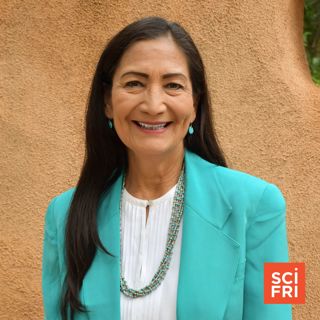
Deb Haaland is a politician, and proud of it

Former Interior Secretary Deb Haaland, a member of the Laguna Pueblo tribe, was the first Native person to hold a cabinet position. Now she’s running to be governor of New Mexico.  Haaland joins Host ...

10 Elo 17min

Sitting all day is terrible for us. Moving a little can help

Sitting all day is terrible for us. Moving a little can help

Keeping your butt in a seat for hours a day increases the risk of heart attacks, diabetes, psychiatric conditions, and more. But in our tech-filled world, many of us lead sedentary lives, whether beca...

7 Elo 18min

A Nagasaki survivor and physician recounts his life's work

A Nagasaki survivor and physician recounts his life's work

Dr. Masao Tomonaga was only 2 years old when the United States bombed his home city of Nagasaki. He survived, and grew up to become a physician for other survivors, known as hibakusha. He also studied...

6 Elo 18min

Suosittua kategoriassa Tiede

rss-poliisin-mieli
tiedekulma-podcast
rss-mita-tulisi-tietaa
rss-tiedetta-vai-tarinaa
docemilia
rss-duodecim-lehti
utelias-mieli
rss-kasvikutsut
rss-astetta-parempi-elama-podcast
radio-antro
rss-hereilla
rss-ammamafia
rss-tervetta-skeptisyytta
hippokrateen-vastaanotolla
rss-ranskaa-raakana
rss-radplus
filocast-filosofian-perusteet
mielipaivakirja
rss-bios-podcast
rss-ylistys-elaimille