Coronavirus Fact-Check, Poetry of Science, Social Bats. March 20, 2020, Part 2
Science Friday21 Maalis 2020

Coronavirus Fact-Check, Poetry of Science, Social Bats. March 20, 2020, Part 2

As new cases of coronavirus pop up across the United States, and as millions of people must self-isolate from family and friends at home, one place many are turning to for comfort and information is their news feed. But our regular media diet of politics, sports, and entertainment has been replaced by 24/7 coverage of the novel coronavirus pandemic.

Nearly every outlet is covering the pandemic in some way—celebrities live streaming their self-quarantine, restaurants rolling out new health practices and food delivery options, educators and parents finding ways to teach kids at home. There’s an overwhelming number of ways the media has covered the virus. But on top of that, there’s also blatant misinformation about the virus distracting us from the useful facts. It’s all appearing in one big blur on Facebook or Twitter feeds. And it doesn’t help that nearly every few hours we’re getting important, and often urgent, updates to the evolving story.

This week, guest host John Dankosky speaks with two scientists who can help fact-check your news feed. Angela Rasmussen, assistant research scientist and virologist at Columbia Mailman School of Public Health, and Akiko Iwasaki, professor of immunology at the Yale University School of Medicine give us a clearer picture of the coronavirus news this week.

Poet Jane Hirshfield calls these “unaccountable” times. Crises in the biosphere—climate change, extinctions—collide with crises in human life. And in her new book Ledger she says she has tried to do the accounting of where we, human beings, are as a result.

As a poet whose work touches on the Hubble telescope, the proteins of itch, and the silencing of climate researchers, Hirshfield talks with John Dankosky about the particular observational capacity of language, and why scientists and poets can share similar awe. Hirshfield is also the founder of Poets for Science, which continues a project to create a global community poem started after 2017’s March for Science.

“When we introduced them in isolated pairs they formed relationships much faster, like college students in a dorm room,” Carter said to Science Friday earlier this week. “And when we introduced a bat into a group of three, that was faster than when we just put two larger groups together.”

Carter has also studied how illness changes social relationships within a vampire bat roost. He found that if a baby bat gets sick, for instance, the mom won’t stop grooming or sharing food with their offspring. But that same bat will stop participating in some social behavior with a close roost-mate that isn’t family.

Carter joins Science Friday guest host John Dankosky to talk about researching vampire bats, and what their response to illness tells us about our own time social distancing during the coronavirus outbreak. See more photos and video of social bat behavior below.

Subscribe to this podcast. Follow our show on Instagram, TikTok, Facebook, and Bluesky @scifri and sign up for our newsletters. Got a science question that’s keeping you up at night? Call us: 877-472-4374


Hosted by Simplecast, an AdsWizz company. See pcm.adswizz.com for information about our collection and use of personal data for advertising.

Tämä jakso on lisätty Podme-palveluun avoimen RSS-syötteen kautta eikä se ole Podmen omaa tuotantoa. Siksi jakso saattaa sisältää mainontaa.

Jaksot(1380)

Colorado’s snow drought deals a major blow to recreation

Colorado’s snow drought deals a major blow to recreation

Winter in Colorado looked very different this year. Many parts of the state experienced record-high temperatures and record-low snowpack, which had downstream effects on farming, sports, tourism, and ...

17 Elo 11min

How do you find a ‘lost’ species?

How do you find a ‘lost’ species?

The earth is facing a biodiversity crisis, and there’s a lot of attention on species that are threatened, or at risk of dying out completely. But, there’s another critter category that’s a little more...

14 Elo 18min

What we get wrong about vaccine hesitancy

What we get wrong about vaccine hesitancy

President Trump has signed an executive order calling for a change to the childhood vaccination schedule. Specifically, he wants to separate the MMR vaccine, which protects against measles, mumps, and...

13 Elo 12min

Why this lab studies the speed of bug pee and other curiosities

Why this lab studies the speed of bug pee and other curiosities

In a lab in the Rocky Mountains, a group of scientists is hard at work trying to find answers across biology, physics, and engineering: They’re looking into things like the hydrodynamics of insect pee...

12 Elo 18min
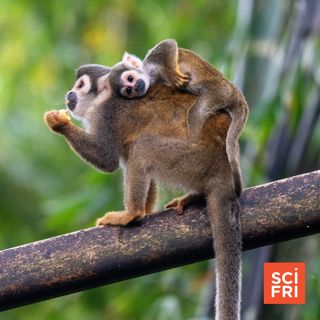
Some primates undergo even more extreme childbirth than humans

Some primates undergo even more extreme childbirth than humans

Human childbirth is often difficult and incredibly painful—just ask anyone who’s been through it. And for a long time, childbirth seemed to be uniquely difficult for humans. But a new study suggests t...

11 Elo 11min
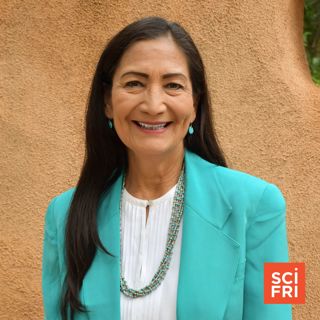
Deb Haaland is a politician, and proud of it

Deb Haaland is a politician, and proud of it

Former Interior Secretary Deb Haaland, a member of the Laguna Pueblo tribe, was the first Native person to hold a cabinet position. Now she’s running to be governor of New Mexico.  Haaland joins Host ...

10 Elo 17min
Sitting all day is terrible for us. Moving a little can help

Sitting all day is terrible for us. Moving a little can help

Keeping your butt in a seat for hours a day increases the risk of heart attacks, diabetes, psychiatric conditions, and more. But in our tech-filled world, many of us lead sedentary lives, whether beca...

7 Elo 18min

A Nagasaki survivor and physician recounts his life's work

A Nagasaki survivor and physician recounts his life's work

Dr. Masao Tomonaga was only 2 years old when the United States bombed his home city of Nagasaki. He survived, and grew up to become a physician for other survivors, known as hibakusha. He also studied...

6 Elo 18min

Suosittua kategoriassa Tiede

rss-poliisin-mieli
tiedekulma-podcast
rss-mita-tulisi-tietaa
rss-tiedetta-vai-tarinaa
docemilia
rss-duodecim-lehti
utelias-mieli
rss-kasvikutsut
rss-astetta-parempi-elama-podcast
radio-antro
rss-hereilla
rss-ammamafia
rss-tervetta-skeptisyytta
hippokrateen-vastaanotolla
rss-ranskaa-raakana
rss-radplus
filocast-filosofian-perusteet
mielipaivakirja
rss-bios-podcast
rss-ylistys-elaimille