Healthcare Ripple Effects, Resilient Flowers, Cancer Detection. April 10, 2020, Part 1
Science Friday10 Huhti 2020

Healthcare Ripple Effects, Resilient Flowers, Cancer Detection. April 10, 2020, Part 1

Routine Healthcare Is Falling Through The COVID-19 Cracks

Our healthcare system is straining under the weight of the coronavirus epidemic, with hospital emergency rooms and ICUs around the country facing shortages of masks, ventilators, hospital beds, and medical staff. But the epidemic is also upsetting parts of the healthcare system that aren’t directly treating COVID patients. How are you supposed to keep up with regular medical care when you’re not supposed to leave the house, or when your primary care doctor’s office is shut down

Michael Barnett is an assistant professor at the Harvard T. H. Chan School of Public Health who studies access to healthcare services, as well as a primary care physician at Brigham and Women’s Hospital in Boston. He joins Ira to talk about how patients and clinics are attempting to navigate a healthcare landscape altered by the global pandemic—including telemedicine and virtual health services, the economics of private doctors’ offices, and shortages of regular medications.

These Flowers Bounce Back

Everywhere, colorful, spirit-lifting flowers are blooming. But if you’ve stepped off a path to avoid an oncoming runner recently, don’t worry. New research, published in the journal New Phytologist, finds some flowers have a unique ability to “bounce back” after injury—say after getting squished by a falling branch or shoe. This gives flowers a second chance at being pollinated, preserving their role in the seasonal ecosystem.

One of the authors of this study, Nathan Muchhala, an assistant professor of biology at the University of Missouri in St. Louis, joins Science Friday to discuss the unique properties of flowers.

How Dogs Are Helping Scientists Build A Smell Detector For Cancer

Scientists are now training dogs to sniff out cancer. A team at UPenn and Monell Chemical Chemical Senses Center are using dogs’ heightened sense of smell to detect the specific chemicals produced by cancer cells. The scientists are using this data to produce a device that could be used in ovarian cancer detection.

Science Friday’s video producer Luke Groskin and digital producer Daniel Peterschmidt talk with Ira about a trip to the cancer laboratory, where they met the scientists—and dogs—behind this unique research. This is part of Science Friday’s Methods, where we bring you into the field alongside the scientists working to answer big questions, by using gorgeous video and pictures. You can read the article and watch the videos about their trip at sciencefriday.com/smellingcancer.

Big Data’s Latest On Tracking The Spread of COVID-19

In an effort to stop the spread of the novel coronavirus, some European countries are collecting information on the movements of residents using cell phone data. This helps determine who is following stay-at-home orders, and who isn’t. Facebook and Google want to use their data about user movements to do the same. But some say this is a big breach of privacy. Amy Nordrum of IEEE Spectrum joins Ira to discuss this story and more of the latest COVID-19 news.

Subscribe to this podcast. Follow our show on Instagram, TikTok, Facebook, and Bluesky @scifri and sign up for our newsletters. Got a science question that’s keeping you up at night? Call us: 877-472-4374


Hosted by Simplecast, an AdsWizz company. See pcm.adswizz.com for information about our collection and use of personal data for advertising.

Tämä jakso on lisätty Podme-palveluun avoimen RSS-syötteen kautta eikä se ole Podmen omaa tuotantoa. Siksi jakso saattaa sisältää mainontaa.

Jaksot(1380)

Colorado’s snow drought deals a major blow to recreation

Colorado’s snow drought deals a major blow to recreation

Winter in Colorado looked very different this year. Many parts of the state experienced record-high temperatures and record-low snowpack, which had downstream effects on farming, sports, tourism, and ...

17 Elo 11min
How do you find a ‘lost’ species?

How do you find a ‘lost’ species?

The earth is facing a biodiversity crisis, and there’s a lot of attention on species that are threatened, or at risk of dying out completely. But, there’s another critter category that’s a little more...

14 Elo 18min
What we get wrong about vaccine hesitancy

What we get wrong about vaccine hesitancy

President Trump has signed an executive order calling for a change to the childhood vaccination schedule. Specifically, he wants to separate the MMR vaccine, which protects against measles, mumps, and...

13 Elo 12min

Why this lab studies the speed of bug pee and other curiosities

Why this lab studies the speed of bug pee and other curiosities

In a lab in the Rocky Mountains, a group of scientists is hard at work trying to find answers across biology, physics, and engineering: They’re looking into things like the hydrodynamics of insect pee...

12 Elo 18min
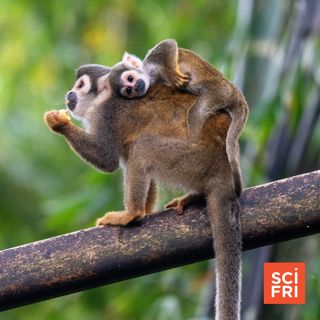
Some primates undergo even more extreme childbirth than humans

Some primates undergo even more extreme childbirth than humans

Human childbirth is often difficult and incredibly painful—just ask anyone who’s been through it. And for a long time, childbirth seemed to be uniquely difficult for humans. But a new study suggests t...

11 Elo 11min
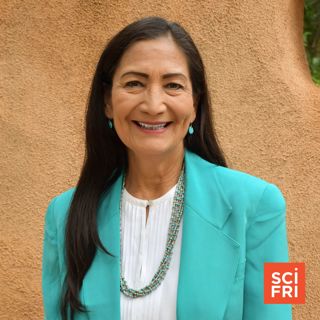
Deb Haaland is a politician, and proud of it

Deb Haaland is a politician, and proud of it

Former Interior Secretary Deb Haaland, a member of the Laguna Pueblo tribe, was the first Native person to hold a cabinet position. Now she’s running to be governor of New Mexico.  Haaland joins Host ...

10 Elo 17min
Sitting all day is terrible for us. Moving a little can help

Sitting all day is terrible for us. Moving a little can help

Keeping your butt in a seat for hours a day increases the risk of heart attacks, diabetes, psychiatric conditions, and more. But in our tech-filled world, many of us lead sedentary lives, whether beca...

7 Elo 18min

A Nagasaki survivor and physician recounts his life's work

A Nagasaki survivor and physician recounts his life's work

Dr. Masao Tomonaga was only 2 years old when the United States bombed his home city of Nagasaki. He survived, and grew up to become a physician for other survivors, known as hibakusha. He also studied...

6 Elo 18min

Suosittua kategoriassa Tiede

rss-poliisin-mieli
tiedekulma-podcast
rss-mita-tulisi-tietaa
rss-tiedetta-vai-tarinaa
utelias-mieli
rss-kasvikutsut
filocast-filosofian-perusteet
rss-ranskaa-raakana
rss-ylistys-elaimille
rss-ammamafia
rss-astetta-parempi-elama-podcast
mielipaivakirja
hippokrateen-vastaanotolla
rss-duodecim-lehti
rss-tervetta-skeptisyytta
rss-radplus