
Vaccine Process, Hubble Space Telescope Anniversary, Alchemy Of Us. April 24, 2020, Part 2
Science Friday24 Huhti 2020

Vaccine Process, Hubble Space Telescope Anniversary, Alchemy Of Us. April 24, 2020, Part 2

Over 50 pharmaceutical companies and biotech firms around the world are now racing to develop vaccines for the coronavirus responsible for COVID-19. Anthony Fauci has said that it might be possible to develop a vaccine in as quickly as 12 to 18 months—but so far, researchers still don’t know which of several approaches might be most safe and effective.

Paul Offit, head of the Vaccine Education Center at Children’s Hospital of Philadelphia, says that usually, the standard time to develop a new vaccine and move it through the multiple phases of clinical trials required for FDA approval is measured in years, not months—and despite the need, he worries that shortening the path to a vaccine means that developers will skip critical parts of the testing process.

He joins Ira to talk about the path to a vaccine, and how it might fit in with other parts of the coronavirus response, including community testing and the development of therapeutic drugs to treat patients with COVID-19.

Think about the breathtaking images you’ve seen of space—swirling, multicolor galaxies, shining star clusters, and far-off planets. There’s a good chance these photos were taken by the Hubble Space Telescope, which was launched into space 30 years ago today.

Over these decades, Hubble has helped researchers better understand space mysteries, like black holes, warped space, exoplanets, and the expansion of the universe. While it had a rough beginning—it was deployed with a miscalibrated mirror—Hubble has long maintained its status as the premiere telescope.

Joining Ira to celebrate this anniversary is Dr. Jennifer Wiseman, senior project scientist for the Hubble Space Telescope in Greenbelt, Maryland.

When you think about how the telephone was invented, you probably think of Alexander Graham Bell. But what about the people who made the telephone effortless to use? For example, you might not have heard of Almon Strowger, a Kansas City undertaker in the late 19th century, who feared he was losing business thanks to poorly connected phone calls—at that time, calls relied on women known as “hello girls,” who manually operated the switches.

Strowger’s frustration led him to invent the automatic switching system, which led to modern telephones, transistors, and eventually, computers. His name, however, is still less well-known.

Strowger’s story is one of dozens documented in The Alchemy of Us, a new book by materials scientist Ainissa Ramirez, who explores the way human foibles and flaws have shaped our inventions—and how those inventions have changed us. Take, for example, Ruth Belleville, the Englishwoman who literally sold time until accurate clocks were ubiquitous, a story Ramirez uses to describe how industrialization and industrialized time have shaped our sleep.

Producer Christie Taylor talks to Ramirez about her unexpected stories of innovation in time, light, photography, and telecommunications—inventions that all helped shape modern culture.

Subscribe to this podcast. Follow our show on Instagram, TikTok, Facebook, and Bluesky @scifri and sign up for our newsletters. Got a science question that’s keeping you up at night? Call us: 877-472-4374


Hosted by Simplecast, an AdsWizz company. See pcm.adswizz.com for information about our collection and use of personal data for advertising.

Tämä jakso on lisätty Podme-palveluun avoimen RSS-syötteen kautta eikä se ole Podmen omaa tuotantoa. Siksi jakso saattaa sisältää mainontaa.

Jaksot(1380)

Colorado’s snow drought deals a major blow to recreation

Colorado’s snow drought deals a major blow to recreation

Winter in Colorado looked very different this year. Many parts of the state experienced record-high temperatures and record-low snowpack, which had downstream effects on farming, sports, tourism, and ...

17 Elo 11min

How do you find a ‘lost’ species?

How do you find a ‘lost’ species?

The earth is facing a biodiversity crisis, and there’s a lot of attention on species that are threatened, or at risk of dying out completely. But, there’s another critter category that’s a little more...

14 Elo 18min

What we get wrong about vaccine hesitancy

What we get wrong about vaccine hesitancy

President Trump has signed an executive order calling for a change to the childhood vaccination schedule. Specifically, he wants to separate the MMR vaccine, which protects against measles, mumps, and...

13 Elo 12min

Why this lab studies the speed of bug pee and other curiosities

Why this lab studies the speed of bug pee and other curiosities

In a lab in the Rocky Mountains, a group of scientists is hard at work trying to find answers across biology, physics, and engineering: They’re looking into things like the hydrodynamics of insect pee...

12 Elo 18min

Some primates undergo even more extreme childbirth than humans

Some primates undergo even more extreme childbirth than humans

Human childbirth is often difficult and incredibly painful—just ask anyone who’s been through it. And for a long time, childbirth seemed to be uniquely difficult for humans. But a new study suggests t...

11 Elo 11min
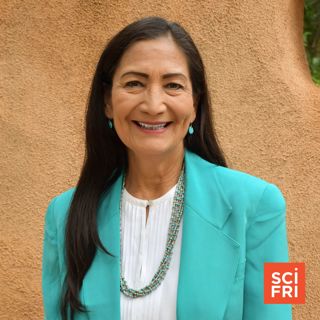
Deb Haaland is a politician, and proud of it

Deb Haaland is a politician, and proud of it

Former Interior Secretary Deb Haaland, a member of the Laguna Pueblo tribe, was the first Native person to hold a cabinet position. Now she’s running to be governor of New Mexico.  Haaland joins Host ...

10 Elo 17min

Sitting all day is terrible for us. Moving a little can help

Sitting all day is terrible for us. Moving a little can help

Keeping your butt in a seat for hours a day increases the risk of heart attacks, diabetes, psychiatric conditions, and more. But in our tech-filled world, many of us lead sedentary lives, whether beca...

7 Elo 18min

A Nagasaki survivor and physician recounts his life's work

A Nagasaki survivor and physician recounts his life's work

Dr. Masao Tomonaga was only 2 years old when the United States bombed his home city of Nagasaki. He survived, and grew up to become a physician for other survivors, known as hibakusha. He also studied...

6 Elo 18min

Suosittua kategoriassa Tiede

rss-poliisin-mieli
tiedekulma-podcast
rss-mita-tulisi-tietaa
rss-tiedetta-vai-tarinaa
utelias-mieli
rss-kasvikutsut
filocast-filosofian-perusteet
rss-ranskaa-raakana
rss-ylistys-elaimille
rss-ammamafia
rss-astetta-parempi-elama-podcast
mielipaivakirja
hippokrateen-vastaanotolla
rss-duodecim-lehti
rss-tervetta-skeptisyytta
rss-radplus