Proactive Policing, The Social Brain. June 12, 2020, Part 2
Science Friday12 Kesä 2020

Proactive Policing, The Social Brain. June 12, 2020, Part 2

In the 1980s and 1990s, in the midst of rising crime rates and a nationally waning confidence in policing, law enforcement around the country adopted a different approach to addressing crime. Instead of just reacting to crime when it happened, officers decided they’d try to prevent it from happening in the first place, employing things like “hot spots” policing and “stop and frisk,” or “terry stops.” The strategy is what criminologists call proactive policing, and it’s now become widely used in police departments across the nation, especially in cities.

Critics and experts debate how effective these tactics are in lowering crime rates. While there’s some evidence that proactive policing does reduce crime, now public health researchers are questioning if the practice—which sometimes results in innocent people being stopped, searched, and detained—comes with other unintended physical and mental health consequences.

Samuel Walker, emeritus professor of criminology at the University of Nebraska Omaha and an expert in police accountability, reviews what led police departments to adopt a more proactive approach, while medical sociologist Alyasah Ali Sewell explains the physical and mental health impacts of stop-question-and-frisk policing.

Over the past few months, people’s social lives have transformed. We’re now told to stay home, and when we do go out, to maintain at least six feet between ourselves and others—forget about a handshake or a hug. Many are now isolated in their homes, with just a screen and its two-dimensional images to keep them company. But our brains are wired for social connections. “We’re social primates,” says psychiatrist Julie Holland. “It’s in the job description.”

Holland’s new book, Good Chemistry: The Science of Connection, from Soul to Psychedelics, looks at what happens to the brain’s chemistry when we connect socially, and how devastating disconnections can be. She joins Ira to talk about the social life of the brain, community, and the mental health impact of the stressful times we’re living in.

Subscribe to this podcast. Follow our show on Instagram, TikTok, Facebook, and Bluesky @scifri and sign up for our newsletters. Got a science question that’s keeping you up at night? Call us: 877-472-4374


Hosted by Simplecast, an AdsWizz company. See pcm.adswizz.com for information about our collection and use of personal data for advertising.

Tämä jakso on lisätty Podme-palveluun avoimen RSS-syötteen kautta eikä se ole Podmen omaa tuotantoa. Siksi jakso saattaa sisältää mainontaa.

Jaksot(1380)

Colorado’s snow drought deals a major blow to recreation

Colorado’s snow drought deals a major blow to recreation

Winter in Colorado looked very different this year. Many parts of the state experienced record-high temperatures and record-low snowpack, which had downstream effects on farming, sports, tourism, and ...

17 Elo 11min
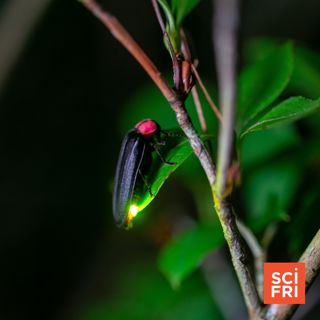
How do you find a ‘lost’ species?

How do you find a ‘lost’ species?

The earth is facing a biodiversity crisis, and there’s a lot of attention on species that are threatened, or at risk of dying out completely. But, there’s another critter category that’s a little more...

14 Elo 18min
What we get wrong about vaccine hesitancy

What we get wrong about vaccine hesitancy

President Trump has signed an executive order calling for a change to the childhood vaccination schedule. Specifically, he wants to separate the MMR vaccine, which protects against measles, mumps, and...

13 Elo 12min

Why this lab studies the speed of bug pee and other curiosities

Why this lab studies the speed of bug pee and other curiosities

In a lab in the Rocky Mountains, a group of scientists is hard at work trying to find answers across biology, physics, and engineering: They’re looking into things like the hydrodynamics of insect pee...

12 Elo 18min

Some primates undergo even more extreme childbirth than humans

Some primates undergo even more extreme childbirth than humans

Human childbirth is often difficult and incredibly painful—just ask anyone who’s been through it. And for a long time, childbirth seemed to be uniquely difficult for humans. But a new study suggests t...

11 Elo 11min
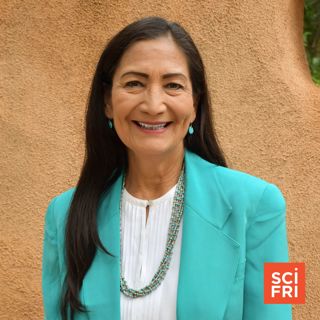
Deb Haaland is a politician, and proud of it

Deb Haaland is a politician, and proud of it

Former Interior Secretary Deb Haaland, a member of the Laguna Pueblo tribe, was the first Native person to hold a cabinet position. Now she’s running to be governor of New Mexico.  Haaland joins Host ...

10 Elo 17min
Sitting all day is terrible for us. Moving a little can help

Sitting all day is terrible for us. Moving a little can help

Keeping your butt in a seat for hours a day increases the risk of heart attacks, diabetes, psychiatric conditions, and more. But in our tech-filled world, many of us lead sedentary lives, whether beca...

7 Elo 18min

A Nagasaki survivor and physician recounts his life's work

A Nagasaki survivor and physician recounts his life's work

Dr. Masao Tomonaga was only 2 years old when the United States bombed his home city of Nagasaki. He survived, and grew up to become a physician for other survivors, known as hibakusha. He also studied...

6 Elo 18min

Suosittua kategoriassa Tiede

rss-poliisin-mieli
tiedekulma-podcast
rss-mita-tulisi-tietaa
rss-tiedetta-vai-tarinaa
utelias-mieli
rss-kasvikutsut
filocast-filosofian-perusteet
rss-ranskaa-raakana
rss-ylistys-elaimille
rss-ammamafia
rss-astetta-parempi-elama-podcast
mielipaivakirja
hippokrateen-vastaanotolla
rss-duodecim-lehti
rss-tervetta-skeptisyytta
rss-radplus