Making The Outdoors Great For Everyone. July 3, 2020, Part 1
Science Friday3 Heinä 2020

Making The Outdoors Great For Everyone. July 3, 2020, Part 1

It’s the start to a holiday weekend, which often means spending time outdoors, whether that’s going to the beach, on a hike, or grilling in a park. But not everyone feels safe enjoying the great outdoors—and we’re not talking about getting mosquito bites or sunburns.

In late May, a white woman, Amy Cooper, called the police on a Black bird watcher who asked her to leash her dog. This incident felt familiar to many other Black outdoor enthusiasts, many of whom had encountered similar experiences of racism outside.

To understand why the outdoors is an unwelcoming place for some people, we need to look back at our violent history. Joining Ira to talk about this is Dr. Carolyn Finney, author of the book Black Faces, White Spaces. She is also a scholar-in-residence at Middlebury College in Vermont.

And later in the conversation, Ira is joined by two scientists, biology graduate student Corina Newsome from Statesboro, Georgia, and exploration geoscientist Tim Shin from Houston, Texas. They’ll talk about what it’s like to do fieldwork while Black, and what responsibility academic institutions should have in keeping their students safe.

As coronavirus cases surge across the U.S., including in Texas, Florida, Arizona, and California, it’s more important than ever to have an accurate and real-time understanding of transmission. Epidemiologists have been measuring the spread of the virus based on the number of individual people who test positive. But depending on when people get tested, and how long it takes to get their results, confirmed cases can lag days behind actual infections.

Luckily, there’s another way to find out where people are getting sick: The virus that causes COVID-19 can be detected in feces, and for months, researchers have been studying whether sampling sewage systems can help identify new outbreaks faster.

Scientific American technology editor Sophie Bushwick joins Ira to talk about the value of sewage tracing for COVID-19. Plus, a new sparrow song has gone viral in Canada, and why summer fireworks can damage not only your hearing, but also your lungs.

Subscribe to this podcast. Follow our show on Instagram, TikTok, Facebook, and Bluesky @scifri and sign up for our newsletters. Got a science question that’s keeping you up at night? Call us: 877-472-4374


Hosted by Simplecast, an AdsWizz company. See pcm.adswizz.com for information about our collection and use of personal data for advertising.

Tämä jakso on lisätty Podme-palveluun avoimen RSS-syötteen kautta eikä se ole Podmen omaa tuotantoa. Siksi jakso saattaa sisältää mainontaa.

Jaksot(1380)

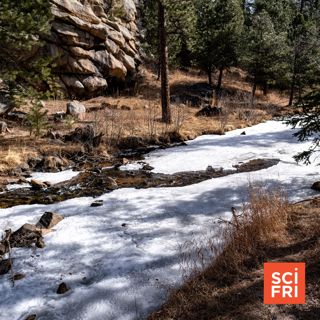
Colorado’s snow drought deals a major blow to recreation

Colorado’s snow drought deals a major blow to recreation

Winter in Colorado looked very different this year. Many parts of the state experienced record-high temperatures and record-low snowpack, which had downstream effects on farming, sports, tourism, and ...

17 Elo 11min
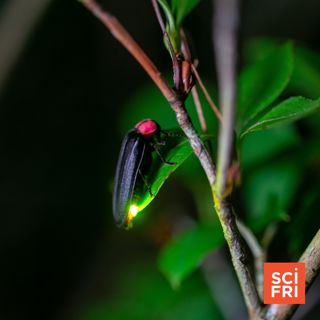
How do you find a ‘lost’ species?

How do you find a ‘lost’ species?

The earth is facing a biodiversity crisis, and there’s a lot of attention on species that are threatened, or at risk of dying out completely. But, there’s another critter category that’s a little more...

14 Elo 18min
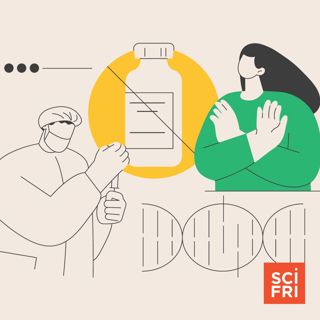
What we get wrong about vaccine hesitancy

What we get wrong about vaccine hesitancy

President Trump has signed an executive order calling for a change to the childhood vaccination schedule. Specifically, he wants to separate the MMR vaccine, which protects against measles, mumps, and...

13 Elo 12min

Why this lab studies the speed of bug pee and other curiosities

Why this lab studies the speed of bug pee and other curiosities

In a lab in the Rocky Mountains, a group of scientists is hard at work trying to find answers across biology, physics, and engineering: They’re looking into things like the hydrodynamics of insect pee...

12 Elo 18min

Some primates undergo even more extreme childbirth than humans

Some primates undergo even more extreme childbirth than humans

Human childbirth is often difficult and incredibly painful—just ask anyone who’s been through it. And for a long time, childbirth seemed to be uniquely difficult for humans. But a new study suggests t...

11 Elo 11min
Deb Haaland is a politician, and proud of it

Deb Haaland is a politician, and proud of it

Former Interior Secretary Deb Haaland, a member of the Laguna Pueblo tribe, was the first Native person to hold a cabinet position. Now she’s running to be governor of New Mexico.  Haaland joins Host ...

10 Elo 17min

Sitting all day is terrible for us. Moving a little can help

Sitting all day is terrible for us. Moving a little can help

Keeping your butt in a seat for hours a day increases the risk of heart attacks, diabetes, psychiatric conditions, and more. But in our tech-filled world, many of us lead sedentary lives, whether beca...

7 Elo 18min

A Nagasaki survivor and physician recounts his life's work

A Nagasaki survivor and physician recounts his life's work

Dr. Masao Tomonaga was only 2 years old when the United States bombed his home city of Nagasaki. He survived, and grew up to become a physician for other survivors, known as hibakusha. He also studied...

6 Elo 18min

Suosittua kategoriassa Tiede

rss-poliisin-mieli
tiedekulma-podcast
rss-mita-tulisi-tietaa
rss-tiedetta-vai-tarinaa
utelias-mieli
rss-kasvikutsut
filocast-filosofian-perusteet
rss-ranskaa-raakana
rss-ylistys-elaimille
rss-ammamafia
rss-astetta-parempi-elama-podcast
mielipaivakirja
hippokrateen-vastaanotolla
rss-duodecim-lehti
rss-tervetta-skeptisyytta
rss-radplus