
Long-Term COVID Effects, Dicamba and Agriculture, Mosquitoes. July 24, 2020, Part 2
Science Friday24 Heinä 2020

Long-Term COVID Effects, Dicamba and Agriculture, Mosquitoes. July 24, 2020, Part 2

Since the beginning of the pandemic, hospitals have been treating and triaging an influx of COVID-19 patients. Hundreds of thousands of seriously ill patients have been hospitalized, with some having to stay and receive care for months at a time.

But now as some of those patients return home, hospitals are opening post-COVID clinics to help with their transition. Health care professionals are monitoring the recovery process and taking note of persisting health issues from the disease.

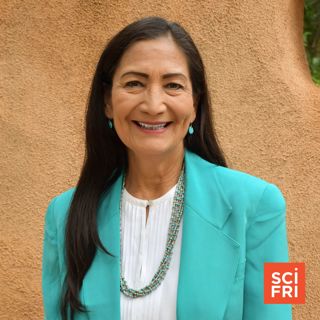
Mafuzur Rahman, clinician and leader of the post-discharge COVID-19 clinic at SUNY Downstate in Brooklyn, New York, and Margaret Wheeler, a physician at the Richard Fine’s People Clinic at San Francisco General Hospital, talk about the health effects they have seen in their patients and what patients may need for recovery.

A federal court in California recently vacated the three popular dicamba herbicides—Xtendimax, Fexipan, and Engenia—after the court determined the EPA violated the Federal Insecticide, Fungicide, and Rodenticide Act (FIFRA) by registering the chemicals for use. Environmental advocates rejoiced, while farm groups lamented the decision as yet another hurdle for farmers to overcome during a difficult year.

More herbicides could face legal challenges in the coming years. But they were once part of a golden era of U.S. agriculture, and a key player in the rise of modern industrialized growing systems.

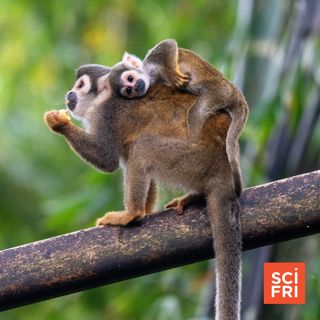
There are over 3,000 mosquitoes, but only a handful feast on blood, like the yellow fever mosquito, Aedes aegypti. Other mammals also have blood running through their veins, but are bit less frequently. So why do mosquitoes love humans so much?

New research on these bugs look into the cause, investigating mosquitoes’ preference for certain mammal odors and human population densities. Another paper examines a potential gene solution to decrease mosquito bites—thus lowering transmission of mosquito-borne diseases. Joining Ira to talk about the latest research and more mosquito science is “Lindy” McBride, biology assistant professor at Princeton University and Jake Tu, biochemistry professor at Virginia Tech.

Subscribe to this podcast. Follow our show on Instagram, TikTok, Facebook, and Bluesky @scifri and sign up for our newsletters. Got a science question that’s keeping you up at night? Call us: 877-472-4374


Hosted by Simplecast, an AdsWizz company. See pcm.adswizz.com for information about our collection and use of personal data for advertising.

Tämä jakso on lisätty Podme-palveluun avoimen RSS-syötteen kautta eikä se ole Podmen omaa tuotantoa. Siksi jakso saattaa sisältää mainontaa.

Jaksot(1338)

Why do sports announcers talk like that?

Why do sports announcers talk like that?

If you watch sports, whether the recent NBA finals or the ongoing World Cup matches, you may have noticed that the athletes aren’t the only ones putting on a show. The announcers seem to be playing a ...

19 Kesä 13min

Swords, cannibalism, poison: inside the world of killer microbes

Swords, cannibalism, poison: inside the world of killer microbes

There is a murderous crime spree happening right under—and perhaps inside—our noses. Killer microbes armed with weapons are eviscerating, assassinating, and detonating their fellow microbes. And the n...

18 Kesä 21min

When music transports you to a different place

When music transports you to a different place

Do you ever hear a song that transports you to a specific place and time? This auditory wormhole has a name: musical daydreams. Music cognition expert Elizabeth Margulis studies why they happen, and w...

17 Kesä 18min

A vast whale graveyard + Zombie sea cucumbers

A vast whale graveyard + Zombie sea cucumbers

Researchers just published details of a massive undersea graveyard of whales deep in the Indian Ocean. Spanning about 1,200 kilometers (745 miles), it contains whale remains dating back more than 5 mi...

16 Kesä 18min

Should we bring mountain lions back to the Northeast?

Should we bring mountain lions back to the Northeast?

Big cats used to roam the entire United States. You might know them as mountain lions, pumas, cougars, or catamounts. Though they go by many names, they're actually all the same species.  Their curren...

15 Kesä 12min

Blue Origin explosion hits NASA timeline + Artemis III crew

Blue Origin explosion hits NASA timeline + Artemis III crew

When Blue Origin’s New Glenn spacecraft exploded in an enormous fireball during a ground test a couple weeks ago, it sent shockwaves not only through the air, but through NASA’s timeline for the upcom...

12 Kesä 12min

Why can I handle tequila but not rum?

Why can I handle tequila but not rum?

‘Tis the season for porch beers and happy hours, and we’re taking on listener questions about how alcohol affects us. Like, is a glass of wine at dinner really good for you? And why do sugary drinks g...

11 Kesä 21min

AI + turfgrass science in the most high-tech World Cup yet

AI + turfgrass science in the most high-tech World Cup yet

The 2026 World Cup will be the largest one yet, and FIFA is trying to make it the most high-tech, too. The federation has partnered with tech giant Lenovo to launch Football AI Pro, which is designed ...

10 Kesä 19min

Suosittua kategoriassa Tiede

rss-mita-tulisi-tietaa
utelias-mieli
rss-duodecim-lehti
rss-hereilla
rss-poliisin-mieli
rss-totuuden-liepeilla
rss-laakaripodi
rss-lihavuudesta-podcast
tiedekulma-podcast
sotataidon-ytimessa
radio-antro
rss-tiedetta-vai-tarinaa