
The Black Hole At The Center Of The Galaxy, Shipwreck Microbes. Oct 16, 2020, Part 1
Science Friday16 Loka 2020

The Black Hole At The Center Of The Galaxy, Shipwreck Microbes. Oct 16, 2020, Part 1

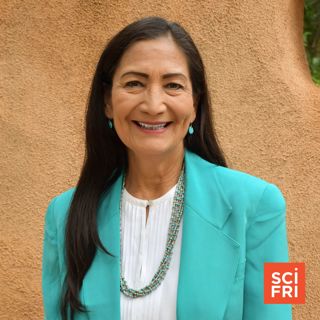
The 2020 Nobel Prize winners have been announced, and among them is UCLA astronomer Andrea Ghez, who split the prize with Roger Penrose and Reinhard Genzel. Ghez, also the fourth woman to ever win the Physics prize, won for her 1998 work that resolved a decades-old debate among astronomers: What lurks at the difficult-to-observe heart of the Milky Way?

After innovating new ways to peer through the obscuring gas and dust, Ghez and her team observed the orbits of stars around the galaxy’s seemingly empty center—and found they fit a pattern explained so far only by a supermassive black hole of at least four million times the mass of our Sun. In the decades since, she and her team have investigated the gravitational forces of the galactic center, and how well they match Einstein’s theory of relativity. (So far, her team has concluded, Einstein seems mostly right, but his theories may not fully explain what’s going on.)

Ira talks to Ghez about how our understanding of the center of the galaxy has evolved, plus the questions that still puzzle her.

Plus, off the coast of North Carolina is a large lagoon called the Pamlico Sound, which supports a diverse ecological landscape. It’s also home to the Pappy’s Lane Shipwreck, a World War II vessel that’s partially submerged in the Sound. This wreck has become an artificial reef, and the life that surrounds it, big and small, is ripe for research.

Just as humans have their own microbiomes, which are different for everyone, shipwrecks have microbiomes, too. Scientists study them to better understand what’s living on these sunken ships, and how to preserve them for future generations.

While the vessel is not a natural part of the Sound, its role as an artificial reef makes it an important part of the ecosystem. By better understanding its microbes, scientists hope to help preserve this non-renewable cultural artifact.

Joining Ira to talk about the marvelous microbes on the Pappy’s Lane Shipwreck is Erin Field, assistant professor of biology at East Carolina University in Greenville, North Carolina.

Subscribe to this podcast. Follow our show on Instagram, TikTok, Facebook, and Bluesky @scifri and sign up for our newsletters. Got a science question that’s keeping you up at night? Call us: 877-472-4374


Hosted by Simplecast, an AdsWizz company. See pcm.adswizz.com for information about our collection and use of personal data for advertising.

Tämä jakso on lisätty Podme-palveluun avoimen RSS-syötteen kautta eikä se ole Podmen omaa tuotantoa. Siksi jakso saattaa sisältää mainontaa.

Jaksot(1338)

Why do sports announcers talk like that?

Why do sports announcers talk like that?

If you watch sports, whether the recent NBA finals or the ongoing World Cup matches, you may have noticed that the athletes aren’t the only ones putting on a show. The announcers seem to be playing a ...

19 Kesä 13min

Swords, cannibalism, poison: inside the world of killer microbes

Swords, cannibalism, poison: inside the world of killer microbes

There is a murderous crime spree happening right under—and perhaps inside—our noses. Killer microbes armed with weapons are eviscerating, assassinating, and detonating their fellow microbes. And the n...

18 Kesä 21min

When music transports you to a different place

When music transports you to a different place

Do you ever hear a song that transports you to a specific place and time? This auditory wormhole has a name: musical daydreams. Music cognition expert Elizabeth Margulis studies why they happen, and w...

17 Kesä 18min

A vast whale graveyard + Zombie sea cucumbers

A vast whale graveyard + Zombie sea cucumbers

Researchers just published details of a massive undersea graveyard of whales deep in the Indian Ocean. Spanning about 1,200 kilometers (745 miles), it contains whale remains dating back more than 5 mi...

16 Kesä 18min

Should we bring mountain lions back to the Northeast?

Should we bring mountain lions back to the Northeast?

Big cats used to roam the entire United States. You might know them as mountain lions, pumas, cougars, or catamounts. Though they go by many names, they're actually all the same species.  Their curren...

15 Kesä 12min

Blue Origin explosion hits NASA timeline + Artemis III crew

Blue Origin explosion hits NASA timeline + Artemis III crew

When Blue Origin’s New Glenn spacecraft exploded in an enormous fireball during a ground test a couple weeks ago, it sent shockwaves not only through the air, but through NASA’s timeline for the upcom...

12 Kesä 12min

Why can I handle tequila but not rum?

Why can I handle tequila but not rum?

‘Tis the season for porch beers and happy hours, and we’re taking on listener questions about how alcohol affects us. Like, is a glass of wine at dinner really good for you? And why do sugary drinks g...

11 Kesä 21min

AI + turfgrass science in the most high-tech World Cup yet

AI + turfgrass science in the most high-tech World Cup yet

The 2026 World Cup will be the largest one yet, and FIFA is trying to make it the most high-tech, too. The federation has partnered with tech giant Lenovo to launch Football AI Pro, which is designed ...

10 Kesä 19min

Suosittua kategoriassa Tiede

rss-mita-tulisi-tietaa
rss-hereilla
rss-duodecim-lehti
utelias-mieli
rss-poliisin-mieli
rss-lihavuudesta-podcast
rss-laakaripodi
rss-totuuden-liepeilla
sotataidon-ytimessa
rss-tiedetta-vai-tarinaa
rss-alycast-alykasta-laakehoitoa-yksilollisesti