
Virtual Disease, Daydreaming, Geoengineering. March 12 2021, Part 2
Science Friday12 Maalis 2021

Virtual Disease, Daydreaming, Geoengineering. March 12 2021, Part 2

Learning From World Of Warcraft’s Virtual Pandemic

The widespread infection of roughly four million virtual characters all started with a giant snake demon. In 2005, the massively multiplayer online video game World Of Warcraft introduced a special event raid, where groups of players could team up to fight a giant snake demon named Hakkar the Soulflayer. Hakkar would cast a spell called “Corrupted Blood” on players, which would slowly whittle down their health.

The effect of the spell was only supposed to last inside the raid arena—when players returned to the main world of the game, the spell would dissipate. But thanks to a software glitch, that wasn’t the case if the player had a pet companion. When the pets returned to the main world, they started infecting players and non-playable characters with the Corrupted Blood spell. If the player wasn’t powerful enough to heal themselves, they would die and erupt in a fountain of blood before turning into a skeleton.

What followed was a virtual pandemic that startlingly resembled today’s COVID-19 pandemic, from the spread, human behavior, and cultural response. Blizzard, the developer of the game, wanted players to social distance. Some players listened, others flouted the rules, traveling freely and spreading the disease with them. Conspiracy theories formed about how the virus was engineered by Blizzard on purpose, and others placed blame on players with pets as the cause of the outbreak, mirroring the racist anti-Asian attacks and rhetoric surrounding COVID-19 today.

Coincidentally, two epidemiologists, Nina Fefferman and Eric Lofgren, were there to witness the World Of Warcraft outbreak unfold. They studied and used the incident to model human behavior in response to a pandemic. Their findings were published in The Lancet in 2007. Many of their observations came to pass in 2020 when COVID-19 appeared.

SciFri producer Daniel Peterschmidt sat down with Eric Molinsky, host of the podcast Imaginary Worlds, who reported this story for his show. He talks about the epidemiologists who studied the outbreak and how it prepared them for public responses to COVID-19.

Why Is Daydreaming Difficult For Grownups?

Children have a natural talent for imagination. Even in moments of boredom, their imagination can take them away into daydreams that help pass the time in a flash. But for many adults, falling into a daydream is hard, especially when our minds are filled with worries about tomorrow’s obligations, finances, and a global pandemic.

Turns out those who feel this way are not alone. New research shows that adults report getting to a daydreaming state is harder than experiencing their unguided thoughts. Adults often require a prompt to think about something pleasant, and tend to ruminate on unpleasant things.

Daydreaming can be an antidote to boredom, and researcher Erin Westgate of the University of Florida says that’s important. Her previous research shows that boredom can cause sadistic behavior in people. Westgate joins guest host John Dankosky and Manoush Zomorodi, host of the TED Radio Hour and author of the book “Bored and Brilliant,” who argues leaning into boredom can unlock our most creative selves.

Can We Geoengineer Our Way Out Of A Natural Disaster?

Humans have always altered their landscapes—from simple agriculture used to cultivate specific crops to huge projects like damming rivers to change the flow of entire ecosystems. And many of these human interventions have unintended consequences and have led to major environmental disasters.

In her book Under A White Sky: The Nature Of The Future, author Elizabeth Kolbert talks to scientists and people working on geoengineering projects and technology to mitigate and avert damage caused by humans in the natural world like climate change. The projects range from electrifying rivers to turning CO2 emissions into rocks. Kolbert discusses if we can solve these natural problems with the tools that created the problems in the first place, and at what cost?

Subscribe to this podcast. Follow our show on Instagram, TikTok, Facebook, and Bluesky @scifri and sign up for our newsletters. Got a science question that’s keeping you up at night? Call us: 877-472-4374


Hosted by Simplecast, an AdsWizz company. See pcm.adswizz.com for information about our collection and use of personal data for advertising.

Tämä jakso on lisätty Podme-palveluun avoimen RSS-syötteen kautta eikä se ole Podmen omaa tuotantoa. Siksi jakso saattaa sisältää mainontaa.

Jaksot(1381)

What can moments of lucidity teach us about Alzheimer’s?

What can moments of lucidity teach us about Alzheimer’s?

Watching a loved one with Alzheimer's or dementia slowly lose their cognitive abilities can be heartbreaking. While the person you once knew seems to be slipping away, sometimes people with Alzheimer'...

18 Elo 17min

Colorado’s snow drought deals a major blow to recreation

Colorado’s snow drought deals a major blow to recreation

Winter in Colorado looked very different this year. Many parts of the state experienced record-high temperatures and record-low snowpack, which had downstream effects on farming, sports, tourism, and ...

17 Elo 11min

How do you find a ‘lost’ species?

How do you find a ‘lost’ species?

The earth is facing a biodiversity crisis, and there’s a lot of attention on species that are threatened, or at risk of dying out completely. But, there’s another critter category that’s a little more...

14 Elo 18min

What we get wrong about vaccine hesitancy

What we get wrong about vaccine hesitancy

President Trump has signed an executive order calling for a change to the childhood vaccination schedule. Specifically, he wants to separate the MMR vaccine, which protects against measles, mumps, and...

13 Elo 12min

Why this lab studies the speed of bug pee and other curiosities

Why this lab studies the speed of bug pee and other curiosities

In a lab in the Rocky Mountains, a group of scientists is hard at work trying to find answers across biology, physics, and engineering: They’re looking into things like the hydrodynamics of insect pee...

12 Elo 18min
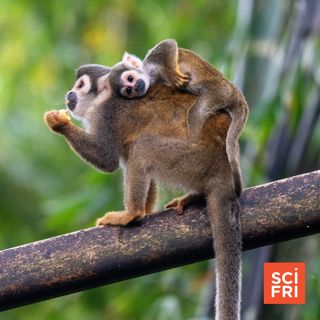
Some primates undergo even more extreme childbirth than humans

Some primates undergo even more extreme childbirth than humans

Human childbirth is often difficult and incredibly painful—just ask anyone who’s been through it. And for a long time, childbirth seemed to be uniquely difficult for humans. But a new study suggests t...

11 Elo 11min
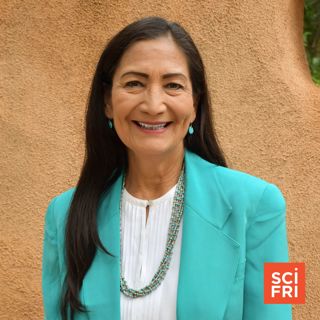
Deb Haaland is a politician, and proud of it

Deb Haaland is a politician, and proud of it

Former Interior Secretary Deb Haaland, a member of the Laguna Pueblo tribe, was the first Native person to hold a cabinet position. Now she’s running to be governor of New Mexico.  Haaland joins Host ...

10 Elo 17min

Sitting all day is terrible for us. Moving a little can help

Sitting all day is terrible for us. Moving a little can help

Keeping your butt in a seat for hours a day increases the risk of heart attacks, diabetes, psychiatric conditions, and more. But in our tech-filled world, many of us lead sedentary lives, whether beca...

7 Elo 18min

Suosittua kategoriassa Tiede

rss-poliisin-mieli
tiedekulma-podcast
rss-mita-tulisi-tietaa
rss-tiedetta-vai-tarinaa
utelias-mieli
rss-tervetta-skeptisyytta
rss-ammamafia
rss-duodecim-lehti
rss-ylistys-elaimille
rss-kasvikutsut
rss-radplus
rss-luontopodi-samuel-glassar-tutkii-luonnon-ihmeita
rss-ranskaa-raakana
hippokrateen-vastaanotolla
mielipaivakirja
rss-bios-podcast
filocast-filosofian-perusteet
rss-astetta-parempi-elama-podcast