
Future For Long COVID Patients, Getting COVID Info To Sihk Truckers. April 9, 2021, Part 1
Science Friday9 Huhti 2021

Future For Long COVID Patients, Getting COVID Info To Sihk Truckers. April 9, 2021, Part 1

What Does The Future Look Like For COVID-19 Long-Haulers?

There’s something strange happening with some people who’ve gotten sick with COVID-19: Somewhere between 10 and 30% of people who are infected are stuck with long-lasting effects and complications.

People dealing with long-term symptoms after a coronavirus infection are known as COVID long-haulers, and as the pandemic gets longer, their numbers grow. Long-haul COVID is still a mystery in a lot of ways, but work is being done to understand it better.

Joining Ira to talk about the various effects of Long COVID and its possible treatments are Walter Koroshetz, director of the National Institute of Neurological Disorders and Stroke at the National Institutes of Health in Bethesda, Maryland, and David Putrino, director of Rehabilitation Innovation for the Mount Sinai Health System in New York, New York.

Punjabi Sikh Truckers Lack Access To COVID-19 Information

The cab of Sunny Grewal’s 18-wheeler is neat and tidy. He’s got bunk beds with red checkered sheets and gray interior cabinets that hide a fridge, microwave, paper plates and spices for long days on the road. One plastic container holds bite-sized sweets from his native India. “We call it gur, G-U-R,” Grewal says. “You can put it in tea, or you can have a small piece after food.”

Grewal is a trucking company owner-operator based in Fresno. He’s on the road upwards of 150,000 miles a year, delivering produce and cleaning supplies like hand sanitizer to and from the East Coast, the Midwest, and the South. In other words, his work is essential to keeping this country running. “If nurses want to take care of you, they need the stuff that we bring,” he says. “You want to buy food to stay home, you’re going to stock the food in your house, we bring that food.”

Early on in the COVID-19 pandemic, the state of California designated truckers as essential workers, but that status hasn’t materialized into any tangible advantages or privileges:No requirements that rest stops remain open, no hazard pay, and no priority access to the vaccine. “It is strange that our day didn’t come sooner,” says Lovepreet Singh, a truck driver from Bakersfield who was hoping momentum in support of his industry would build after the White House honored truck drivers with a rally in April 2020.

Singh and Grewal are also among an estimated hundreds of thousands of truckers in the U.S. who are Sikh, from the northern Indian state of Punjab. The North American Punjabi Trucking Association estimates Punjabi Sikhs make up 20 percent of the country’s truckers and control as much as 40 percent of the industry in California, and yet few public health departments in the state offer critical COVID-related information in the Punjabi language. “It makes me feel left over, you know?” says Grewal.

That lack of information has had consequences for the whole Punjabi-speaking community, says Manpreet Kaur of the non-profit Jakara Movement, especially in the early days of the pandemic. “The information was just always missing or it was too late or it was shared in a way that wasn’t easily understood,” she says. Read more at sciencefriday.com.

Particle Behavior Disobeys Laws Of Physics As We Know Them

Physicists have confirmed the unexplainable behavior of an elementary particle first noticed 20 years ago. Experiments at Fermilab in Batavia, Illinois, showed that a certain subatomic particle, called a muon, disobeys the laws of physics as scientists have written them. This is a big deal for scientists in a field where much is still unknown.

Plus, our hotter Earth will officially become the new normal next month. The National Oceanic and Atmospheric Administration will release its once-a-decade update to “climate normals”, baseline temperatures meteorologists rely on for their forecasts. While some places won’t see much of a change, this new update will substantially change what’s “normal” across the coasts and in the southern U.S.

Joining Ira to talk about these science stories and other big news of the week is Roxanne Khamsi, science journalist based in Montreal, Quebec.

Subscribe to this podcast. Follow our show on Instagram, TikTok, Facebook, and Bluesky @scifri and sign up for our newsletters. Got a science question that’s keeping you up at night? Call us: 877-472-4374


Hosted by Simplecast, an AdsWizz company. See pcm.adswizz.com for information about our collection and use of personal data for advertising.

Tämä jakso on lisätty Podme-palveluun avoimen RSS-syötteen kautta eikä se ole Podmen omaa tuotantoa. Siksi jakso saattaa sisältää mainontaa.

Jaksot(1381)

What can moments of lucidity teach us about Alzheimer’s?

What can moments of lucidity teach us about Alzheimer’s?

Watching a loved one with Alzheimer's or dementia slowly lose their cognitive abilities can be heartbreaking. While the person you once knew seems to be slipping away, sometimes people with Alzheimer'...

18 Elo 17min
Colorado’s snow drought deals a major blow to recreation

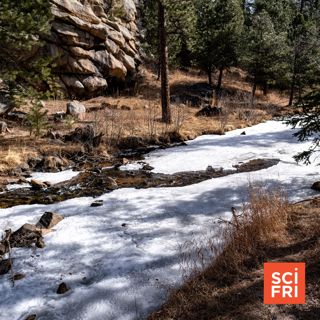
Colorado’s snow drought deals a major blow to recreation

Winter in Colorado looked very different this year. Many parts of the state experienced record-high temperatures and record-low snowpack, which had downstream effects on farming, sports, tourism, and ...

17 Elo 11min
How do you find a ‘lost’ species?

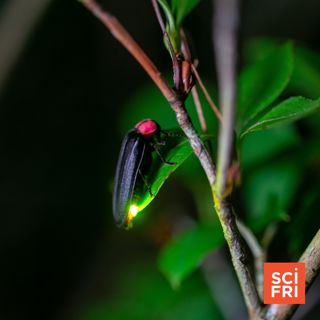
How do you find a ‘lost’ species?

The earth is facing a biodiversity crisis, and there’s a lot of attention on species that are threatened, or at risk of dying out completely. But, there’s another critter category that’s a little more...

14 Elo 18min
What we get wrong about vaccine hesitancy

What we get wrong about vaccine hesitancy

President Trump has signed an executive order calling for a change to the childhood vaccination schedule. Specifically, he wants to separate the MMR vaccine, which protects against measles, mumps, and...

13 Elo 12min

Why this lab studies the speed of bug pee and other curiosities

Why this lab studies the speed of bug pee and other curiosities

In a lab in the Rocky Mountains, a group of scientists is hard at work trying to find answers across biology, physics, and engineering: They’re looking into things like the hydrodynamics of insect pee...

12 Elo 18min

Some primates undergo even more extreme childbirth than humans

Some primates undergo even more extreme childbirth than humans

Human childbirth is often difficult and incredibly painful—just ask anyone who’s been through it. And for a long time, childbirth seemed to be uniquely difficult for humans. But a new study suggests t...

11 Elo 11min
Deb Haaland is a politician, and proud of it

Deb Haaland is a politician, and proud of it

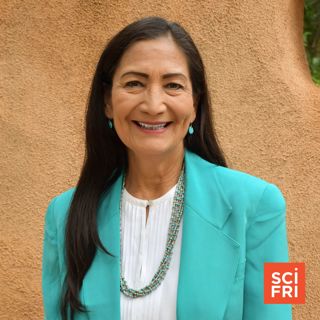
Former Interior Secretary Deb Haaland, a member of the Laguna Pueblo tribe, was the first Native person to hold a cabinet position. Now she’s running to be governor of New Mexico.  Haaland joins Host ...

10 Elo 17min

Sitting all day is terrible for us. Moving a little can help

Sitting all day is terrible for us. Moving a little can help

Keeping your butt in a seat for hours a day increases the risk of heart attacks, diabetes, psychiatric conditions, and more. But in our tech-filled world, many of us lead sedentary lives, whether beca...

7 Elo 18min

Suosittua kategoriassa Tiede

rss-poliisin-mieli
tiedekulma-podcast
rss-mita-tulisi-tietaa
rss-tiedetta-vai-tarinaa
utelias-mieli
rss-tervetta-skeptisyytta
rss-ammamafia
rss-duodecim-lehti
rss-ylistys-elaimille
rss-kasvikutsut
rss-radplus
rss-luontopodi-samuel-glassar-tutkii-luonnon-ihmeita
rss-ranskaa-raakana
hippokrateen-vastaanotolla
mielipaivakirja
rss-bios-podcast
filocast-filosofian-perusteet
rss-astetta-parempi-elama-podcast