
Shellfish Deaths, Chemical Safety, Humpback Songs. July 23, 2021, Part 2
Science Friday23 Heinä 2021

Shellfish Deaths, Chemical Safety, Humpback Songs. July 23, 2021, Part 2

Billions Of Sea Creatures, Lost To Heat Waves

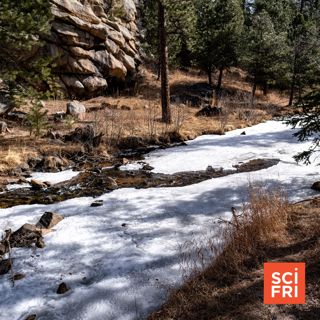
A couple weeks ago, the Pacific Northwest saw record-breaking temperatures. News coverage captured countless people suffering, and dying, during triple-digit heat the region had never seen before. Portland and Seattle reached their highest temperatures ever recorded. Canada set a new record for the highest temperature ever seen in the country with a measurement of 118 degrees Fahrenheit in British Columbia.

However, there are still more victims of the climate crisis tragedy in the Pacific Northwest: coastal wildlife. Experts estimate that over the course of that one scorching weekend, over a billion sea creatures died.

Starfish, mussels, oysters, clams, barnacles, sea snails—all of these animals and more virtually baked to death on the beach as they sat, helpless, in the intense heat during low tide.

Chris Harley, a marine biologist at the University of British Columbia, witnessed this die-off firsthand. He joins Ira to talk about what this loss means for the future of life along the coast.

EPA Whistleblowers Allege ‘Atmosphere Of Fear’

Earlier this month, four whistleblowers from the Environmental Protection Agency’s (EPA) chemical safety office went public with allegations of intimidation and downplayed chemical risks, stating:

“The Office of Chemical Safety and Pollution Prevention is broken… The entire New Chemicals program operates under an atmosphere of fear—scientists are afraid of retaliation for trying to implement TSCA the way Congress intended, and they fear that their actions (or inactions) at the direction of management are resulting in harm to human health and the environment.”

John Dankosky spoke with two of the whistleblowers, along with Sharon Lerner, an investigative reporter who originally broke this story for The Intercept. As EPA staff, they were not authorized to speak with the press, but chose to participate in this interview as private citizens regarding a matter of public concern.

We contacted the EPA and received the following statement:

“This Administration is committed to investigating alleged violations of scientific integrity. It is critical that all EPA decisions are informed by rigorous scientific information and standards. As one of his first acts as Administrator, Administrator Regan issued a memorandum outlining concrete steps to reinforce the agency’s commitment to science. EPA takes seriously all allegations of violations of scientific integrity. EPA’s scientific integrity official and scientific integrity team members will thoroughly investigate any allegation of violation of EPA’s scientific integrity policy that they receive and work to safeguard EPA science. Additionally, EPA is currently reviewing agency policies, processes, and practices to ensure that the best available science and data inform Agency decisions. EPA is committed to fostering a culture of evaluation and continuous learning that promotes an open exchange of differing scientific and policy positions. Additionally, retaliation against EPA employees for reporting violations alleged to have occurred will not be tolerated in this administration. EPA leadership are reviewing these complaints, and any appropriate action will be taken.”

How The Humpback Says Hello

A humpback whale makes two kinds of noises. The first are songs, long, elaborate, patterned and rhythmic vocalizations made by mature males, with some connection to the mating ritual. Within any given pod, every male sings the same song, but the songs themselves are different in pods around the world.

The second kind are calls, short sounds made by every whale, that seem much more consistent across populations and over time. Of around 50 documented kinds of calls, scientists have settled on the meaning of one for sure: the sound the whales make when feeding on one specific kind of fish.

In the decades since scientists first began to investigate the calls and songs of humpback whales, the exact function of these noises has been a tough mystery to crack. Humpbacks’ watery habitat makes researching them difficult and expensive, and the whales themselves live on slow time scales that make leaps in understanding a process that can take decades.

Now, the new documentary Fathom tells the story of two researchers working to further understand what humpback whales are saying, and why they say it. Cornell University researcher Michelle Fournet investigated a call—the ‘whup’ call—that seems to be a greeting, and found when she played the sound underwater, the whales responded back to her. And University of St. Andrews scientist Ellen Garland scoured recordings of South Pacific humpbacks to find out how pods will suddenly adopt new songs despite little contact with other populations.

Ira talks to Garland and Fournet about their work, the complexity of whale communication, and how understanding it better could help save them from human threats.

Subscribe to this podcast. Follow our show on Instagram, TikTok, Facebook, and Bluesky @scifri and sign up for our newsletters. Got a science question that’s keeping you up at night? Call us: 877-472-4374


Hosted by Simplecast, an AdsWizz company. See pcm.adswizz.com for information about our collection and use of personal data for advertising.

Tämä jakso on lisätty Podme-palveluun avoimen RSS-syötteen kautta eikä se ole Podmen omaa tuotantoa. Siksi jakso saattaa sisältää mainontaa.

Jaksot(1339)

FDA approves a well-known sunscreen ingredient—finally

FDA approves a well-known sunscreen ingredient—finally

The FDA recently approved a sunscreen ingredient called bemotrizinol, or BEMT, that’s been used in Europe and Asia for years. This is the first new sunscreen ingredient approved in the United States i...

22 Kesä 12min

Why do sports announcers talk like that?

Why do sports announcers talk like that?

If you watch sports, whether the recent NBA finals or the ongoing World Cup matches, you may have noticed that the athletes aren’t the only ones putting on a show. The announcers seem to be playing a ...

19 Kesä 13min

Swords, cannibalism, poison: inside the world of killer microbes

Swords, cannibalism, poison: inside the world of killer microbes

There is a murderous crime spree happening right under—and perhaps inside—our noses. Killer microbes armed with weapons are eviscerating, assassinating, and detonating their fellow microbes. And the n...

18 Kesä 21min

When music transports you to a different place

When music transports you to a different place

Do you ever hear a song that transports you to a specific place and time? This auditory wormhole has a name: musical daydreams. Music cognition expert Elizabeth Margulis studies why they happen, and w...

17 Kesä 18min

A vast whale graveyard + Zombie sea cucumbers

A vast whale graveyard + Zombie sea cucumbers

Researchers just published details of a massive undersea graveyard of whales deep in the Indian Ocean. Spanning about 1,200 kilometers (745 miles), it contains whale remains dating back more than 5 mi...

16 Kesä 18min

Should we bring mountain lions back to the Northeast?

Should we bring mountain lions back to the Northeast?

Big cats used to roam the entire United States. You might know them as mountain lions, pumas, cougars, or catamounts. Though they go by many names, they're actually all the same species.  Their curren...

15 Kesä 12min

Blue Origin explosion hits NASA timeline + Artemis III crew

Blue Origin explosion hits NASA timeline + Artemis III crew

When Blue Origin’s New Glenn spacecraft exploded in an enormous fireball during a ground test a couple weeks ago, it sent shockwaves not only through the air, but through NASA’s timeline for the upcom...

12 Kesä 12min

Why can I handle tequila but not rum?

Why can I handle tequila but not rum?

‘Tis the season for porch beers and happy hours, and we’re taking on listener questions about how alcohol affects us. Like, is a glass of wine at dinner really good for you? And why do sugary drinks g...

11 Kesä 21min

Suosittua kategoriassa Tiede

rss-mita-tulisi-tietaa
rss-hereilla
rss-duodecim-lehti
utelias-mieli
rss-poliisin-mieli
rss-lihavuudesta-podcast
rss-laakaripodi
rss-totuuden-liepeilla
sotataidon-ytimessa
rss-tiedetta-vai-tarinaa
rss-alycast-alykasta-laakehoitoa-yksilollisesti