
Gut Fungi, Olympic Challenges, Planetary Seismology. July 30, 2021, Part 2
Science Friday30 Heinä 2021

Gut Fungi, Olympic Challenges, Planetary Seismology. July 30, 2021, Part 2

Getting To Know The Fungus Among Us (In Our Guts)

Your gut microbiome is composed of more than bacteria—a less populous, but still important, resident is fungi. Many people’s lower digestive tract is home to the yeast Candida albicans, the species implicated in vaginal yeast infections and oral thrush. But new research published in the scientific journal Nature this month suggests that Candida in the gut may also be related to severe cases of inflammatory bowel disease, or IBD.

Candida comes in multiple forms: a single-celled, rounded yeast, and a multicellular, branched version, known as the hyphal form. The latter is capable of invading other cells, and is associated with tissue damage, like that of IBD. The research team writes that our immune system reacts to candida by targeting a protein found on that second, invasive state. Conversely, our bodies seem to leave the rounded, yeast form alone.

Better understanding what drives these distinct responses may provide clues to developing a vaccine that could help people with candida-linked health problems. And postdoctoral researcher Kyla Ost tells guest host Roxanne Khamsi that the relationship appears to be mutualistic—that is, the fungi themselves benefit from being managed in this way.

She explains the nuanced relationship she and her colleagues uncovered, and how uncovering more about gut fungi may bring new insights into the relationship between our microbial communities and our health.

COVID And Climate Change Collide At The Olympics

The Tokyo Olympics have been underway for a week, with talented athletes competing at their peak. But this year, it’s hard to watch the Olympics without thinking about two of the biggest science stories of the summer: COVID-19, and the record heat and humidity athletes are facing as part of this year’s games.

Holding the Olympics during a global pandemic is uncharted territory, and keeping the virus out of the games has been a huge logistical challenge. There are more than 11,000 athletes participating in this summer’s games, coming from 206 nations. Factor in the coaches, staff, press, and service workers, and that’s a lot of people to keep healthy.

As if that wasn’t enough, Tokyo is experiencing extreme heat and humidity, consistently reaching 90 degrees Fahrenheit with humidity at about 80%. While the city has always had hot summers, they have gotten worse with climate change. Tokyo’s average annual temperature has risen by more than 5 degrees Fahrenheit since 1900, according to NASA. Athletes have had to take additional measures to keep themselves cool.

To tackle these stories, guest host Roxanne Khamsi talks to sports writer Hannah Keyser, from Yahoo Sports, about the Olympics’ COVID-19 protocols, as well as her experience as a reporter covering the games in Tokyo. Then, Roxanne speaks with Scott Delp, professor of bioengineering at Stanford University and director of the Wu Tsai Human Performance Alliance, about athletic performance and safety.

What’s Shaking Below Mars’ Surface?

You’ve seen the effects of earthquakes on our planet. The ground shakes, the earth trembles, and if a quake is strong enough, it can bring widespread damage and devastation. But it turns out that ours is not the only quaking planet around—there are quakes caused by geologic activity on Mars too. While Mars doesn’t have plate tectonics like Earth, other processes, from volcanic activity to planetary cooling, can cause tremors in the ground. Seismologists have been using these marsquakes almost like sonar signals through the planet’s interior to provide clues as to what’s going on below the Martian surface.

Several new papers based on the data from the Mars InSight lander were recently published in the academic journal Science. Bruce Banerdt, principal investigator, and Sue Smrekar, deputy principal investigator for the InSight lander, join guest host Roxanne Khamsi to talk about the results and how they compare to Earth geology. Smrekar also gives a preview of the planned VERITAS mission to Venus, which will attempt to deduce some of Venus’ geologic processes from orbit. Smrekar is principal investigator for VERITAS, which might launch in 2027.

Subscribe to this podcast. Follow our show on Instagram, TikTok, Facebook, and Bluesky @scifri and sign up for our newsletters. Got a science question that’s keeping you up at night? Call us: 877-472-4374


Hosted by Simplecast, an AdsWizz company. See pcm.adswizz.com for information about our collection and use of personal data for advertising.

Tämä jakso on lisätty Podme-palveluun avoimen RSS-syötteen kautta eikä se ole Podmen omaa tuotantoa. Siksi jakso saattaa sisältää mainontaa.

Jaksot(1382)

Creating 'world models' for robots + An AI math shakeup

Creating 'world models' for robots + An AI math shakeup

When you ask an LLM like ChatGPT or Claude a question, the model goes through its massive amount of training data and guesses the answer by mathematically predicting the word most likely to appear nex...

19 Elo 17min
What can moments of lucidity teach us about Alzheimer’s?

What can moments of lucidity teach us about Alzheimer’s?

Watching a loved one with Alzheimer's or dementia slowly lose their cognitive abilities can be heartbreaking. While the person you once knew seems to be slipping away, sometimes people with Alzheimer'...

18 Elo 17min
Colorado’s snow drought deals a major blow to recreation

Colorado’s snow drought deals a major blow to recreation

Winter in Colorado looked very different this year. Many parts of the state experienced record-high temperatures and record-low snowpack, which had downstream effects on farming, sports, tourism, and ...

17 Elo 11min
How do you find a ‘lost’ species?

How do you find a ‘lost’ species?

The earth is facing a biodiversity crisis, and there’s a lot of attention on species that are threatened, or at risk of dying out completely. But, there’s another critter category that’s a little more...

14 Elo 18min
What we get wrong about vaccine hesitancy

What we get wrong about vaccine hesitancy

President Trump has signed an executive order calling for a change to the childhood vaccination schedule. Specifically, he wants to separate the MMR vaccine, which protects against measles, mumps, and...

13 Elo 12min
Why this lab studies the speed of bug pee and other curiosities

Why this lab studies the speed of bug pee and other curiosities

In a lab in the Rocky Mountains, a group of scientists is hard at work trying to find answers across biology, physics, and engineering: They’re looking into things like the hydrodynamics of insect pee...

12 Elo 18min
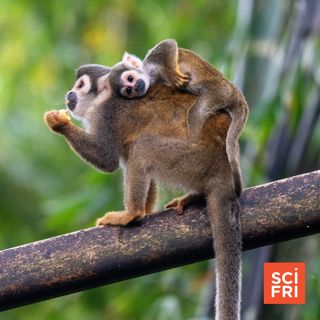
Some primates undergo even more extreme childbirth than humans

Some primates undergo even more extreme childbirth than humans

Human childbirth is often difficult and incredibly painful—just ask anyone who’s been through it. And for a long time, childbirth seemed to be uniquely difficult for humans. But a new study suggests t...

11 Elo 11min
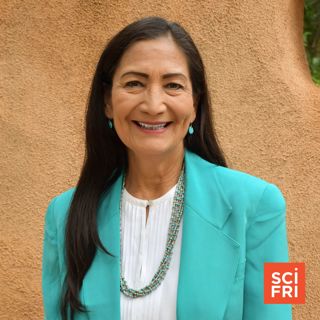
Deb Haaland is a politician, and proud of it

Deb Haaland is a politician, and proud of it

Former Interior Secretary Deb Haaland, a member of the Laguna Pueblo tribe, was the first Native person to hold a cabinet position. Now she’s running to be governor of New Mexico.  Haaland joins Host ...

10 Elo 17min

Suosittua kategoriassa Tiede

rss-poliisin-mieli
tiedekulma-podcast
rss-mita-tulisi-tietaa
rss-tiedetta-vai-tarinaa
utelias-mieli
rss-tervetta-skeptisyytta
rss-ammamafia
rss-duodecim-lehti
rss-ylistys-elaimille
rss-kasvikutsut
rss-radplus
rss-luontopodi-samuel-glassar-tutkii-luonnon-ihmeita
rss-ranskaa-raakana
hippokrateen-vastaanotolla
mielipaivakirja
rss-bios-podcast
filocast-filosofian-perusteet
rss-astetta-parempi-elama-podcast