
Third Thumb, Nostalgia, Orcas. Aug 20, 2021, Part 2
Science Friday20 Elo 2021

Third Thumb, Nostalgia, Orcas. Aug 20, 2021, Part 2

You, Too, Can Be All Thumbs. Or At Least Three.

Take a look at your hand and fingers—and imagine that instead of five digits, you had an additional thumb, approximately opposite your natural thumb. Researchers at University College London built what they call the “Third Thumb”—a flexible, 3D-printed prosthetic device, controlled by pressure on sensors under the wearer’s big toes.The researchers studied how people wearing the thumb adapted their mental models of the world to incorporate their new, augmented body part, which they were able to use to perform tasks that usually take two hands, from picking up multiple wine glasses to plugging a USB cable into an adapter held in the air.

The scientists were interested in learning how the brain adapts to such a change, and whether there’s any mental cost associated with controlling a body part that may not always be there.

SciFri’s Charles Bergquist talks with Dani Clode, the designer of the thumb, and Paulina Kieliba, an engineer working on the project, about what they’ve learned from their interactions with extra body parts.

The Healing Power Of Nostalgia

One of the trends we saw over the course of the pandemic was returning to memories from one’s childhood. The 1977 Fleetwood Mac song Dreams reappeared on music charts worldwide, entertainment industry surveys found that over half of TV consumers rewatched their old favorite shows, and even sales of old Pokémon cards reached record highs.

Believe it or not, there’s a scientific basis to us getting nostalgic during lockdown. Nostalgia may be an emotionally protective force for people in times of crisis. In hindsight, this finding is no stretch of the imagination—just hearing the way people talk about nostalgic memories indicates a deep emotional effect.

Though nostalgia hits us in the gut, evolutionarily, what do humans stand to benefit from indulging in our forever-lost pasts? And perhaps the biggest question of all—is such reminiscing good for us? Should we be actively trying to reflect, or thinking ahead? (Or just living in the moment?)

Joining us to talk about the science of nostalgia, and the important role it has to play in our daily lives, are Clay Routledge, a professor in the Department of Management and Marketing at North Dakota State University in Fargo, North Dakota and Andrew Abeyta, an assistant professor in the Department of Psychology at Rutgers University-Camden, in Camden, New Jersey.

The Future Of Orcas Threatened In Changing Waters

When Seattle Times reporter Lynda Mapes heard of a mother killer whale in the Salish Sea whose baby died shortly after it was born, she was captivated.

The grieving mother carried her baby for 1,000 miles, and Mapes chronicled her story for millions of readers who followed along. She said the story resonated because it “wasn’t an animal story, but a story about a mother who happened to be a whale.”

Now, she’s chronicled the plight of the Southern Resident orcas in a new book, Orca: Shared Waters, Shared Home.

Orcas are known as fast and ferocious predators, sometimes called the “Tyrannosaurus Rex of the sea.” They’ve been swimming the oceans for millions of years. But it’s not these facts that drew Mapes to chronicle their story. It’s that these animals live in ancient societies, with long lineages and strong cultural ties. Their communities are well-known to the native people of the Pacific Northwest, where these orcas swim in the inland waters known as the Salish Sea.

But in recent years, human pressures have forced orcas away from their long-time fishing habitat. They face multiple threats, including climate change, boat traffic, development, noise, and the dwindling numbers of Chinook salmon they rely on for food. Guest host John Dankosky talks with Mapes about her new book, and ongoing efforts to help save these majestic mammals.

Subscribe to this podcast. Follow our show on Instagram, TikTok, Facebook, and Bluesky @scifri and sign up for our newsletters. Got a science question that’s keeping you up at night? Call us: 877-472-4374


Hosted by Simplecast, an AdsWizz company. See pcm.adswizz.com for information about our collection and use of personal data for advertising.

Tämä jakso on lisätty Podme-palveluun avoimen RSS-syötteen kautta eikä se ole Podmen omaa tuotantoa. Siksi jakso saattaa sisältää mainontaa.

Jaksot(1382)

Creating 'world models' for robots + An AI math shakeup

Creating 'world models' for robots + An AI math shakeup

When you ask an LLM like ChatGPT or Claude a question, the model goes through its massive amount of training data and guesses the answer by mathematically predicting the word most likely to appear nex...

19 Elo 17min
What can moments of lucidity teach us about Alzheimer’s?

What can moments of lucidity teach us about Alzheimer’s?

Watching a loved one with Alzheimer's or dementia slowly lose their cognitive abilities can be heartbreaking. While the person you once knew seems to be slipping away, sometimes people with Alzheimer'...

18 Elo 17min

Colorado’s snow drought deals a major blow to recreation

Colorado’s snow drought deals a major blow to recreation

Winter in Colorado looked very different this year. Many parts of the state experienced record-high temperatures and record-low snowpack, which had downstream effects on farming, sports, tourism, and ...

17 Elo 11min
How do you find a ‘lost’ species?

How do you find a ‘lost’ species?

The earth is facing a biodiversity crisis, and there’s a lot of attention on species that are threatened, or at risk of dying out completely. But, there’s another critter category that’s a little more...

14 Elo 18min
What we get wrong about vaccine hesitancy

What we get wrong about vaccine hesitancy

President Trump has signed an executive order calling for a change to the childhood vaccination schedule. Specifically, he wants to separate the MMR vaccine, which protects against measles, mumps, and...

13 Elo 12min

Why this lab studies the speed of bug pee and other curiosities

Why this lab studies the speed of bug pee and other curiosities

In a lab in the Rocky Mountains, a group of scientists is hard at work trying to find answers across biology, physics, and engineering: They’re looking into things like the hydrodynamics of insect pee...

12 Elo 18min
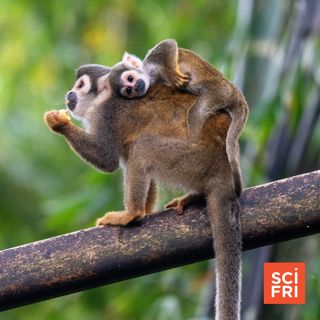
Some primates undergo even more extreme childbirth than humans

Some primates undergo even more extreme childbirth than humans

Human childbirth is often difficult and incredibly painful—just ask anyone who’s been through it. And for a long time, childbirth seemed to be uniquely difficult for humans. But a new study suggests t...

11 Elo 11min
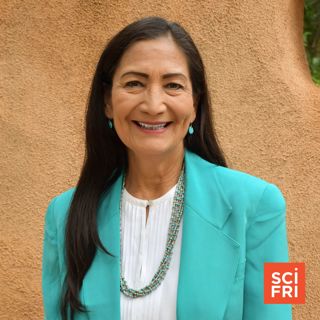
Deb Haaland is a politician, and proud of it

Deb Haaland is a politician, and proud of it

Former Interior Secretary Deb Haaland, a member of the Laguna Pueblo tribe, was the first Native person to hold a cabinet position. Now she’s running to be governor of New Mexico.  Haaland joins Host ...

10 Elo 17min

Suosittua kategoriassa Tiede

rss-poliisin-mieli
tiedekulma-podcast
rss-mita-tulisi-tietaa
rss-tiedetta-vai-tarinaa
utelias-mieli
rss-tervetta-skeptisyytta
rss-ammamafia
rss-duodecim-lehti
rss-ylistys-elaimille
rss-kasvikutsut
rss-radplus
rss-luontopodi-samuel-glassar-tutkii-luonnon-ihmeita
rss-ranskaa-raakana
hippokrateen-vastaanotolla
mielipaivakirja
rss-bios-podcast
filocast-filosofian-perusteet
rss-astetta-parempi-elama-podcast