
Primate Parasites, Spider Mating Songs, Spotted Lanternfly. Oct 1, 2021, Part 1
Science Friday1 Loka 2021

Primate Parasites, Spider Mating Songs, Spotted Lanternfly. Oct 1, 2021, Part 1

Healthcare Is Hard Enough to Get. If You’re A Trans Youth, It’s Even Harder

Healthcare can be difficult to access for anyone—that’s been made clear during the COVID-19 pandemic. But for transgender youth, the barriers are exponentially higher. A new study from the journal JAMA Pediatrics shows that trans youth don’t get the care they need because of a variety of obstacles. Those range from laws that prevent them from advocating for themselves, to stigma from doctors.

Joining Ira to talk about this story and other big science news of the week is Sabrina Imbler, science reporting fellow for the New York Times based in New York City. Ira and Sabrina also discuss the massive undertaking of COVID-19 testing in school districts, and the impacts ivermectin misinformation is having on the livestock and veterinary industries.

See A Spotted Lanternfly? Squash It!

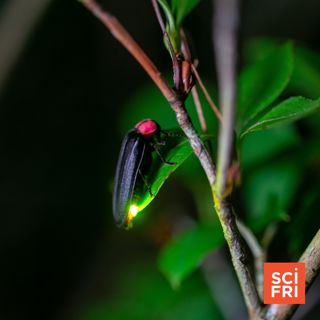
If you live in Pennsylvania or any of its surrounding environs, you’ve probably seen a really interesting looking bug in the past few years: the spotted lanternfly. Around this time of year, it’s in its nymph stage. But when fully grown, these lanternflies sound a little like the joke—they’re black and white and red all over. They’ve also got spots, as their name suggests.

The charming news about how interesting they look is offset by the bad news: They are an invasive species. And they frighten crop farmers because they have a taste for just about anything, and a fondness for grapes, which could have dramatic economic consequences.

Many states have a unified stance on what to do if you spy a spotted lanternfly—stomp them out. But is that an effective way to stop their spread? Joining Ira to chat about stomping techniques and lanternfly biology is Julie Urban, associate research professor in entomology at Penn State University, in State College, Pennsylvania.

As Primates Go Extinct, So Do Their Parasites, Upsetting Ecosystems

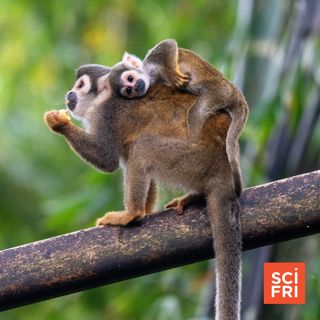
As of 2017, more than half of primate species—that’s apes, monkeys, lemurs, and our other relatives—were considered at risk of extinction. While the loss of these animals would be its own ecological crisis, this is causing another wave of die offs: the parasites that live on those primates, many of whom are specially adapted to live on just one species for their entire lives. That includes fungi and viruses, as well as the more grimace-inducing parasites like lice and intestinal worms.

Producer Christie Taylor talks to Duke Lemur Center researcher James Herrera, the first author on new research that found if endangered primates do disappear, nearly 200 species of primate parasites might also. They talk about why that loss could have consequences—not just for dwindling primates, but also for us.

The World According To Sound: How Spiders Shake Things Up For Love

Amorous arachnids sing to their lovers without making a sound. Instead, they like to shake things up.

Spiders aren’t powerful enough to vibrate the air, the way actual singing does. Instead, they use the ground. Male spiders send vibrations down their legs, and into whatever they’re standing on. Nearby females “hear” the song vibrating up their legs.

Humans can’t hear these spider songs with our ears, but we can listen to them with the help of a laser doppler vibrometer. This instrument can make non-contact vibration measurements of a surface. It shoots a laser beam at a particular surface, and depending on how much that surface moves, it can then measure the frequency and amplitude of the vibration, based on the Doppler shift of the reflected laser beam.

Hear an example of these lovelorn spiders on The World According to Sound, a live audio show, online listening series, and miniature podcast that focuses on sound, not story. Producers Chris Hoff and Sam Harnett create intentional, communal listening experiences as a way to “reclaim autonomy in a visually dominated world that is increasingly fracturing our attention.” The spiders in this piece were recorded by researchers in Damian Elias’s lab at UC Berkeley.

This recording is part of their next listening series, an immersive listening party where audiences from all over the globe will be invited to experience a world of sound together, beginning in January 2022. You can get a ticket to the series here.

Subscribe to this podcast. Follow our show on Instagram, TikTok, Facebook, and Bluesky @scifri and sign up for our newsletters. Got a science question that’s keeping you up at night? Call us: 877-472-4374


Hosted by Simplecast, an AdsWizz company. See pcm.adswizz.com for information about our collection and use of personal data for advertising.

Tämä jakso on lisätty Podme-palveluun avoimen RSS-syötteen kautta eikä se ole Podmen omaa tuotantoa. Siksi jakso saattaa sisältää mainontaa.

Jaksot(1339)

FDA approves a well-known sunscreen ingredient—finally

FDA approves a well-known sunscreen ingredient—finally

The FDA recently approved a sunscreen ingredient called bemotrizinol, or BEMT, that’s been used in Europe and Asia for years. This is the first new sunscreen ingredient approved in the United States i...

22 Kesä 12min

Why do sports announcers talk like that?

Why do sports announcers talk like that?

If you watch sports, whether the recent NBA finals or the ongoing World Cup matches, you may have noticed that the athletes aren’t the only ones putting on a show. The announcers seem to be playing a ...

19 Kesä 13min

Swords, cannibalism, poison: inside the world of killer microbes

Swords, cannibalism, poison: inside the world of killer microbes

There is a murderous crime spree happening right under—and perhaps inside—our noses. Killer microbes armed with weapons are eviscerating, assassinating, and detonating their fellow microbes. And the n...

18 Kesä 21min

When music transports you to a different place

When music transports you to a different place

Do you ever hear a song that transports you to a specific place and time? This auditory wormhole has a name: musical daydreams. Music cognition expert Elizabeth Margulis studies why they happen, and w...

17 Kesä 18min

A vast whale graveyard + Zombie sea cucumbers

A vast whale graveyard + Zombie sea cucumbers

Researchers just published details of a massive undersea graveyard of whales deep in the Indian Ocean. Spanning about 1,200 kilometers (745 miles), it contains whale remains dating back more than 5 mi...

16 Kesä 18min

Should we bring mountain lions back to the Northeast?

Should we bring mountain lions back to the Northeast?

Big cats used to roam the entire United States. You might know them as mountain lions, pumas, cougars, or catamounts. Though they go by many names, they're actually all the same species.  Their curren...

15 Kesä 12min

Blue Origin explosion hits NASA timeline + Artemis III crew

Blue Origin explosion hits NASA timeline + Artemis III crew

When Blue Origin’s New Glenn spacecraft exploded in an enormous fireball during a ground test a couple weeks ago, it sent shockwaves not only through the air, but through NASA’s timeline for the upcom...

12 Kesä 12min

Why can I handle tequila but not rum?

Why can I handle tequila but not rum?

‘Tis the season for porch beers and happy hours, and we’re taking on listener questions about how alcohol affects us. Like, is a glass of wine at dinner really good for you? And why do sugary drinks g...

11 Kesä 21min

Suosittua kategoriassa Tiede

rss-mita-tulisi-tietaa
rss-hereilla
rss-duodecim-lehti
utelias-mieli
rss-poliisin-mieli
rss-lihavuudesta-podcast
rss-laakaripodi
rss-totuuden-liepeilla
sotataidon-ytimessa
rss-tiedetta-vai-tarinaa
rss-alycast-alykasta-laakehoitoa-yksilollisesti