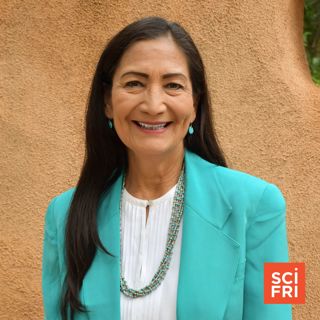

Native Biodata, Indigenous Carbon Resistance, COVID Boosters Next Steps. Oct 15, 2021, Part 1
Science Friday15 Loka 2021

Native Biodata, Indigenous Carbon Resistance, COVID Boosters Next Steps. Oct 15, 2021, Part 1

More Boosters, For More People

This week, an FDA advisory committee met to pore over data and debate the role of COVID vaccine boosters. And on Thursday, they voted to recommend Moderna boosters for older Americans, as well as people in certain at-risk groups. This recommendation came just a few weeks after the FDA authorized a Pfizer booster for similar individuals.

The recommendations of the panel regarding boosters for Moderna and Johnson & Johnson vaccines, as well as the idea of mixing and matching different vaccine and booster types, will now go to FDA officials. The CDC will also weigh in.

Amy Nordrum, commissioning editor at MIT Technology Review, joins Ira to talk about the vaccine meeting and other topics from the week in science—including the FDA authorization of an e-cigarette, efforts to map the brain, mysterious radio signals from space, and a mission to explore asteroids near Jupiter.

Indigenous-Led Biology, Designed For Native Communities

Monday was Indigenous Peoples’ Day here in the United States: a holiday to honor Native Americans and their resilience over many centuries of colonialism. Due to a long history of discrimination, Native Americans face stark health disparities, compared to other American populations. Illnesses like chronic liver disease, diabetes, and respiratory diseases are much more common in Native communities.

This is where the Native BioData Consortium (NBDC) comes in. It’s a biobank, a large collection of biological samples for research purposes. What sets this facility apart from others is its purpose—the biological samples are from indigenous people, and the research is led by indigenous scientists.

This is important, say the founders, because for too long, biological samples from Native people have been used for purposes that don’t benefit them.

Joining Ira to talk about the importance of having a biobank run by indigenous scientists are three foundational members of the project: Krystal Tsosie, co-founder and ethics and policy director of the NBDC and PhD candidate in genetics at Vanderbilt University, Joseph Yracheta, executive director and laboratory manager of the NCDC, and Matt Anderson, assistant professor of microbiology at Ohio State University and NCDC board member.

Indigenous Activists Helped Save Almost A Billion Tons Of Carbon Per Year

This summer, Science Friday and other media outlets covered the protests against an oil pipeline project in northern Minnesota, where Canadian company Enbridge Energy was replacing and expanding their existing Line 3 infrastructure. Native American tribes in Minnesota—whose lands the pipeline would pass through and alongside—organized protests, direct action, and other resistance against the project. The pipeline was completed, and began moving tar sands oil at the beginning of October.

But the protests and their non-Native allies drew arrests, news coverage, and social media attention to the debate over continued drilling of fossil fuels.

Before Line 3, there were protests at the Dakota Access Pipeline, which was completed against the wishes of the nearby Standing Rock Sioux Tribe, and the Keystone XL pipeline, which President Biden ultimately cancelled after objections and lawsuits from two Native American communities in Montana and South Dakota. So far, the Arctic National Wildlife Refuge has remained un-drilled, despite multiple attempts, with help from vocal opposition by Alaska’s Gwich’in people.

A new report from two advocacy groups does the math on how much carbon dioxide or other greenhouse gas emissions these cancelled or delayed projects would have emitted in the last 10 years. According to their calculations, Indigenous resistance to pipelines and other fossil fuel projects has saved the U.S. and Canada 12% of their annual emissions, or 0.8 billion tons of CO2 per year.

Ira talks to the co-authors, Dallas Goldtooth of the Indigenous Environmental Network, and Kyle Gracey from Oil Change International, about the value of tallying these emissions in the fight to prevent future oil projects. Plus, why Native American protesters and their allies deserve credit for keeping fossil fuels in the ground—and the bigger environmental justice issue of pipeline projects alongside Native land.

Subscribe to this podcast. Follow our show on Instagram, TikTok, Facebook, and Bluesky @scifri and sign up for our newsletters. Got a science question that’s keeping you up at night? Call us: 877-472-4374


Hosted by Simplecast, an AdsWizz company. See pcm.adswizz.com for information about our collection and use of personal data for advertising.

Tämä jakso on lisätty Podme-palveluun avoimen RSS-syötteen kautta eikä se ole Podmen omaa tuotantoa. Siksi jakso saattaa sisältää mainontaa.

Jaksot(1339)

FDA approves a well-known sunscreen ingredient—finally

FDA approves a well-known sunscreen ingredient—finally

The FDA recently approved a sunscreen ingredient called bemotrizinol, or BEMT, that’s been used in Europe and Asia for years. This is the first new sunscreen ingredient approved in the United States i...

22 Kesä 12min

Why do sports announcers talk like that?

Why do sports announcers talk like that?

If you watch sports, whether the recent NBA finals or the ongoing World Cup matches, you may have noticed that the athletes aren’t the only ones putting on a show. The announcers seem to be playing a ...

19 Kesä 13min

Swords, cannibalism, poison: inside the world of killer microbes

Swords, cannibalism, poison: inside the world of killer microbes

There is a murderous crime spree happening right under—and perhaps inside—our noses. Killer microbes armed with weapons are eviscerating, assassinating, and detonating their fellow microbes. And the n...

18 Kesä 21min

When music transports you to a different place

When music transports you to a different place

Do you ever hear a song that transports you to a specific place and time? This auditory wormhole has a name: musical daydreams. Music cognition expert Elizabeth Margulis studies why they happen, and w...

17 Kesä 18min

A vast whale graveyard + Zombie sea cucumbers

A vast whale graveyard + Zombie sea cucumbers

Researchers just published details of a massive undersea graveyard of whales deep in the Indian Ocean. Spanning about 1,200 kilometers (745 miles), it contains whale remains dating back more than 5 mi...

16 Kesä 18min

Should we bring mountain lions back to the Northeast?

Should we bring mountain lions back to the Northeast?

Big cats used to roam the entire United States. You might know them as mountain lions, pumas, cougars, or catamounts. Though they go by many names, they're actually all the same species.  Their curren...

15 Kesä 12min

Blue Origin explosion hits NASA timeline + Artemis III crew

Blue Origin explosion hits NASA timeline + Artemis III crew

When Blue Origin’s New Glenn spacecraft exploded in an enormous fireball during a ground test a couple weeks ago, it sent shockwaves not only through the air, but through NASA’s timeline for the upcom...

12 Kesä 12min

Why can I handle tequila but not rum?

Why can I handle tequila but not rum?

‘Tis the season for porch beers and happy hours, and we’re taking on listener questions about how alcohol affects us. Like, is a glass of wine at dinner really good for you? And why do sugary drinks g...

11 Kesä 21min

Suosittua kategoriassa Tiede

rss-mita-tulisi-tietaa
rss-hereilla
rss-duodecim-lehti
utelias-mieli
rss-poliisin-mieli
rss-lihavuudesta-podcast
rss-laakaripodi
rss-totuuden-liepeilla
sotataidon-ytimessa
rss-tiedetta-vai-tarinaa
rss-alycast-alykasta-laakehoitoa-yksilollisesti