
Vocal Fry, Indigenous Tribes And The Colorado River, Year In Space. December 10, 2021, Part 2
Science Friday10 Joulu 2021

Vocal Fry, Indigenous Tribes And The Colorado River, Year In Space. December 10, 2021, Part 2

The Why Of Vocal Fry

For decades, vocal fry lived a relatively quiet existence. A creaky or breathy sound that occurs when your voice drops to its lowest register, this phenomenon was long known to linguists, speech pathologists, and voice coaches—but everyday people didn’t pay much attention to it.

Then in 2011, people started noticing it everywhere. So, what happened? What’s going on in our vocal chords when we fry? And why does it bother so many people so very much?

“Science Diction” host Johanna Mayer explains the history of vocal fry, and looks at languages where fry is a feature, not a bug.

Tribal Concerns Grow As Water Levels Drop In The Colorado River Basin

Lorenzo Pena pulls off the highway and into a drive-through water distribution center on the Southern Ute Indian Tribe reservation in southwest Colorado. He parks his truck and connects the empty tank it’s hauling to a large hose and thousands of gallons of water quickly rush in. Pena, who works for the Southern Ute Indian Tribe’s hauled water program, has made this trip countless times to deliver water to tribal members who don’t have clean water piped to their homes from the local utility. “It’s pretty dry around here,” Pena said. “So if people have wells, they’re real slow or the wells aren’t really producing much water.” If a family on the reservation doesn’t use well water or lives outside of town, they have to haul water to fill their cistern to flow through their home.

The Colorado River is the lifeblood for the Southern Ute and dozens of federally recognized tribes who have relied on it for drinking water, farming, and supporting hunting and fishing habitats for thousands of years. The river also holds spiritual and cultural significance. Today, 15 percent of Southern Utes living on the reservation in southwest Colorado don’t have running water in their homes at all. That rate is higher for other tribes that rely on the Colorado River, including 40 percent of the Navajo Nation.

Native American households are 19 times more likely to lack piped water services than white households, according to a report from the Water & Tribes Initiative. The data also show Native American households are more likely to lack piped water services than any other racial group. Leaders of tribes who depend on the Colorado River say the century-old agreement on managing a resource vital to 40 million people across the West is a major factor fueling these and other water inequalities. State water managers and the federal government say they will include tribes in upcoming Colorado River policymaking negotiations for the first time.

Read more at sciencefriday.com.

Space Tourists, Asteroids, And Anti-Satellite Tests, Oh My!

Space has been a busy place this year. In February, NASA’s Perseverance rover landed on Mars and embarked on its mission to collect samples, alongside the first ever helicopter to fly on the Red Planet. July and September saw the launches of billionaires, space tourists, and civilian astronauts to various elevations above the Earth. Human beings are arriving to the International Space Station via Cape Canaveral for the first time since the discontinuation of the shuttle program in 2011. In November, NASA launched a mission to test our ability to deflect dangerous asteroids. And China, the United Arab Emirates, and Russia have all continued to make their way through the solar system as well.

But what about the continued concerns astronomers have about the steep rise and future plans for fleets of private telecommunications satellites in low Earth orbit, like SpaceX’s StarLink? Will the increasing footprint of private industry in space exploration have potential drawbacks for science? And what about that Russian anti-satellite test, which disrupted operations at the International Space Station for several days after?

Ira and a trio of star space reporters—WFME’s Brendan Byrne, Axios’ Miriam Kramer, and The Verge’s Loren Grush—round up 2021’s out-of-this-world headlines.

Subscribe to this podcast. Follow our show on Instagram, TikTok, Facebook, and Bluesky @scifri and sign up for our newsletters. Got a science question that’s keeping you up at night? Call us: 877-472-4374


Hosted by Simplecast, an AdsWizz company. See pcm.adswizz.com for information about our collection and use of personal data for advertising.

Tämä jakso on lisätty Podme-palveluun avoimen RSS-syötteen kautta eikä se ole Podmen omaa tuotantoa. Siksi jakso saattaa sisältää mainontaa.

Jaksot(1382)

Creating 'world models' for robots + An AI math shakeup

Creating 'world models' for robots + An AI math shakeup

When you ask an LLM like ChatGPT or Claude a question, the model goes through its massive amount of training data and guesses the answer by mathematically predicting the word most likely to appear nex...

19 Elo 17min
What can moments of lucidity teach us about Alzheimer’s?

What can moments of lucidity teach us about Alzheimer’s?

Watching a loved one with Alzheimer's or dementia slowly lose their cognitive abilities can be heartbreaking. While the person you once knew seems to be slipping away, sometimes people with Alzheimer'...

18 Elo 17min
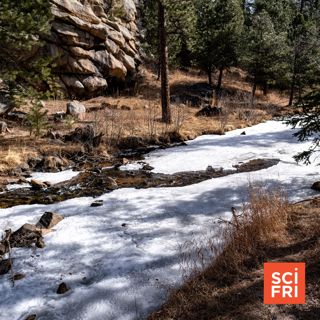
Colorado’s snow drought deals a major blow to recreation

Colorado’s snow drought deals a major blow to recreation

Winter in Colorado looked very different this year. Many parts of the state experienced record-high temperatures and record-low snowpack, which had downstream effects on farming, sports, tourism, and ...

17 Elo 11min
How do you find a ‘lost’ species?

How do you find a ‘lost’ species?

The earth is facing a biodiversity crisis, and there’s a lot of attention on species that are threatened, or at risk of dying out completely. But, there’s another critter category that’s a little more...

14 Elo 18min

What we get wrong about vaccine hesitancy

What we get wrong about vaccine hesitancy

President Trump has signed an executive order calling for a change to the childhood vaccination schedule. Specifically, he wants to separate the MMR vaccine, which protects against measles, mumps, and...

13 Elo 12min

Why this lab studies the speed of bug pee and other curiosities

Why this lab studies the speed of bug pee and other curiosities

In a lab in the Rocky Mountains, a group of scientists is hard at work trying to find answers across biology, physics, and engineering: They’re looking into things like the hydrodynamics of insect pee...

12 Elo 18min

Some primates undergo even more extreme childbirth than humans

Some primates undergo even more extreme childbirth than humans

Human childbirth is often difficult and incredibly painful—just ask anyone who’s been through it. And for a long time, childbirth seemed to be uniquely difficult for humans. But a new study suggests t...

11 Elo 11min
Deb Haaland is a politician, and proud of it

Deb Haaland is a politician, and proud of it

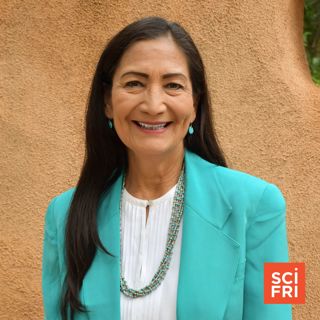
Former Interior Secretary Deb Haaland, a member of the Laguna Pueblo tribe, was the first Native person to hold a cabinet position. Now she’s running to be governor of New Mexico.  Haaland joins Host ...

10 Elo 17min

Suosittua kategoriassa Tiede

rss-poliisin-mieli
tiedekulma-podcast
rss-mita-tulisi-tietaa
utelias-mieli
rss-duodecim-lehti
rss-tiedetta-vai-tarinaa
rss-ammamafia
rss-astetta-parempi-elama-podcast
rss-tervetta-skeptisyytta
rss-kasvikutsut
rss-radplus
mielipaivakirja
rss-bios-podcast
rss-ranskaa-raakana
rss-luontopodi-samuel-glassar-tutkii-luonnon-ihmeita
rss-ylistys-elaimille