History Of Sex, Plastic Battery, Mosquito Smell, Postpartum Art. June 3, 2022, Part 1
Science Friday3 Kesä 2022

History Of Sex, Plastic Battery, Mosquito Smell, Postpartum Art. June 3, 2022, Part 1

Scientists Found The Biggest Known Plant On Earth

This week, an underwater seagrass meadow claimed the title for the world’s largest plant. This organism sprawls across 77 square miles of shallow ocean and has survived 4,500 years. To accomplish this, it kept cloning itself and created identical offshoots to spread along the sand. The ocean has changed wildly over the last 4,500 years, yet this plant has survived.

Researchers believe that cloning itself may have helped the plant adapt to a changing ocean, offering hope that seagrass meadows may be more resilient than expected in the face of climate change.

Sophie Bushwick, a technology editor at Scientific American, joins Ira to talk about how this mighty meadow persisted for millennia and what it tells scientists about climate change.

Sophie and Ira also discuss other stories from this week in science, including what countries are most responsible for fueling the extinction of wildlife, what a well-preserved fossil tell us about the sex lives of ancient trilobites, why male mice are terrified of bananas, the creation of a flea-sized robot that walks like a crab, and how scientists developed an algorithm to pinpoint the whereabouts of unknown asteroids.

Building A Better Battery… Using Plastic?

The lithium-ion battery in your cell phone, laptop, or electric car is a crucial component of the modern world. These batteries can charge quickly, and pack a lot of power into a small space. But they’re also expensive, require mining scarce lithium, and need to be handled carefully.

Other battery technologies have issues as well. For example, the heavy lead-acid battery that starts your car is quite reliable—but lead has its own environmental and health costs. That’s why PolyJoule, a startup company based near Boston, is trying to create a new kind of battery, somewhere on the performance curve between those old lead-acid batteries and lithium-ion cells. Their technology relies not on a metal, but on polymer plastics.

Read more at sciencefriday.com.

Bug Off: Why Mosquitoes Have An Annoyingly Amazing Sense Of Smell

Mosquitoes use their sense of smell to find their next meal: us. So what would happen if you tweaked their smell so that humans smell really gross to them?

That’s what Dr. Chris Potter and his lab recently tried to do—they changed the neurons responsible for the insect’s smell detection, so that in the presence of animal odors, their olfactory systems would be overwhelmed. Instead of smelling like a nice meal, mosquitoes would be repelled by the scent of humans, like if you were stuck in a small room with someone wearing too much cologne.

This method worked in Drosophila, the common fruit fly, so Potter and his team were hopeful that would also be the case for mosquitoes. Instead, the experiment didn’t go as planned. Because finding a blood meal is so important for mosquitoes, those little buggers evolved backups for their backup receptors. When Potter turned one pathway off, another one kicked in.

Ira talks with Dr. Chris Potter, an associate professor of neuroscience in the Johns Hopkins University School of Medicine, based in Baltimore, Maryland, about his findings, and why we can never quite get mosquitoes to bug off.

So You Think You Know About Sex

When it comes to sex, there’s really no such thing as normal. What was once considered taboo, sometimes goes mainstream. And some things considered new have been around as long as sex itself, like birth control, abortion, and sexually transmitted infections.

All that and more is contained in the new book, Been There, Done That: A Rousing History of Sex, by Rachel Feltman, executive editor of Popular Science, based in New York City.

Radio producer Shoshannah Buxbaum talks with author Rachel Feltman about queer animals, crocodile dung contraception, ancient STIs, what led to the United States’ original abortion ban, and more.

Processing Postpartum With AI And Synthetic Breast Milk Art

One of Ani Liu’s strengths as an artist is her ability to process emotion through different scientific mediums: machine learning, chemistry, 3D-printing. The result is often visceral: she’s used organic chemistry to concoct perfumes that smell like people emotionally close to her and engineered a device that enables the wearer to control the direction of swimming sperm with their mind.

And at her new exhibition—next to a 3D-printed sculpture of a pig’s uterus—lies 328 feet of clear tubing with a milky-white substance pumped through it, a commentary on pumping breast milk as a new parent. “I wanted to use my own breast milk, but it wouldn’t be stable for the duration of the show,” she said.

Liu became a parent shortly before the pandemic, and she channeled that experience into a new show called “Ecologies of Care,” to process her postpartum period and the communities in her life that helped her through that time.

“I hope that this can allow new parents to bond and maybe feel less lonely,” she said. “In making it, I was questioning how do we create better communities of care? I made all of this work before the formula shortage, before our reproductive rights were even more under threat. When I look at this, I’m hoping that you see this particular slice of love and labor.”

Transcripts for each segment will be available the week after the show airs on sciencefriday.com.

Subscribe to this podcast. Follow our show on Instagram, TikTok, Facebook, and Bluesky @scifri and sign up for our newsletters. Got a science question that’s keeping you up at night? Call us: 877-472-4374


Hosted by Simplecast, an AdsWizz company. See pcm.adswizz.com for information about our collection and use of personal data for advertising.

Tämä jakso on lisätty Podme-palveluun avoimen RSS-syötteen kautta eikä se ole Podmen omaa tuotantoa. Siksi jakso saattaa sisältää mainontaa.

Jaksot(1383)

Making a case for physicists to join climate research

Making a case for physicists to join climate research

When you think of physics, your mind might go to forces—like gravity, friction, and magnetism—or to astrophysics, like galaxies and exoplanets. But many of the same principles used to understand how t...

20 Elo 12min
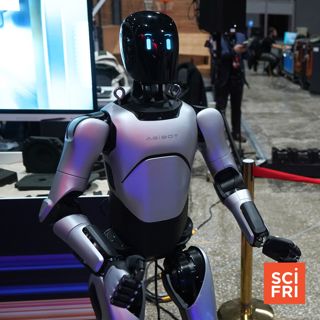
Creating 'world models' for robots + An AI math shakeup

Creating 'world models' for robots + An AI math shakeup

When you ask an LLM like ChatGPT or Claude a question, the model goes through its massive amount of training data and guesses the answer by mathematically predicting the word most likely to appear nex...

19 Elo 17min

What can moments of lucidity teach us about Alzheimer’s?

What can moments of lucidity teach us about Alzheimer’s?

Watching a loved one with Alzheimer's or dementia slowly lose their cognitive abilities can be heartbreaking. While the person you once knew seems to be slipping away, sometimes people with Alzheimer'...

18 Elo 17min

Colorado’s snow drought deals a major blow to recreation

Colorado’s snow drought deals a major blow to recreation

Winter in Colorado looked very different this year. Many parts of the state experienced record-high temperatures and record-low snowpack, which had downstream effects on farming, sports, tourism, and ...

17 Elo 11min
How do you find a ‘lost’ species?

How do you find a ‘lost’ species?

The earth is facing a biodiversity crisis, and there’s a lot of attention on species that are threatened, or at risk of dying out completely. But, there’s another critter category that’s a little more...

14 Elo 18min
What we get wrong about vaccine hesitancy

What we get wrong about vaccine hesitancy

President Trump has signed an executive order calling for a change to the childhood vaccination schedule. Specifically, he wants to separate the MMR vaccine, which protects against measles, mumps, and...

13 Elo 12min

Why this lab studies the speed of bug pee and other curiosities

Why this lab studies the speed of bug pee and other curiosities

In a lab in the Rocky Mountains, a group of scientists is hard at work trying to find answers across biology, physics, and engineering: They’re looking into things like the hydrodynamics of insect pee...

12 Elo 18min
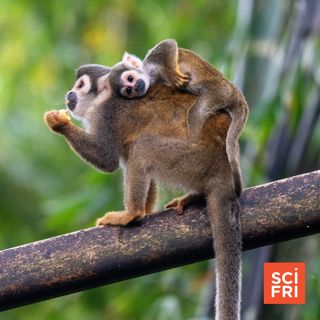
Some primates undergo even more extreme childbirth than humans

Some primates undergo even more extreme childbirth than humans

Human childbirth is often difficult and incredibly painful—just ask anyone who’s been through it. And for a long time, childbirth seemed to be uniquely difficult for humans. But a new study suggests t...

11 Elo 11min

Suosittua kategoriassa Tiede

rss-poliisin-mieli
tiedekulma-podcast
rss-mita-tulisi-tietaa
utelias-mieli
rss-duodecim-lehti
rss-tiedetta-vai-tarinaa
rss-ammamafia
rss-astetta-parempi-elama-podcast
rss-tervetta-skeptisyytta
rss-kasvikutsut
rss-radplus
mielipaivakirja
rss-bios-podcast
rss-ranskaa-raakana
rss-luontopodi-samuel-glassar-tutkii-luonnon-ihmeita
rss-ylistys-elaimille