Radioactive Wildlife, Bus Stop Heat, Football Jersey Numbers. Sept 15, 2023, Part 1
Science Friday15 Syys 2023

Radioactive Wildlife, Bus Stop Heat, Football Jersey Numbers. Sept 15, 2023, Part 1

Astronomers Find Exoplanet That May Be Covered In Water

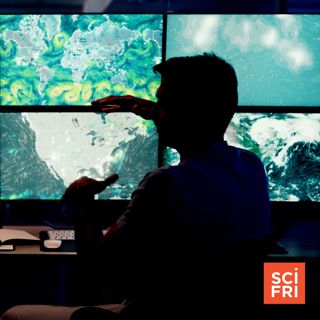
Scientists using the James Webb Space Telescope made an exciting discovery this week: Exoplanet K2-18 b, 120 light years away from our solar system, could be covered by a water ocean, similar to Earth. Astronomers say this could be a big leap in our exploration of life on other planets.

This news comes amid another JWST discovery: The earliest black holes seem to be much larger than black holes today. This news also provides evidence that black holes can form without stars, a theorized phenomenon that has never been directly observed.

Joining Ira to talk about these and other science stories of the week is Tim Revell, Deputy U.S. Editor of New Scientist, based in New York, New York.

What Radioactive Animals Teach Us About Nuclear Fallout

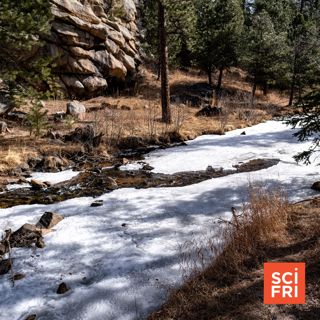
When you hear the words “radioactive wildlife,” your brain probably jumps to Chernobyl’s wolves, which—despite the odds—are still thriving at the site of the nuclear disaster. Or maybe you’ve heard of the rat snakes in Fukushima that pick up radioactive contamination as they slither around.

Well, it’s time to add two more to that list of radioactive critters: turtles and wild boar. They’re the subjects of two new studies that looked at radioactivity in wildlife and mapped out where it came from.

Ira talks with Dr. Cyler Conrad, archaeologist at Pacific Northwest National Lab in Richland, Washington who worked on the turtle study, and Dr. Georg Steinhauser, professor of applied radiochemistry at the Vienna University of Technology in Austria, who studied boar. They chat about the two studies, how wildlife can clue us into radioactive contamination, and what we can learn from critters in nuclear fallout zones.

Waiting for the Bus in Houston is Hot. And Dangerous.

It was a hot summer day and Glory Medina and her daughter Jade, who was 3 at the time, were running a quick errand at the grocery store near their apartment in Gulfton. They had taken the bus and once they arrived, the two of them faced a giant unshaded parking lot, the black asphalt radiating heat into their faces as they walked across it.

The blast of AC felt cool as they entered the store, and Medina bent down to lift her daughter into the grocery cart. That’s when she noticed Jade’s face was red, almost purple.

“I got scared,” Medina said in Spanish, remembering that day four years ago.

Read more at sciencefriday.com.

The Psychology Behind Wide Receivers’ Jersey Numbers

Football season is officially here, with the NFL’s first game kicking off last Sunday. And if you’ve been watching the sport for a long time, you may have noticed some changes: better-padded helmets meant to reduce serious brain injury, new “sticky” gloves that make it easier for players to hold the ball, and lighter-weight jerseys that make it harder for other players to grab onto. But you’ll also notice the numbers on those jerseys are different, too.

For most of the NFL’s history, wide receivers could only pick jersey numbers between 80 and 89. But in 2004, the league relaxed this policy, allowing players to also pick numbers between 10 and 19. Many players preferred these smaller values explaining that the 1 looked slimmer than the 8, and made them feel thinner and faster. As of 2019, 80% of wide receivers made the switch.

But is there an actual association between smaller numbers and perception of body size?

To investigate whether this was fact or superstition, Dr. Ladan Shams, professor of psychology, bioengineering, and neuroscience at UCLA, ran a study that found those wide receivers were onto something: the results suggest there is a correlation between smaller numbers and perceived body size. Her team’s research was published in PLOS One. She joins Ira to talk about the study and what it could tell us about implicit bias.

To stay updated on all-things-science, sign up for Science Friday's newsletters.

Transcripts for each segment will be available the week after the show airs on sciencefriday.com.

Subscribe to this podcast. Follow our show on Instagram, TikTok, Facebook, and Bluesky @scifri and sign up for our newsletters. Got a science question that’s keeping you up at night? Call us: 877-472-4374


Hosted by Simplecast, an AdsWizz company. See pcm.adswizz.com for information about our collection and use of personal data for advertising.

Tämä jakso on lisätty Podme-palveluun avoimen RSS-syötteen kautta eikä se ole Podmen omaa tuotantoa. Siksi jakso saattaa sisältää mainontaa.

Jaksot(1342)

That chlorine smell at the pool? It’s pee

That chlorine smell at the pool? It’s pee

On a hot summer day, there’s nothing better than a dip in a cold pool. But you know who can ruin that for you? A scientist who studies pool chemistry. What chemical reactions are happening in that swi...

25 Kesä 12min

Under proposed rule, science funding must pass political review

Under proposed rule, science funding must pass political review

The federal Office of Management and Budget (OMB) has proposed rule changes that would bring a major shift in how scientific grants are awarded by U.S. government agencies. Under the current process, ...

24 Kesä 12min

Can you learn to love the scorpion?

Can you learn to love the scorpion?

If you have arachnophobia, consider this your opportunity to try exposure therapy: A new study suggests that 415 million years ago, in modern-day England and Wales, a scorpion the length of a golden r...

23 Kesä 18min

FDA approves a well-known sunscreen ingredient—finally

FDA approves a well-known sunscreen ingredient—finally

The FDA recently approved a sunscreen ingredient called bemotrizinol, or BEMT, that’s been used in Europe and Asia for years. This is the first new sunscreen ingredient approved in the United States i...

22 Kesä 12min

Why do sports announcers talk like that?

Why do sports announcers talk like that?

If you watch sports, whether the recent NBA finals or the ongoing World Cup matches, you may have noticed that the athletes aren’t the only ones putting on a show. The announcers seem to be playing a ...

19 Kesä 13min

Swords, cannibalism, poison: inside the world of killer microbes

Swords, cannibalism, poison: inside the world of killer microbes

There is a murderous crime spree happening right under—and perhaps inside—our noses. Killer microbes armed with weapons are eviscerating, assassinating, and detonating their fellow microbes. And the n...

18 Kesä 21min

When music transports you to a different place

When music transports you to a different place

Do you ever hear a song that transports you to a specific place and time? This auditory wormhole has a name: musical daydreams. Music cognition expert Elizabeth Margulis studies why they happen, and w...

17 Kesä 18min

A vast whale graveyard + Zombie sea cucumbers

A vast whale graveyard + Zombie sea cucumbers

Researchers just published details of a massive undersea graveyard of whales deep in the Indian Ocean. Spanning about 1,200 kilometers (745 miles), it contains whale remains dating back more than 5 mi...

16 Kesä 18min

Suosittua kategoriassa Tiede

rss-mita-tulisi-tietaa
rss-hereilla
utelias-mieli
tiedekulma-podcast
hippokrateen-vastaanotolla
rss-duodecim-lehti
rss-astetta-parempi-elama-podcast
rss-lihavuudesta-podcast
university-of-eastern-finland
ihanat-ipanat
docemilia
rss-poliisin-mieli
rss-laakaripodi
rss-alycast-alykasta-laakehoitoa-yksilollisesti
rss-totuuden-liepeilla