Rapidly Evolving Trout & Ancient Hyper-Apex Predators
Science Friday24 Loka 2023

Rapidly Evolving Trout & Ancient Hyper-Apex Predators

Research shows some rapidly evolving trout are altering Wyoming's aquatic ecosystems. Plus, paleontologists pieced together a level of apex predators with no modern equivalent.

In Wyoming’s Mountain Lakes, Stocked Trout Are Evolving Quickly

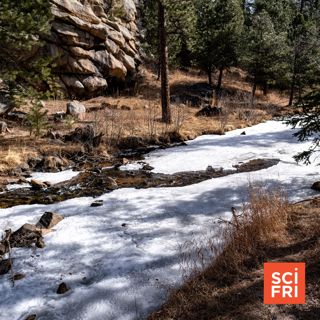
Anglers across the West love to fish in high, alpine lakes, and Wyoming’s Wind River Range is nearly unbeatable for this experience. Around this time of year, frost covers the tips of trees at sunrise, and there’s plenty of room along the lonesome blue waters above 10,000 feet.

Those who do make the trek—which usually takes more than 15 miles of hiking—are greeted by hungry golden, brook or cutthroat trout looking to fatten up for the winter. They’ll take almost any fly, from a yellow foam grasshopper, to a Parachute Adams to a tiny ant. And the fish are often big, colorful and photogenic.

But as untamed, historic and relaxing as a day on the water feels, it’s anything but natural. New research is shedding light on how the history of fish stocking has impacted alpine lake ecosystems in the Wind Rivers. In many cases, the genetics of trout have evolved rapidly, allowing them to survive in harsh mountain environments.

Read the rest at sciencefriday.com.

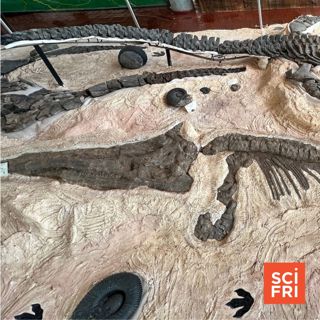
Hyper-Apex Predators: Colombian Fossils Reveal Big Reptilians Atop Ancient Marine Food Chain

The Paja Formation, located in central Colombia, is a treasure trove of fossils. The site is integral to scientists’ understanding of ancient creatures who roamed the seas during the Early Cretaceous period, about 130 million years ago.

Now, paleontologists have pieced together the food chain of this marine ecosystem. Surprisingly, they found it supported an additional level of apex predators—think massive marine reptiles—for which there is no modern equivalent.

SciFri producer Kathleen Davis talks with Dirley Cortés, paleontologist at the Centro de Investigaciones Paleontológicas in Colombia and PhD candidate at McGill University’s Redpath Museum, and Dr. Hans Larsson, paleontologist and professor at McGill University’s Redpath Museum. They discuss their fascinating findings, and the importance of better understanding this part of the fossil record.

To stay updated on all things science, sign up for Science Friday's newsletters. Transcripts for each segment will be available the week after the show airs on sciencefriday.com.

Subscribe to this podcast. Follow our show on Instagram, TikTok, Facebook, and Bluesky @scifri and sign up for our newsletters. Got a science question that’s keeping you up at night? Call us: 877-472-4374


Hosted by Simplecast, an AdsWizz company. See pcm.adswizz.com for information about our collection and use of personal data for advertising.

Tämä jakso on lisätty Podme-palveluun avoimen RSS-syötteen kautta eikä se ole Podmen omaa tuotantoa. Siksi jakso saattaa sisältää mainontaa.

Jaksot(1342)

That chlorine smell at the pool? It’s pee

That chlorine smell at the pool? It’s pee

On a hot summer day, there’s nothing better than a dip in a cold pool. But you know who can ruin that for you? A scientist who studies pool chemistry. What chemical reactions are happening in that swi...

25 Kesä 12min

Under proposed rule, science funding must pass political review

Under proposed rule, science funding must pass political review

The federal Office of Management and Budget (OMB) has proposed rule changes that would bring a major shift in how scientific grants are awarded by U.S. government agencies. Under the current process, ...

24 Kesä 12min

Can you learn to love the scorpion?

Can you learn to love the scorpion?

If you have arachnophobia, consider this your opportunity to try exposure therapy: A new study suggests that 415 million years ago, in modern-day England and Wales, a scorpion the length of a golden r...

23 Kesä 18min

FDA approves a well-known sunscreen ingredient—finally

FDA approves a well-known sunscreen ingredient—finally

The FDA recently approved a sunscreen ingredient called bemotrizinol, or BEMT, that’s been used in Europe and Asia for years. This is the first new sunscreen ingredient approved in the United States i...

22 Kesä 12min

Why do sports announcers talk like that?

Why do sports announcers talk like that?

If you watch sports, whether the recent NBA finals or the ongoing World Cup matches, you may have noticed that the athletes aren’t the only ones putting on a show. The announcers seem to be playing a ...

19 Kesä 13min

Swords, cannibalism, poison: inside the world of killer microbes

Swords, cannibalism, poison: inside the world of killer microbes

There is a murderous crime spree happening right under—and perhaps inside—our noses. Killer microbes armed with weapons are eviscerating, assassinating, and detonating their fellow microbes. And the n...

18 Kesä 21min

When music transports you to a different place

When music transports you to a different place

Do you ever hear a song that transports you to a specific place and time? This auditory wormhole has a name: musical daydreams. Music cognition expert Elizabeth Margulis studies why they happen, and w...

17 Kesä 18min

A vast whale graveyard + Zombie sea cucumbers

A vast whale graveyard + Zombie sea cucumbers

Researchers just published details of a massive undersea graveyard of whales deep in the Indian Ocean. Spanning about 1,200 kilometers (745 miles), it contains whale remains dating back more than 5 mi...

16 Kesä 18min

Suosittua kategoriassa Tiede

rss-mita-tulisi-tietaa
rss-hereilla
utelias-mieli
tiedekulma-podcast
hippokrateen-vastaanotolla
rss-duodecim-lehti
rss-astetta-parempi-elama-podcast
rss-lihavuudesta-podcast
university-of-eastern-finland
ihanat-ipanat
docemilia
rss-poliisin-mieli
rss-laakaripodi
rss-alycast-alykasta-laakehoitoa-yksilollisesti
rss-totuuden-liepeilla