The Unseen World Of Seaweeds | Should 'Dark Fungi' Species Get Names?
Science Friday27 Joulu 2023

The Unseen World Of Seaweeds | Should 'Dark Fungi' Species Get Names?

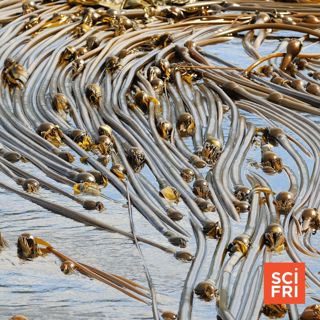
The Unseen World Of Seaweeds

Chances are you don’t give much thought to seaweed unless you’re at the beach, or perhaps when you’re considering a dinner menu. But the thousands of seaweed species around the world are a key part of our coastal ecosystems.

Seaweeds photosynthesize, provide food and shelter for marine animals, stabilize the coastlines, and even contribute to making your ice cream creamier (through an ingredient called carrageenans, extracted from red seaweeds in the Rhodophyceae family). Increasingly, they’re also being investigated as a source of biofuels and as biological factories, due to their fast-growing nature.

Dr. John Bothwell, a phycologist at Durham University in the UK, has written a book in praise of seaweeds. In Seaweeds of the World: A Guide To Every Order, he highlights beautiful, unusual, and important species from each of the three seaweed lineages—green, red, and brown. In this segment, he talks with SciFri’s Charles Bergquist about some of his favorite species, where the seaweeds fit into the web of life, and the importance of seaweeds to the global ecosystem.

“Dark Fungi” Species Don’t Get Names. Should They?

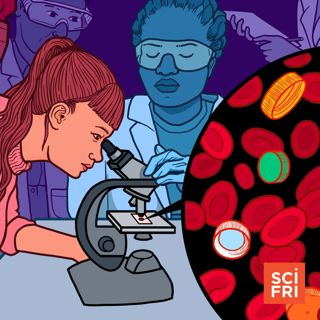
Scientists have collected DNA samples of thousands of new fungus species over the past several decades. These fragments of fungal DNA are found nearly everywhere—in soil, decomposing logs, water, and even in the air. Mycologists have enough data to place these new species within the fungal family tree, but haven’t collected physical samples of them or been able to grow them in a lab. This means that according to the International Code of Nomenclature for algae, fungi, and plants, these new species cannot receive scientific names.

How can you understand a fungus that has no name? SciFri producer Shoshannah Buxbaum talks with fungal taxonomist Dr. David Hibbett, professor of biology at Clark University, about a proposal to give these “dark fungi” scientific names, and why naming living things might help us better protect the Earth’s biodiversity.

Transcripts for each segment will be available the week after the show airs on sciencefriday.com.

Subscribe to this podcast. Follow our show on Instagram, TikTok, Facebook, and Bluesky @scifri and sign up for our newsletters. Got a science question that’s keeping you up at night? Call us: 877-472-4374


Hosted by Simplecast, an AdsWizz company. See pcm.adswizz.com for information about our collection and use of personal data for advertising.

Tämä jakso on lisätty Podme-palveluun avoimen RSS-syötteen kautta eikä se ole Podmen omaa tuotantoa. Siksi jakso saattaa sisältää mainontaa.

Jaksot(1340)

Can you learn to love the scorpion?

Can you learn to love the scorpion?

If you have arachnophobia, consider this your opportunity to try exposure therapy: A new study suggests that 415 million years ago, in modern-day England and Wales, a scorpion the length of a golden r...

23 Kesä 18min

FDA approves a well-known sunscreen ingredient—finally

FDA approves a well-known sunscreen ingredient—finally

The FDA recently approved a sunscreen ingredient called bemotrizinol, or BEMT, that’s been used in Europe and Asia for years. This is the first new sunscreen ingredient approved in the United States i...

22 Kesä 12min

Why do sports announcers talk like that?

Why do sports announcers talk like that?

If you watch sports, whether the recent NBA finals or the ongoing World Cup matches, you may have noticed that the athletes aren’t the only ones putting on a show. The announcers seem to be playing a ...

19 Kesä 13min

Swords, cannibalism, poison: inside the world of killer microbes

Swords, cannibalism, poison: inside the world of killer microbes

There is a murderous crime spree happening right under—and perhaps inside—our noses. Killer microbes armed with weapons are eviscerating, assassinating, and detonating their fellow microbes. And the n...

18 Kesä 21min

When music transports you to a different place

When music transports you to a different place

Do you ever hear a song that transports you to a specific place and time? This auditory wormhole has a name: musical daydreams. Music cognition expert Elizabeth Margulis studies why they happen, and w...

17 Kesä 18min

A vast whale graveyard + Zombie sea cucumbers

A vast whale graveyard + Zombie sea cucumbers

Researchers just published details of a massive undersea graveyard of whales deep in the Indian Ocean. Spanning about 1,200 kilometers (745 miles), it contains whale remains dating back more than 5 mi...

16 Kesä 18min

Should we bring mountain lions back to the Northeast?

Should we bring mountain lions back to the Northeast?

Big cats used to roam the entire United States. You might know them as mountain lions, pumas, cougars, or catamounts. Though they go by many names, they're actually all the same species.  Their curren...

15 Kesä 12min

Blue Origin explosion hits NASA timeline + Artemis III crew

Blue Origin explosion hits NASA timeline + Artemis III crew

When Blue Origin’s New Glenn spacecraft exploded in an enormous fireball during a ground test a couple weeks ago, it sent shockwaves not only through the air, but through NASA’s timeline for the upcom...

12 Kesä 12min

Suosittua kategoriassa Tiede

rss-mita-tulisi-tietaa
rss-hereilla
rss-lihavuudesta-podcast
utelias-mieli
rss-poliisin-mieli
rss-duodecim-lehti
rss-laakaripodi
rss-totuuden-liepeilla
tiedekulma-podcast
ihanat-ipanat
sotataidon-ytimessa
rss-astetta-parempi-elama-podcast
rss-tiedetta-vai-tarinaa
rss-alycast-alykasta-laakehoitoa-yksilollisesti