Triple Feature: Dune, Mars, And An Alien On Earth
Science Friday11 Maalis 2024

Triple Feature: Dune, Mars, And An Alien On Earth

Could A Planet Like Arrakis From ‘Dune’ Exist?

“Dune: Part II” is one of the year’s most highly anticipated films, and it picks up where the first film left off: with Paul Atreides escaping into the desert on the planet Arrakis. It’s a scorching-hot world that’s covered in dunes, and home to giant, deadly sandworms.

Obviously “Dune” and its setting are fictional, but could there be a real planet that resembles Arrakis? And if so, could it sustain life?

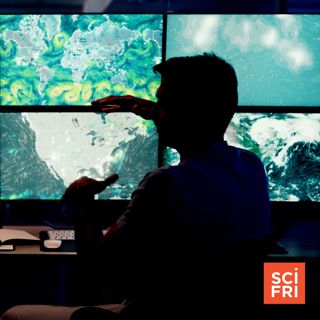
Ira talks with Dr. Mike Wong, astrobiologist and planetary scientist at the Carnegie Institution for Science, about what Arrakis’ atmosphere is like, the search for life in the universe, and what sci-fi films get wrong—and right—about alien planets.

Preparing Astronauts For The Loneliness Of A Mars Mission

NASA is preparing to send humans to Mars. Although the launch date has been pushed back over the years, the agency says it wants to get there in the 2030s. And it has a lot on its to-do list. NASA needs to build new rockets, new habitable living spaces, new spacesuits, and new radiation shielding, just to name a few items.

But what if the one of the biggest challenges of these missions is not the engineering, but the mental health of the astronauts? Can all of the crew members get along with each other and stay alive over the course of three years in tight quarters and unforgiving environments? How will they cope with being separated from their families and friends for so long? And what lessons can they learn from astronauts who’ve lived on the International Space Station—and from our collective experience of isolation during the pandemic?

A new documentary, out March 8, explores all these questions and more. It’s called "The Longest Goodbye," and it dives into NASA’s Human Factors program, which includes a group of psychologists who are trying to figure out the best way to preserve astronauts’ mental health on a long and demanding mission.

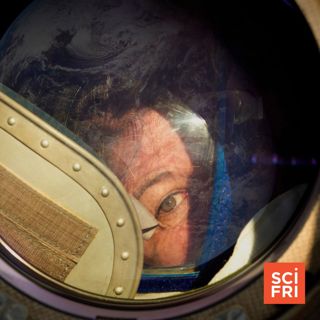
SciFri producer and host of Universe Of Art, D. Peterschmidt, spoke to the film’s director, Ido Mizrahy, and one of its featured astronauts, Dr. Cady Coleman, about how NASA is thinking about tackling loneliness in space and what we can learn from astronauts who’ve already lived on the space station.

Should The Aliens In “65” Have Known About Earth’s Dinos?

Some science fiction movies, like “Alien,” are instant classics. A good sci-fi movie weaves together themes of science and technology with a gripping narrative structure to create a memorable story that leaves the viewer with something to think about. But some (many) sci-fi movies leave the viewer with one thought: “Huh?”

The 2023 movie “65” is in some ways a reversal of “Alien.” Instead of humans coming to an alien world and getting attacked by aliens, in “65,” an alien that existed 65 million years ago crash lands on Earth and gets attacked by dinosaurs. Oh, and the alien is Adam Driver. What’s not to get?

Sometimes, calling in a real-life scientist is the best way to wrap your head around science fiction. Dr. Lisa Kaltenegger, an astrobiologist at Cornell University, says that if there were advanced extraterrestrials near Earth during the age of the dinosaurs, our planet’s life should have been no mystery to them. That’s because around 300 million years ago, Earth’s atmosphere had abundant oxygen and methane, two of the building blocks of life. Kaltenegger’s own research has shown how Earth’s atmosphere during that period would have been visible through a telescope—and indicated an even stronger potential for life than Earth’s atmosphere today. She also saw “65” on a plane.

Based on Kaltenegger’s research, should Adam Driver have seen those dinosaurs coming? In an interview with Digital Producer Emma Gometz, she shares how telescopes can spot exoplanet atmospheres, why Jurassic Earth’s atmosphere was special, and a few of her thoughts on “65.”

Transcripts for each segment will be available after the show airs on sciencefriday.com.

Subscribe to this podcast. Follow our show on Instagram, TikTok, Facebook, and Bluesky @scifri and sign up for our newsletters. Got a science question that’s keeping you up at night? Call us: 877-472-4374


Hosted by Simplecast, an AdsWizz company. See pcm.adswizz.com for information about our collection and use of personal data for advertising.

Tämä jakso on lisätty Podme-palveluun avoimen RSS-syötteen kautta eikä se ole Podmen omaa tuotantoa. Siksi jakso saattaa sisältää mainontaa.

Jaksot(1340)

Can you learn to love the scorpion?

Can you learn to love the scorpion?

If you have arachnophobia, consider this your opportunity to try exposure therapy: A new study suggests that 415 million years ago, in modern-day England and Wales, a scorpion the length of a golden r...

23 Kesä 18min

FDA approves a well-known sunscreen ingredient—finally

FDA approves a well-known sunscreen ingredient—finally

The FDA recently approved a sunscreen ingredient called bemotrizinol, or BEMT, that’s been used in Europe and Asia for years. This is the first new sunscreen ingredient approved in the United States i...

22 Kesä 12min

Why do sports announcers talk like that?

Why do sports announcers talk like that?

If you watch sports, whether the recent NBA finals or the ongoing World Cup matches, you may have noticed that the athletes aren’t the only ones putting on a show. The announcers seem to be playing a ...

19 Kesä 13min

Swords, cannibalism, poison: inside the world of killer microbes

Swords, cannibalism, poison: inside the world of killer microbes

There is a murderous crime spree happening right under—and perhaps inside—our noses. Killer microbes armed with weapons are eviscerating, assassinating, and detonating their fellow microbes. And the n...

18 Kesä 21min

When music transports you to a different place

When music transports you to a different place

Do you ever hear a song that transports you to a specific place and time? This auditory wormhole has a name: musical daydreams. Music cognition expert Elizabeth Margulis studies why they happen, and w...

17 Kesä 18min

A vast whale graveyard + Zombie sea cucumbers

A vast whale graveyard + Zombie sea cucumbers

Researchers just published details of a massive undersea graveyard of whales deep in the Indian Ocean. Spanning about 1,200 kilometers (745 miles), it contains whale remains dating back more than 5 mi...

16 Kesä 18min

Should we bring mountain lions back to the Northeast?

Should we bring mountain lions back to the Northeast?

Big cats used to roam the entire United States. You might know them as mountain lions, pumas, cougars, or catamounts. Though they go by many names, they're actually all the same species.  Their curren...

15 Kesä 12min

Blue Origin explosion hits NASA timeline + Artemis III crew

Blue Origin explosion hits NASA timeline + Artemis III crew

When Blue Origin’s New Glenn spacecraft exploded in an enormous fireball during a ground test a couple weeks ago, it sent shockwaves not only through the air, but through NASA’s timeline for the upcom...

12 Kesä 12min

Suosittua kategoriassa Tiede

rss-mita-tulisi-tietaa
rss-hereilla
rss-lihavuudesta-podcast
utelias-mieli
rss-poliisin-mieli
rss-duodecim-lehti
rss-laakaripodi
rss-totuuden-liepeilla
tiedekulma-podcast
ihanat-ipanat
sotataidon-ytimessa
rss-astetta-parempi-elama-podcast
rss-tiedetta-vai-tarinaa
rss-alycast-alykasta-laakehoitoa-yksilollisesti