‘3 Body Problem’ And The Laws Of Physics | In Defense Of ‘Out Of Place’ Plants
Science Friday1 Huhti 2024

‘3 Body Problem’ And The Laws Of Physics | In Defense Of ‘Out Of Place’ Plants

Particle accelerators, nanofibers, and solar physics: The science advisor for the Netflix adaptation breaks down the physics in the show. Also, in her new book, Jessica J. Lee looks at how humans have moved plants around the globe–and how our migrations are intertwined with theirs.

How ‘3 Body Problem’ Explores The Laws Of Physics

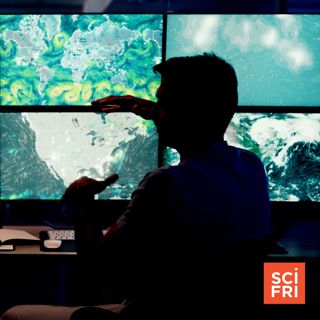
Last week, Netflix released its adaptation of the Hugo Award-winning sci-fi book The 3 Body Problem by Cixin Liu. It follows the journey of several scientists, from the Chinese Cultural Revolution to the present day, as they seek to understand why their fellow researchers are dying and why their scientific results no longer make sense. Along the way, they discover an ultra-advanced VR game and a dark secret that suggests we might not be alone in the universe.

Guest host Arielle Duhaime-Ross sits down with the show’s science advisor, Dr. Matt Kenzie, an associate professor of physics at the University of Cambridge, to talk about what exactly the three body problem is, why he gave the actors physics lessons, and what he hopes audiences take away from a show focused on scientists.

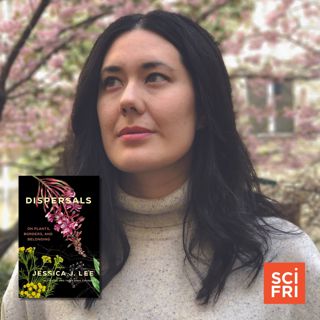
In Defense Of ‘Out Of Place’ Plants

The new book Dispersals: On Plants, Borders, and Belonging unpacks how we think about the migrations of both plants and humans, as well as how those ideas shape our perceptions of what we call “non-native” or “invasive” plants like giant hogweed or English ivy.

Dispersals traces the history of how we moved plants around—including cherry blossoms, mangoes, and soy—and asks: What does it mean to be a plant out of place? And how does the migration of plants mirror our own?

Guest host Arielle Duhaime-Ross talks with environmental historian and author Jessica J. Lee about Dispersals and what we can learn from the histories of plants.

Read an excerpt from Dispersals at sciencefriday.com.

Transcripts for each segment will be available after the show airs on sciencefriday.com.

Subscribe to this podcast. Follow our show on Instagram, TikTok, Facebook, and Bluesky @scifri and sign up for our newsletters. Got a science question that’s keeping you up at night? Call us: 877-472-4374


Hosted by Simplecast, an AdsWizz company. See pcm.adswizz.com for information about our collection and use of personal data for advertising.

Tämä jakso on lisätty Podme-palveluun avoimen RSS-syötteen kautta eikä se ole Podmen omaa tuotantoa. Siksi jakso saattaa sisältää mainontaa.

Jaksot(1340)

Can you learn to love the scorpion?

Can you learn to love the scorpion?

If you have arachnophobia, consider this your opportunity to try exposure therapy: A new study suggests that 415 million years ago, in modern-day England and Wales, a scorpion the length of a golden r...

23 Kesä 18min

FDA approves a well-known sunscreen ingredient—finally

FDA approves a well-known sunscreen ingredient—finally

The FDA recently approved a sunscreen ingredient called bemotrizinol, or BEMT, that’s been used in Europe and Asia for years. This is the first new sunscreen ingredient approved in the United States i...

22 Kesä 12min

Why do sports announcers talk like that?

Why do sports announcers talk like that?

If you watch sports, whether the recent NBA finals or the ongoing World Cup matches, you may have noticed that the athletes aren’t the only ones putting on a show. The announcers seem to be playing a ...

19 Kesä 13min

Swords, cannibalism, poison: inside the world of killer microbes

Swords, cannibalism, poison: inside the world of killer microbes

There is a murderous crime spree happening right under—and perhaps inside—our noses. Killer microbes armed with weapons are eviscerating, assassinating, and detonating their fellow microbes. And the n...

18 Kesä 21min

When music transports you to a different place

When music transports you to a different place

Do you ever hear a song that transports you to a specific place and time? This auditory wormhole has a name: musical daydreams. Music cognition expert Elizabeth Margulis studies why they happen, and w...

17 Kesä 18min

A vast whale graveyard + Zombie sea cucumbers

A vast whale graveyard + Zombie sea cucumbers

Researchers just published details of a massive undersea graveyard of whales deep in the Indian Ocean. Spanning about 1,200 kilometers (745 miles), it contains whale remains dating back more than 5 mi...

16 Kesä 18min

Should we bring mountain lions back to the Northeast?

Should we bring mountain lions back to the Northeast?

Big cats used to roam the entire United States. You might know them as mountain lions, pumas, cougars, or catamounts. Though they go by many names, they're actually all the same species.  Their curren...

15 Kesä 12min

Blue Origin explosion hits NASA timeline + Artemis III crew

Blue Origin explosion hits NASA timeline + Artemis III crew

When Blue Origin’s New Glenn spacecraft exploded in an enormous fireball during a ground test a couple weeks ago, it sent shockwaves not only through the air, but through NASA’s timeline for the upcom...

12 Kesä 12min

Suosittua kategoriassa Tiede

rss-mita-tulisi-tietaa
rss-hereilla
rss-lihavuudesta-podcast
utelias-mieli
rss-poliisin-mieli
rss-duodecim-lehti
rss-laakaripodi
rss-totuuden-liepeilla
tiedekulma-podcast
ihanat-ipanat
sotataidon-ytimessa
rss-astetta-parempi-elama-podcast
rss-tiedetta-vai-tarinaa
rss-alycast-alykasta-laakehoitoa-yksilollisesti