Our Inevitable Cosmic Apocalypse
Science Friday4 Huhti 2024

Our Inevitable Cosmic Apocalypse

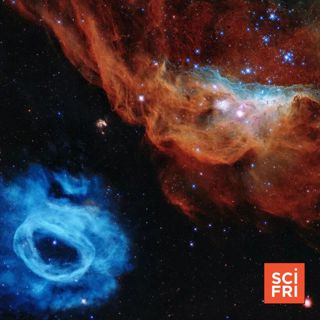
When it comes to the eventual end of our universe, cosmologists have a few classic theories: the Big Crunch, where the universe reverses its expansion and contracts again, setting the stars themselves on fire in the process. Or the Big Rip, where the universe expands forever—but in a fundamentally unstable way that tears matter itself apart. Or it might be heat death, in which matter and energy become equally distributed in a cold, eventless soup.

These theories have continued to evolve as we gain new understandings from particle accelerators and astronomical observations. As our understanding of fundamental physics advances, new ideas about the ending are joining the list. Take vacuum decay, a theory that’s been around since the 1970s, but which gained new support when CERN confirmed detection of the Higgs Boson particle. The nice thing about vacuum decay, writes cosmologist Dr. Katie Mack in her book The End of Everything: (Astrophysically Speaking), is that it could happen at any time, and would be almost instantaneous—painless, efficient.

The End Of Everything is our SciFri Book Club pick for April—you can join in on the community conversation and maybe even win a free book on our book club page. In this interview from 2020, Mack joins Ira to talk about the diversity of universe-ending theories, and how cosmologists like her think about the big questions, like where the universe started, how it might end, and what happens after it does.

Also, Nobel Prize-winning psychologist Dr. Daniel Kahneman died this week at the age of 90. His work turned many traditional ideas about economics upside-down, arguing that people often make bad decisions that go against their own self-interest. It’s something he continued to study throughout his career, and that he wrote about in the 2022 book Noise: A Flaw in Human Judgment. At the end of this segment, we revisit an interview from 2022 with Kahneman in remembrance of his long career studying cognitive biases.

Transcripts for each segment will be available after the show airs on sciencefriday.com.

Subscribe to this podcast. Follow our show on Instagram, TikTok, Facebook, and Bluesky @scifri and sign up for our newsletters. Got a science question that’s keeping you up at night? Call us: 877-472-4374


Hosted by Simplecast, an AdsWizz company. See pcm.adswizz.com for information about our collection and use of personal data for advertising.

Tämä jakso on lisätty Podme-palveluun avoimen RSS-syötteen kautta eikä se ole Podmen omaa tuotantoa. Siksi jakso saattaa sisältää mainontaa.

Jaksot(1383)

Making a case for physicists to join climate research

Making a case for physicists to join climate research

When you think of physics, your mind might go to forces—like gravity, friction, and magnetism—or to astrophysics, like galaxies and exoplanets. But many of the same principles used to understand how t...

20 Elo 12min
Creating 'world models' for robots + An AI math shakeup

Creating 'world models' for robots + An AI math shakeup

When you ask an LLM like ChatGPT or Claude a question, the model goes through its massive amount of training data and guesses the answer by mathematically predicting the word most likely to appear nex...

19 Elo 17min

What can moments of lucidity teach us about Alzheimer’s?

What can moments of lucidity teach us about Alzheimer’s?

Watching a loved one with Alzheimer's or dementia slowly lose their cognitive abilities can be heartbreaking. While the person you once knew seems to be slipping away, sometimes people with Alzheimer'...

18 Elo 17min
Colorado’s snow drought deals a major blow to recreation

Colorado’s snow drought deals a major blow to recreation

Winter in Colorado looked very different this year. Many parts of the state experienced record-high temperatures and record-low snowpack, which had downstream effects on farming, sports, tourism, and ...

17 Elo 11min
How do you find a ‘lost’ species?

How do you find a ‘lost’ species?

The earth is facing a biodiversity crisis, and there’s a lot of attention on species that are threatened, or at risk of dying out completely. But, there’s another critter category that’s a little more...

14 Elo 18min
What we get wrong about vaccine hesitancy

What we get wrong about vaccine hesitancy

President Trump has signed an executive order calling for a change to the childhood vaccination schedule. Specifically, he wants to separate the MMR vaccine, which protects against measles, mumps, and...

13 Elo 12min
Why this lab studies the speed of bug pee and other curiosities

Why this lab studies the speed of bug pee and other curiosities

In a lab in the Rocky Mountains, a group of scientists is hard at work trying to find answers across biology, physics, and engineering: They’re looking into things like the hydrodynamics of insect pee...

12 Elo 18min
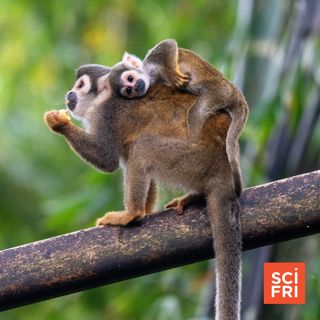
Some primates undergo even more extreme childbirth than humans

Some primates undergo even more extreme childbirth than humans

Human childbirth is often difficult and incredibly painful—just ask anyone who’s been through it. And for a long time, childbirth seemed to be uniquely difficult for humans. But a new study suggests t...

11 Elo 11min

Suosittua kategoriassa Tiede

rss-poliisin-mieli
tiedekulma-podcast
rss-mita-tulisi-tietaa
utelias-mieli
rss-duodecim-lehti
rss-tiedetta-vai-tarinaa
rss-ammamafia
rss-astetta-parempi-elama-podcast
rss-tervetta-skeptisyytta
rss-kasvikutsut
rss-radplus
mielipaivakirja
rss-bios-podcast
rss-ranskaa-raakana
rss-luontopodi-samuel-glassar-tutkii-luonnon-ihmeita
rss-ylistys-elaimille