Carbon Cost Of Urban Gardens And Commercial Farms | Why There's No Superbloom This Year
Science Friday17 Huhti 2024

Carbon Cost Of Urban Gardens And Commercial Farms | Why There's No Superbloom This Year

Some food has a larger carbon footprint when grown in urban settings than on commercial farms, while for other foods the reverse is true. Also, what’s the difference between wildflowers blooming in the desert each spring, and the rare phenomenon of a “superbloom”?

The Carbon Cost Of Urban Gardens And Commercial Farms

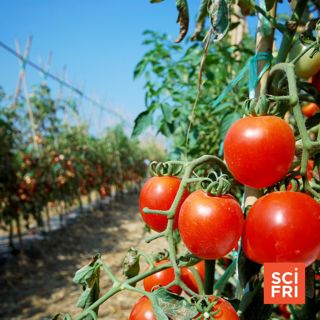
If you have a home garden, you may be expecting that the food you grow has less of an environmental impact than food grown on large commercial farms. But new research throws some cold water on that idea. A study led by scientists at the University of Michigan examined 73 small urban gardening sites across the U.S., the U.K., France, Poland, and Germany, and found that food grown in urban settings produced six times more carbon emissions per serving than commercially grown food. The bulk of these emissions (63%) came from the building materials used for items like raised garden beds.

However, there are some foods that have a smaller carbon footprint when grown at home. They include crops like tomatoes and asparagus, which sometimes need to be flown long distances or require power-hungry greenhouses when grown commercially.

Jason Hawes, PhD candidate in the School for Environment and Sustainability at University of Michigan and lead author of the study which was published in Nature Cities, breaks down the results of the research with Ira. They talk about how urban farmers have responded to the findings, the positive social benefits of community gardens, and what home gardeners can do to lessen their carbon footprint.

Why There Won’t Be A Superbloom This Year

In California, wildflowers are in bloom.

Last year, there was a superbloom. Though there’s no official criteria, a superbloom is when there is an above average number of wildflowers blooming, mostly in desert regions of California and Arizona. It’s an explosion of color in regions that typically have sparse vegetation.

About a month ago, a few news articles hinted that maybe, just maybe, we were in for another superbloom year. Turns out we’re not.

Who decides when there’s a superbloom anyway? And why did this year turn out not to be a superbloom after all?

To answer those questions and provide an update on the state of California’s wildflowers, SciFri producer Kathleen Davis talks with Dr. Naomi Fraga, director of conservation programs at the California Botanic Garden, and research assistant professor at Claremont Graduate University.

Transcripts for each segment will be available after the show airs on sciencefriday.com.

Subscribe to this podcast. Follow our show on Instagram, TikTok, Facebook, and Bluesky @scifri and sign up for our newsletters. Got a science question that’s keeping you up at night? Call us: 877-472-4374


Hosted by Simplecast, an AdsWizz company. See pcm.adswizz.com for information about our collection and use of personal data for advertising.

Tämä jakso on lisätty Podme-palveluun avoimen RSS-syötteen kautta eikä se ole Podmen omaa tuotantoa. Siksi jakso saattaa sisältää mainontaa.

Jaksot(1339)

FDA approves a well-known sunscreen ingredient—finally

FDA approves a well-known sunscreen ingredient—finally

The FDA recently approved a sunscreen ingredient called bemotrizinol, or BEMT, that’s been used in Europe and Asia for years. This is the first new sunscreen ingredient approved in the United States i...

22 Kesä 12min

Why do sports announcers talk like that?

Why do sports announcers talk like that?

If you watch sports, whether the recent NBA finals or the ongoing World Cup matches, you may have noticed that the athletes aren’t the only ones putting on a show. The announcers seem to be playing a ...

19 Kesä 13min

Swords, cannibalism, poison: inside the world of killer microbes

Swords, cannibalism, poison: inside the world of killer microbes

There is a murderous crime spree happening right under—and perhaps inside—our noses. Killer microbes armed with weapons are eviscerating, assassinating, and detonating their fellow microbes. And the n...

18 Kesä 21min

When music transports you to a different place

When music transports you to a different place

Do you ever hear a song that transports you to a specific place and time? This auditory wormhole has a name: musical daydreams. Music cognition expert Elizabeth Margulis studies why they happen, and w...

17 Kesä 18min

A vast whale graveyard + Zombie sea cucumbers

A vast whale graveyard + Zombie sea cucumbers

Researchers just published details of a massive undersea graveyard of whales deep in the Indian Ocean. Spanning about 1,200 kilometers (745 miles), it contains whale remains dating back more than 5 mi...

16 Kesä 18min

Should we bring mountain lions back to the Northeast?

Should we bring mountain lions back to the Northeast?

Big cats used to roam the entire United States. You might know them as mountain lions, pumas, cougars, or catamounts. Though they go by many names, they're actually all the same species.  Their curren...

15 Kesä 12min

Blue Origin explosion hits NASA timeline + Artemis III crew

Blue Origin explosion hits NASA timeline + Artemis III crew

When Blue Origin’s New Glenn spacecraft exploded in an enormous fireball during a ground test a couple weeks ago, it sent shockwaves not only through the air, but through NASA’s timeline for the upcom...

12 Kesä 12min

Why can I handle tequila but not rum?

Why can I handle tequila but not rum?

‘Tis the season for porch beers and happy hours, and we’re taking on listener questions about how alcohol affects us. Like, is a glass of wine at dinner really good for you? And why do sugary drinks g...

11 Kesä 21min

Suosittua kategoriassa Tiede

rss-mita-tulisi-tietaa
rss-hereilla
rss-duodecim-lehti
utelias-mieli
rss-poliisin-mieli
rss-lihavuudesta-podcast
rss-laakaripodi
rss-totuuden-liepeilla
sotataidon-ytimessa
rss-tiedetta-vai-tarinaa
rss-alycast-alykasta-laakehoitoa-yksilollisesti