
Greenhouse Gases From Anesthesia | Fighting Militarization In The Mariana Islands
Science Friday1 Loka 2024

Greenhouse Gases From Anesthesia | Fighting Militarization In The Mariana Islands

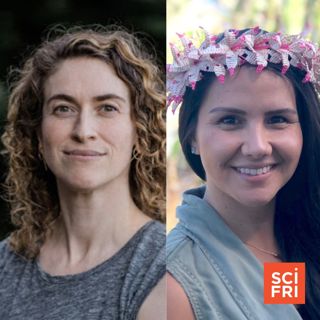
Emissions from anesthesia are one of the largest sources of greenhouse gases from hospitals. This anesthesiologist wants to change that. And, a cultural anthropologist discusses the Mariana Islands’ long history of colonization and why demilitarization matters for climate progress.

A Major Source Of Greenhouse Gases In Hospitals? Anesthesia

Did you know that some of the gases used in anesthesia are strong greenhouse gases? A few years ago, Seattle Children’s Hospital analyzed its carbon footprint and found that the gases used in anesthesia made up about 7% of the hospital’s total emissions, right behind emissions from heating and power and those from commuting.

Faced with this problem, Dr. Elizabeth Hansen, a pediatric anesthesiologist at Seattle Children’s, took matters into her own hands and slashed the operating room’s emissions. She now helps other hospitals do the same with Project Spruce.

Guest host Anna Rothschild talks with Dr. Hansen about how and why she took on the problem.

Militarization And Environmental Injustice In The Mariana Islands

Let’s take a trip to the Northern Mariana Islands, a string of islands in the Pacific just north of Guam. The islands were sites of major battles during World War II and were captured by the United States in 1944. The US established a military presence across the territory—including building the world’s largest air force base at the time, on an island called Tinian.

The US military never left, and in the 1980s, the Northern Mariana Islands became a US territory. A few years ago, the Pentagon proposed building a bombing range on an island called Pagan, but residents of the islands pushed back.

Dr. Isa Arriola is a cultural anthropologist at Concordia University in Montreal and co-founder of the organization Our Common Wealth 670, based in Saipan, the capital of the Northern Mariana Islands. She’s fought back against the militarization of her home islands, and she talks with guest host Anna Rothschild about how the military presence has affected the people and environment of the Marianas, and why demilitarization needs to be part of climate action.

Transcripts for each segment will be available after the show airs on sciencefriday.com.

Subscribe to this podcast. Follow our show on Instagram, TikTok, Facebook, and Bluesky @scifri and sign up for our newsletters. Got a science question that’s keeping you up at night? Call us: 877-472-4374


Hosted by Simplecast, an AdsWizz company. See pcm.adswizz.com for information about our collection and use of personal data for advertising.

Tämä jakso on lisätty Podme-palveluun avoimen RSS-syötteen kautta eikä se ole Podmen omaa tuotantoa. Siksi jakso saattaa sisältää mainontaa.

Jaksot(1382)

Creating 'world models' for robots + An AI math shakeup

Creating 'world models' for robots + An AI math shakeup

When you ask an LLM like ChatGPT or Claude a question, the model goes through its massive amount of training data and guesses the answer by mathematically predicting the word most likely to appear nex...

19 Elo 17min

What can moments of lucidity teach us about Alzheimer’s?

What can moments of lucidity teach us about Alzheimer’s?

Watching a loved one with Alzheimer's or dementia slowly lose their cognitive abilities can be heartbreaking. While the person you once knew seems to be slipping away, sometimes people with Alzheimer'...

18 Elo 17min

Colorado’s snow drought deals a major blow to recreation

Colorado’s snow drought deals a major blow to recreation

Winter in Colorado looked very different this year. Many parts of the state experienced record-high temperatures and record-low snowpack, which had downstream effects on farming, sports, tourism, and ...

17 Elo 11min

How do you find a ‘lost’ species?

How do you find a ‘lost’ species?

The earth is facing a biodiversity crisis, and there’s a lot of attention on species that are threatened, or at risk of dying out completely. But, there’s another critter category that’s a little more...

14 Elo 18min

What we get wrong about vaccine hesitancy

What we get wrong about vaccine hesitancy

President Trump has signed an executive order calling for a change to the childhood vaccination schedule. Specifically, he wants to separate the MMR vaccine, which protects against measles, mumps, and...

13 Elo 12min

Why this lab studies the speed of bug pee and other curiosities

Why this lab studies the speed of bug pee and other curiosities

In a lab in the Rocky Mountains, a group of scientists is hard at work trying to find answers across biology, physics, and engineering: They’re looking into things like the hydrodynamics of insect pee...

12 Elo 18min

Some primates undergo even more extreme childbirth than humans

Some primates undergo even more extreme childbirth than humans

Human childbirth is often difficult and incredibly painful—just ask anyone who’s been through it. And for a long time, childbirth seemed to be uniquely difficult for humans. But a new study suggests t...

11 Elo 11min
Deb Haaland is a politician, and proud of it

Deb Haaland is a politician, and proud of it

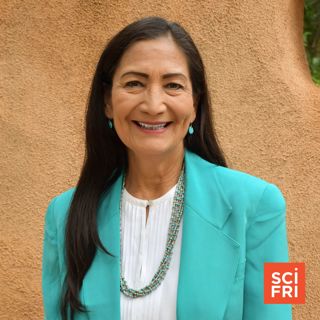
Former Interior Secretary Deb Haaland, a member of the Laguna Pueblo tribe, was the first Native person to hold a cabinet position. Now she’s running to be governor of New Mexico.  Haaland joins Host ...

10 Elo 17min

Suosittua kategoriassa Tiede

rss-poliisin-mieli
tiedekulma-podcast
rss-mita-tulisi-tietaa
utelias-mieli
rss-duodecim-lehti
rss-tiedetta-vai-tarinaa
rss-ammamafia
rss-astetta-parempi-elama-podcast
rss-tervetta-skeptisyytta
rss-kasvikutsut
rss-radplus
mielipaivakirja
rss-bios-podcast
rss-ranskaa-raakana
rss-luontopodi-samuel-glassar-tutkii-luonnon-ihmeita
rss-ylistys-elaimille