#226 – Holden Karnofsky on unexploited opportunities to make AI safer — and all his AGI takes

#226 – Holden Karnofsky on unexploited opportunities to make AI safer — and all his AGI takes

For years, working on AI safety usually meant theorising about the ‘alignment problem’ or trying to convince other people to give a damn. If you could find any way to help, the work was frustrating and low feedback.

According to Anthropic’s Holden Karnofsky, this situation has now reversed completely.

There are now large amounts of useful, concrete, shovel-ready projects with clear goals and deliverables. Holden thinks people haven’t appreciated the scale of the shift, and wants everyone to see the large range of ‘well-scoped object-level work’ they could personally help with, in both technical and non-technical areas.

Video, full transcript, and links to learn more: https://80k.info/hk25

In today’s interview, Holden — previously cofounder and CEO of Open Philanthropy (now Coefficient Giving) — lists 39 projects he’s excited to see happening, including:

  • Training deceptive AI models to study deception and how to detect it
  • Developing classifiers to block jailbreaking
  • Implementing security measures to stop ‘backdoors’ or ‘secret loyalties’ from being added to models in training
  • Developing policies on model welfare, AI-human relationships, and what instructions to give models
  • Training AIs to work as alignment researchers

And that’s all just stuff he’s happened to observe directly, which is probably only a small fraction of the options available.

Holden makes a case that, for many people, working at an AI company like Anthropic will be the best way to steer AGI in a positive direction. He notes there are “ways that you can reduce AI risk that you can only do if you’re a competitive frontier AI company.” At the same time, he believes external groups have their own advantages and can be equally impactful.

Critics worry that Anthropic’s efforts to stay at that frontier encourage competitive racing towards AGI — significantly or entirely offsetting any useful research they do. Holden thinks this seriously misunderstands the strategic situation we’re in — and explains his case in detail with host Rob Wiblin.

Chapters:

  • Cold open (00:00:00)
  • Holden is back! (00:02:26)
  • An AI Chernobyl we never notice (00:02:56)
  • Is rogue AI takeover easy or hard? (00:07:32)
  • The AGI race isn't a coordination failure (00:17:48)
  • What Holden now does at Anthropic (00:28:04)
  • The case for working at Anthropic (00:30:08)
  • Is Anthropic doing enough? (00:40:45)
  • Can we trust Anthropic, or any AI company? (00:43:40)
  • How can Anthropic compete while paying the “safety tax”? (00:49:14)
  • What, if anything, could prompt Anthropic to halt development of AGI? (00:56:11)
  • Holden's retrospective on responsible scaling policies (00:59:01)
  • Overrated work (01:14:27)
  • Concrete shovel-ready projects Holden is excited about (01:16:37)
  • Great things to do in technical AI safety (01:20:48)
  • Great things to do on AI welfare and AI relationships (01:28:18)
  • Great things to do in biosecurity and pandemic preparedness (01:35:11)
  • How to choose where to work (01:35:57)
  • Overrated AI risk: Cyberattacks (01:41:56)
  • Overrated AI risk: Persuasion (01:51:37)
  • Why AI R&D is the main thing to worry about (01:55:36)
  • The case that AI-enabled R&D wouldn't speed things up much (02:07:15)
  • AI-enabled human power grabs (02:11:10)
  • Main benefits of getting AGI right (02:23:07)
  • The world is handling AGI about as badly as possible (02:29:07)
  • Learning from targeting companies for public criticism in farm animal welfare (02:31:39)
  • Will Anthropic actually make any difference? (02:40:51)
  • “Misaligned” vs “misaligned and power-seeking” (02:55:12)
  • Success without dignity: how we could win despite being stupid (03:00:58)
  • Holden sees less dignity but has more hope (03:08:30)
  • Should we expect misaligned power-seeking by default? (03:15:58)
  • Will reinforcement learning make everything worse? (03:23:45)
  • Should we push for marginal improvements or big paradigm shifts? (03:28:58)
  • Should safety-focused people cluster or spread out? (03:31:35)
  • Is Anthropic vocal enough about strong regulation? (03:35:56)
  • Is Holden biased because of his financial stake in Anthropic? (03:39:26)
  • Have we learned clever governance structures don't work? (03:43:51)
  • Is Holden scared of AI bioweapons? (03:46:12)
  • Holden thinks AI companions are bad news (03:49:47)
  • Are AI companies too hawkish on China? (03:56:39)
  • The frontier of infosec: confidentiality vs integrity (04:00:51)
  • How often does AI work backfire? (04:03:38)
  • Is AI clearly more impactful to work in? (04:18:26)
  • What's the role of earning to give? (04:24:54)

This episode was recorded on July 25 and 28, 2025.

Video editing: Simon Monsour, Luke Monsour, Dominic Armstrong, and Milo McGuire
Audio engineering: Milo McGuire, Simon Monsour, and Dominic Armstrong
Music: CORBIT
Coordination, transcriptions, and web: Katy Moore

Tämä jakso on lisätty Podme-palveluun avoimen RSS-syötteen kautta eikä se ole Podmen omaa tuotantoa. Siksi jakso saattaa sisältää mainontaa.

Jaksot(334)

#44 - Paul Christiano on how we'll hand the future off to AI, & solving the alignment problem

#44 - Paul Christiano on how we'll hand the future off to AI, & solving the alignment problem

Paul Christiano is one of the smartest people I know. After our first session produced such great material, we decided to do a second recording, resulting in our longest interview so far. While challe...

2 Loka 20183h 51min
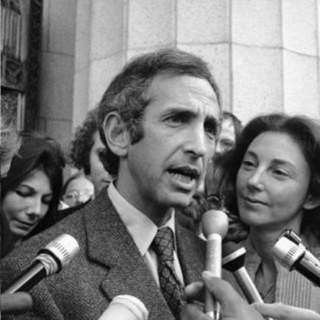
#43 - Daniel Ellsberg on the institutional insanity that maintains nuclear doomsday machines

#43 - Daniel Ellsberg on the institutional insanity that maintains nuclear doomsday machines

In Stanley Kubrick’s iconic film Dr. Strangelove, the American president is informed that the Soviet Union has created a secret deterrence system which will automatically wipe out humanity upon detect...

25 Syys 20182h 44min
#42 - Amanda Askell on moral empathy, the value of information & the ethics of infinity

#42 - Amanda Askell on moral empathy, the value of information & the ethics of infinity

Consider two familiar moments at a family reunion. Our host, Uncle Bill, takes pride in his barbecuing skills. But his niece Becky says that she now refuses to eat meat. A groan goes round the table; ...

11 Syys 20182h 46min
#41 - David Roodman on incarceration, geomagnetic storms, & becoming a world-class researcher

#41 - David Roodman on incarceration, geomagnetic storms, & becoming a world-class researcher

With 698 inmates per 100,000 citizens, the U.S. is by far the leader among large wealthy nations in incarceration. But what effect does imprisonment actually have on crime? According to David Roodman...

28 Elo 20182h 18min

#40 - Katja Grace on forecasting future technology & how much we should trust expert predictions

#40 - Katja Grace on forecasting future technology & how much we should trust expert predictions

Experts believe that artificial intelligence will be better than humans at driving trucks by 2027, working in retail by 2031, writing bestselling books by 2049, and working as surgeons by 2053. But ho...

21 Elo 20182h 11min
#39 - Spencer Greenberg on the scientific approach to solving difficult everyday questions

#39 - Spencer Greenberg on the scientific approach to solving difficult everyday questions

Will Trump be re-elected? Will North Korea give up their nuclear weapons? Will your friend turn up to dinner? Spencer Greenberg, founder of ClearerThinking.org has a process for working out such real...

7 Elo 20182h 17min

#38 - Yew-Kwang Ng on anticipating effective altruism decades ago & how to make a much happier world

#38 - Yew-Kwang Ng on anticipating effective altruism decades ago & how to make a much happier world

Will people who think carefully about how to maximize welfare eventually converge on the same views? The effective altruism community has spent a lot of time over the past 10 years debating how best t...

26 Heinä 20181h 59min
#37 - GiveWell picks top charities by estimating the unknowable. James Snowden on how they do it.

#37 - GiveWell picks top charities by estimating the unknowable. James Snowden on how they do it.

What’s the value of preventing the death of a 5-year-old child, compared to a 20-year-old, or an 80-year-old? The global health community has generally regarded the value as proportional to the numbe...

16 Heinä 20181h 44min

Suosittua kategoriassa Koulutus

rss-murhan-anatomia
psykopodiaa-podcast
voi-hyvin-meditaatiot-2
adhd-podi
rss-rahamania
rss-liian-kuuma-peruna
rahapuhetta
kesken
rss-valo-minussa-2
rss-narsisti
rss-luonnollinen-synnytys-podcast
rss-tietoinen-yhteys-podcast-2
rss-vapaudu-voimaasi
rss-niinku-asia-on
filocast-filosofian-perusteet
psykologia
ihminen-tavattavissa-tommy-hellsten-instituutti
rss-duodecim-lehti
aamukahvilla
rss-elamankoulu