Akhenaten Phase 2 (Summary)
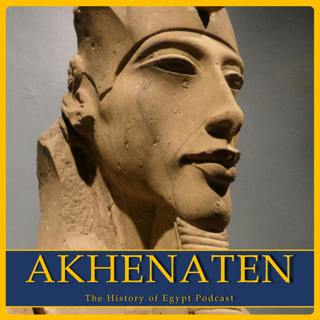
More Story So Far... We've covered a lot since Akhenaten abandoned the traditional capitals and moved to his new home of Akhet-Aten. Now, the second phase of pharaoh's rule lasted between regnal years 6 and 12 (c.1357-1351 BCE). In this time, the King completed many of the goals he initiated back in phase 1. Then, he began to build on those, further refining his ideas and moving forward into new territory... Website: www.egyptianhistorypodcast.com. Support the show via Patreon www.patreon.com/egyptpodcast. Make a one-time donation via PayPal payments. Music by Keith Zizza www.keithzizza.net. Learn more about your ad choices. Visit megaphone.fm/adchoices
4 Maalis 202018min

121: Akhenaten, King of the World (Festival of Tribute)
Akhenaten (Part 11). By 1351 BCE, Akhenaten had achieved many of his early goals. His city, Akhet-Aten, was established, his religious ideas were reaching maturity, and the King could begin to express his vision of Aten in a new way. Finally, pharaoh could celebrate his mastery over foreign populations. Thus, in 1351 BCE, Egypt played host to a grand celebration of tribute… Website: www.egyptianhistorypodcast.com. Support the show via Patreon www.patreon.com/egyptpodcast. Make a one-time donation via PayPal payments. Music by Keith Zizza www.keithzizza.net. Select Bibliography: John Coleman Darnell and Colleen Manassa, Tutankhamun’s Armies: Battle and Conquest during Ancient Egypt’s Late Eighteenth Dynasty, 2007. Benedict G. Davies, Egyptian Historical Records of the Later Eighteenth Dynasty, vol. VI, 1995. Norman De Garis Davies and Seymour De Ricci, The Rock Tombs of El Amarna, Volume II: The Tombs of Panehesy and Meryra II, 1905. Norman De Garis Davies and Seymour De Ricci, The Rock Tombs of El Amarna, Volume III: The Tombs of Huya and Ahmes, 1905. Barry J. Kemp, The City of Akhenaten and Nefertiti: Amarna and Its People, 2012/2014. William J. Murnane, Texts from the Amarna Period in Egypt, 1995. William Moran, The Amarna Letters, 1993. Alan R. Schulman, “Some Observations on the Military Background of the Amarna Period.” Journal of the American Research Center in Egypt 3 (1964): 51-69. Alan R. Schulman, “Hittites, Helmets and Amarna: Akhenaten’s First Hittite War,” in Donald B. Redford, The Akhenaten Temple Projec, Volume II: Rwd-Mnw and Inscriptions, 1988. Anthony J. Spalinger, War in Ancient Egypt, 2005. Learn more about your ad choices. Visit megaphone.fm/adchoices
23 Helmi 202050min

120: Queen Tiye, Reverend Mother
Akhenaten (Part 10): Queen Tiye's Retirement. For the first decade of Akhenaten's rule, his mother Tiye was a background figure. But we have more evidence for her later years than you'd expect, including magnificent art and objects. Plus, the Queen herself returned to public life when she made a splendid visit to pharaoh's new city... Website: www.egyptianhistorypodcast.com. Support the show via Patreon www.patreon.com/egyptpodcast. Make a one-time donation via PayPal payments. Music by Keith Zizza www.keithzizza.com Select Bibliography: Dorothea Arnold “Artistic Revolution” in Dorothea Arnold (ed.) The Royal Women of Amarna: Images of Beauty from Ancient Egypt (1996): 7-17. Free download. John Baines, “The Dawn of the Amarna Age,” in David O’Connor and Eric Cline (eds.), Amenhotep III: Perspectives on His Reign, 1998. Lawrence M. Berman, “Overview of Amenhotep III and His Reign,” in David O’Connor and Eric Cline (eds.), Amenhotep III: Perspectives on His Reign, 1998. Betsy M. Bryan, “Antecedents to Amenhotep III,” in David O’Connor and Eric Cline (eds.), Amenhotep III: Perspectives on His Reign, 1998. Eric H. Cline, “Amenhotep III, the Aegean, and Anatolia,” in David O’Connor and Eric Cline (eds.), Amenhotep III: Perspectives on His Reign, 1998. Benedict G. Davies, Egyptian Historical Records of the Later Eighteenth Dynasty, vols. IV, V, V, 1992, 1994, 1995. Aidan Dodson, Amarna Sunrise, 2012. Rita Freed, Yvonne Markowiz, Sue D’auria (eds.), Pharaohs of the Sun: Akhenaten, Nefertiti, Tutankhamun, 1999. Green, “The Royal Women of Amarna: Who Was Who,” in Dorothea Arnold (ed.) The Royal Women of Amarna: Images of Beauty from Ancient Egypt (1996): 7-17. Free download. Raymond Johnson, “Monuments and Monumental Art Under Amenhotep III: Evolution and Meaning,” in David O’Connor and Eric Cline (eds.), Amenhotep III: Perspectives on His Reign, 1998. Barry Kemp, City of Akhenaten and Nefertiti: Amarna and Its People, 2012. Arielle P. Kozloff & Betsy M. Bryan (eds.), Egypt’s Dazzling Sun: Amunhotep III and His World, 1992. Arielle P. Kozloff, “The Decorative and Funerary Arts During the Reign of Amenhotep III,” in David O’Connor and Eric Cline (eds.), Amenhotep III: Perspectives on His Reign, 1998. William J. Murnane, Texts from the Amarna Period in Egypt, 1995. William Flinders Petrie, Illahun, Kahun & Ghurob, 1894. Lana Troy, Patterns of Queenship in Ancient Egyptian Myth and History, 1986. Christiane Ziegler, Queens of Egypt: from Hetepheres to Cleopatra, 2008. James M. Weinstein, “The World Abroad: Egypt and the Levant in the Reign of Amenhotep III,” in David O’Connor and Eric Cline (eds.), Amenhotep III: Perspectives on His Reign, 1998. Websites: Egyptian Museum, Berlin, Room 2.09, The Amarna Period. Metropolitan Museum of Art, New Work, Objects Related to Tiye. British Museum, Stela of Amunhotep III and Tiye. Learn more about your ad choices. Visit megaphone.fm/adchoices
30 Tammi 202042min

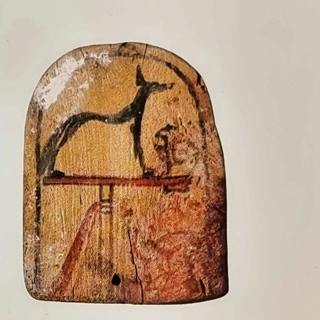
The Doomed Prince
Ancient Fairytales (Part 2). Sometime in the 18th Dynasty, perhaps around the time of Akhenaten, a fairy-tale became popular in Egypt. The story spoke of a prince, forced to flee his home after a prophecy foretold that he would die from one of three fates - a dog, a snake, or a crocodile. Leaving Egypt, the prince went on many adventures - some quite familiar from our own fairy tales. Inevitably, though, the young man had to face his destiny, and confront the three fates which came for him... Website: www.egyptianhistorypodcast.com. Support the show via Patreon www.patreon.com/egyptpodcast. Make a one-time donation via PayPal payments. Music by Keith Zizza www.keithzizza.com. Select Bibliography: Miriam Lichtheim, Ancient Egyptian Literature, Volume II: The New Kingdom, 1976. George Posener, “On the Tale of the Doomed Prince,” Journal of Egyptian Archaeology 39 (1953). JSTOR. William Kelly Simpson (ed.), The Literature of Ancient Egypt, 2003. Learn more about your ad choices. Visit megaphone.fm/adchoices
8 Tammi 202017min

The Tale of Two Brothers
Ancient Fairytales (Part 1). In the late 18th or early 19th Dynasties, a story developed in Egypt. It told of two siblings, Anubis and Bata, who contended with injustice and misfortune. Facing treachery, divine intervention and even the pharaoh himself, the two brothers overcame obstacles and sought to restore justice, against those who did them wrong. In this fairytale, we see how two (divine) beings contended with falsehood. Website: www.egyptianhistorypodcast.com. Support the show via Patreon www.patreon.com/egyptpodcast. Make a one-time donation via PayPal payments. Music by Keith Zizza www.keithzizza.com. Select Bibliography: Susan T. Hollis, The Ancient Egyptian “Tale of Two Brothers:” The Oldest Fairy Tale in the World, 1990. Miriam Lichtheim, Ancient Egyptian Literature, Volume II: The New Kingdom, 1976. Thomas Schneider, “Innovation in Literature on Behalf of Politics: The Tale of the Two Brothers, Ugarit, and 19th Dynasty History,” Egypt and the Levant 18 (2008). Online. William Kelly Simpson (ed.), The Literature of Ancient Egypt, 2003. Pascale M. Teysseire, Portrayal of Women in the Ancient Egyptian Tale, PhD. Dissertation, 1998. Learn more about your ad choices. Visit megaphone.fm/adchoices
1 Tammi 20201h 11min

119: Tut-ankh-Aten (Tutankhamun the Prince)
Akhenaten (Part 9): A Royal Son. By 1352 BCE, Akhenaten and his family were well ensconced in the palaces of Amarna. The pharaoh could enjoy the company of his Great Wife, Nefertiti, and his three elder daughters. He could also enjoy the pleasures afforded by his second wife and look forward to the eventual birth of his son, a prince who would become one of the most famous names in Egyptian history... Website: www.egyptianhistorypodcast.com. Support the show via Patreon www.patreon.com/egyptpodcast. Make a one-time donation via PayPal payments. Music by Keith Zizza www.keithzizza.net. Select Bibliography: Aidan Dodson, Amarna Sunrise, 2012. Lyn Green, ‘The Royal Women of Amarna: Who Was Who’, in D. Arnold et al. (eds), The Royal Women of Amarna: Images of Beauty from Ancient Egypt (New York, 1999), 7--16. Free download. Nozomu Kawai, Studies in the Reign of Tutankhamun, PhD Diss., 2006. Preview. Barry Kemp, City of Akhenaten and Nefertiti: Amarna and Its People, 2012. Arris Kramer, “Enigmatic Kiya,” in A.K. Eyma and C.J. Bennett (eds.), A Delta-Man in Yebu: Occasional Volume of the Egyptologists’ Electronic Forum, Volume I (2003): 48-64. Google Books preview. Norman de Garis Davies, The Rock Tombs of el-Amarna, Vol. I: The Tomb of Meryre, 1903. Archive.org. William J. Murnane, Texts from the Amarna Period in Egypt, 1995. William J. Murnane and Cornel van Siclen III, The Boundary Stelae of Akhenaten, 1993. Alain Zivie, La tombe de Maïa, mère nourricière du roi Toutânkhamon et grande du harem (Bub. I. 20), 2009. Alain Zivie, “La nourrice royale Maïa et ses voisins: cinq tombeaux du Nouvel Empire récemment découverts à Saqqara” Comptes rendus des séances de l’Académie des Inscriptions et Belles-Lettres (1998): 33-54. Online edition. Learn more about your ad choices. Visit megaphone.fm/adchoices
18 Joulu 201937min

118b: Funding the Aten Temples
Around 1354 BCE (regnal year 8), Akhenaten took care to organise his new royal city. Among other things he expanded the agricultural domain which would serve Aten (the sun god), and he also appointed new priests and administrators to manage his temples. As the first decade of his rule came towards its end, Akhenaten's vision was finally starting to become reality... Website: www.egyptianhistorypodcast.com. Support the show via Patreon www.patreon.com/egyptpodcast. Make a one-time donation via PayPal payments. Music by Keith Zizza www.keithzizza.net. Select Bibliography: Aidan Dodson, Amarna Sunrise, 2012. Barry Kemp, City of Akhenaten and Nefertiti: Amarna and Its People, 2012. Donald B. Redford, Akhenaten: The Heretic King, 1984. Norman de Garis Davies, The Rock Tombs of el-Amarna, Vol. I: The Tomb of Meryre, 1903. Archive.org. Norman de Garis Davies, The Rock Tombs of el-Amarna, Vol. II: The Tombs of Panehsy and Meryre II, 1905. Archive.org. Norman de Garis Davies, The Rock Tombs of el-Amarna, Vol. V: Smaller Tombs and Boundary Stela, 1908. Archive.org. William J. Murnane, Texts from the Amarna Period in Egypt, 1995. William J. Murnane and Cornel van Siclen III, The Boundary Stelae of Akhenaten, 1993. Learn more about your ad choices. Visit megaphone.fm/adchoices
4 Joulu 201935min

118: The Temples of Aten
Amarna (Part 5): Great Temples. When he established his new residence-city, Akhenaten made special provision for his god’s house. Two great temples, dedicated to the solar disc, rose on the east bank of the Nile River. Searching the archaeological remains, and scouring the artistic record of these temples, we can get a sense of how Akhenaten worshipped his god; and some of the symbols and meanings he used to express it... Website: www.egyptianhistorypodcast.com. Support the show via Patreon www.patreon.com/egyptpodcast. Make a one-time donation via PayPal payments. Music by Keith Zizza www.keithzizza.net. Select Bibliography: Aidan Dodson, Amarna Sunrise, 2012. Barry Kemp, City of Akhenaten and Nefertiti: Amarna and Its People, 2012. J.D.S. Pendlebury, The City of Akhenaten, Part III, Vol II, 1951. Donald B. Redford, Akhenaten: The Heretic King, 1984. Eric Uphill, “The Per Aten at Amarna,” Journal of Near Eastern Studies, 1970. Norman de Garis Davies, The Rock Tombs of el-Amarna, Vol. I: The Tomb of Meryre, 1903. Archive.org. Norman de Garis Davies, The Rock Tombs of el-Amarna, Vol. II: The Tombs of Panehsy and Meryre II, 1905. Archive.org. Learn more about your ad choices. Visit megaphone.fm/adchoices
21 Marras 201936min