X-Ray Clues to Cosmic Rays: The Discovery of a Galactic PeVatron Candidate

X-Ray Clues to Cosmic Rays: The Discovery of a Galactic PeVatron Candidate

Join us as we dive into the latest astronomical discovery! Scientists have identified a **new candidate pulsar wind nebula (PWN)**, named XMMU 034124.2+525720, which may be directly linked to **1LHAASO J0343+5254u**, a powerful "PeVatron" in our galaxy.


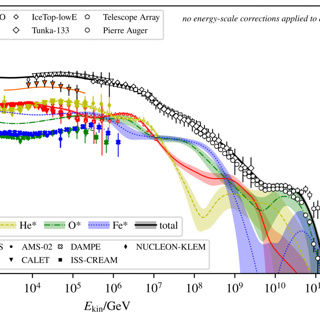
**What are PeVatrons?** They are the most energetic astrophysical objects in our galaxy, producing cosmic rays (CRs) with energies exceeding 1 PeV (10^15 eV), far surpassing what terrestrial accelerators can achieve. Understanding them is key to solving the mystery of the most energetic galactic cosmic rays and gamma rays.


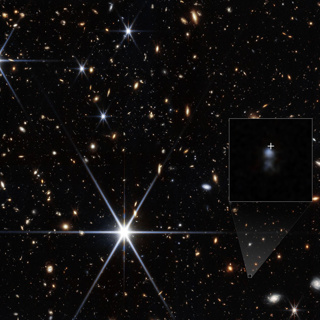
This potential PWN, discovered through extensive **XMM-Newton observations**, exhibits key characteristics typical of other very high-energy PWNs like the "Eel" and "Boomerang" nebulae. Its X-ray emission shows an **extended, asymmetric morphology** and a **power-law spectrum (ΓX = 1.9)** that becomes notably softer farther from its center.


Using **multiwavelength modeling**, researchers demonstrated that a **fully leptonic model**—involving electron synchrotron radiation and inverse-Compton (IC) scattering of ambient photons—can explain the observed X-ray and gamma-ray emission, especially if there are **elevated infrared (IR) photon fields** in the region. While this model largely accounts for the LHAASO gamma-ray flux, future observations will help explore if hadronic processes in nearby molecular clouds also contribute to the gamma-ray emission and potential neutrino flux.


Though XMM-Newton observations didn't definitively resolve a central pulsar or detect X-ray pulsations, this discovery marks a crucial step in understanding galactic PeVatrons. Future, higher-resolution X-ray observations with missions like Chandra and NuSTAR, along with dedicated radio searches for a pulsar, are planned to solidify this PWN classification and provide deeper insights into these extreme cosmic accelerators.


**Article Reference:**

DiKerby, S., Zhang, S., Ergin, T., et al. 2025, *Discovery of a Pulsar Wind Nebula Candidate Associated with the Galactic PeVatron 1LHAASOJ0343+5254u*, The Astrophysical Journal, 983:21.


Acknowledements: Podcast prepared with Google/NotebookLM. Illustration credits: Stephen DiKerby et al., 2025 ApJ 983 21

Tämä jakso on lisätty Podme-palveluun avoimen RSS-syötteen kautta eikä se ole Podmen omaa tuotantoa. Siksi jakso saattaa sisältää mainontaa.

Jaksot(101)

Record-Breaker: Catching Gamma Rays from the Distant Quasar OP 313

Record-Breaker: Catching Gamma Rays from the Distant Quasar OP 313

In this episode, we dive into a groundbreaking astronomical discovery: the detection of very-high-energy (VHE) gamma rays from the quasar OP 313. Located at a redshift of $z = 0.997$, OP 313 has shatt...

1 Kesä 20min

Ripples in Spacetime: Unpacking the GWTC-5.0 Catalog

Ripples in Spacetime: Unpacking the GWTC-5.0 Catalog

In this episode, we dive into the monumental release of the Gravitational-Wave Transient Catalog version 5.0 (GWTC-5.0) and the open data from the second part of the fourth observing run (O4b) by the ...

29 Touko 21min

SN 2017egm : Fermi-LAT's Breakthrough Gamma-Ray Detection

SN 2017egm : Fermi-LAT's Breakthrough Gamma-Ray Detection

In today’s episode, we dive into the mystery of superluminous supernovae (SLSNe)—rare, extreme astronomical events that shine 10 to 100 times brighter than standard core-collapse supernovae. For years...

22 Touko 23min

Supernovae on the RISE: Why Dead Stars Wake Up Decades Later

Supernovae on the RISE: Why Dead Stars Wake Up Decades Later

In this episode, we explore the fascinating phenomenon of core-collapse supernovae that refuse to fade away quietly. Years, or even decades, after their initial explosion, some of these stellar deaths...

20 Touko 17min

The SVOM Satellite: A New Era in Multi-Messenger Astronomy

The SVOM Satellite: A New Era in Multi-Messenger Astronomy

In this episode, we dive into the fascinating world of gamma-ray bursts (GRBs) and high-energy transients through the lens of the SVOM (Space-based Multi-band Variable Object Monitor) mission. Launche...

29 Huhti 24min

Chasing the Flash: Hunting Neutron Star Mergers with CTAO

Chasing the Flash: Hunting Neutron Star Mergers with CTAO

In this episode, we dive into the thrilling world of multi-messenger astronomy! Ever since the historic detection of GW170817, scientists have known that binary neutron star (BNS) mergers can produce ...

14 Huhti 19min

Tiling the Sky: A New Strategy for Finding Elusive GRBs

Tiling the Sky: A New Strategy for Finding Elusive GRBs

In this episode, we dive into the intense and fast-paced world of **Gamma-ray bursts (GRBs)—the most luminous and rapidly evolving transients in the Universe**. While space-based instruments like the ...

13 Huhti 19min

Fast Radio Bursts & Magnetar X-Rays: A Peculiar Discovery

Fast Radio Bursts & Magnetar X-Rays: A Peculiar Discovery

In this episode, we dive into the deep cosmos to explore a recent astronomical breakthrough linking Fast Radio Bursts (FRBs)—enigmatic, millisecond-long cosmic transients—to extreme stellar objects kn...

7 Huhti 22min

Suosittua kategoriassa Tiede

rss-mita-tulisi-tietaa
rss-hereilla
utelias-mieli
rss-duodecim-lehti
rss-totuuden-liepeilla
tiedekulma-podcast
rss-radplus
docemilia
filocast-filosofian-perusteet
rss-laakaripodi
rss-tiedetta-vai-tarinaa
university-of-eastern-finland
sotataidon-ytimessa
radio-antro
rss-bios-podcast
rss-poliisin-mieli
rss-ilmasto-kriisissa
rss-ylistys-elaimille
rss-kasvikutsut