Unmasking Cosmic Explosions with the Einstein Probe

Unmasking Cosmic Explosions with the Einstein Probe

his episode dives into the groundbreaking discoveries of the Einstein Probe, a new soft X-ray mission revolutionizing our understanding of high-energy transients in the universe.


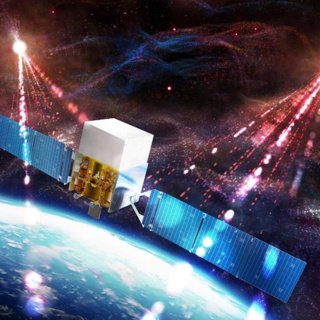
The Einstein Probe (EP), launched on January 9, 2024, has opened a new era of transient discovery in the previously largely unexplored soft X-ray band. It detects numerous fast X-ray transients, many of which surprisingly show no gamma-ray emission, making their connection to more common gamma-ray bursts (GRBs) a key mystery.


Recent research, detailed in the article "The redshift distribution of Einstein Probe transients supports their relation to gamma-ray bursts," has made a significant breakthrough. Using the Astro-COLIBRI archive of transient phenomena and analyzing the redshift distributions of both EP fast X-ray transients and long-duration gamma-ray bursts, scientists found **no statistically significant difference** between them. This strong empirical connection suggests that their redshifts are drawn from the same underlying distribution and that most extragalactic EP transients are **closely related to long GRBs**, originating from the deaths of massive stars (collapsars).


Further supporting this link is the agreement of EP transients with the "Amati relation," a known correlation between spectral peak energy and isotropic-equivalent energy for GRBs. Unlike long GRBs, EP transients are **clearly distinct from short-duration GRBs**, which originate from compact object mergers.


The Einstein Probe is effectively **uncovering a "missing population"** of "failed jets" and "dirty fireballs" that primarily emit at soft X-ray wavelengths. These include fascinating new discoveries such as relativistic shock breakout candidates and even a candidate relativistic jetted tidal disruption event. The volumetric rates of these EP transients are estimated to be comparable to or even exceed those of standard GRBs, suggesting that weak or failed jets might be intrinsically more common than successful ones.


This work highlights the crucial role of the Einstein Probe in expanding our knowledge of **massive star deaths and the mechanisms of jet formation**, revealing a parameter space of cosmic explosions previously hidden from gamma-ray-only detectors.


**Read the full article:**

O’Connor, B. et al. "The redshift distribution of Einstein Probe transients supports their relation to gamma-ray bursts." Draft version September 10, 2025.


Acknowledements: Podcast prepared with Google/NotebookLM. Illustration credits: ESA

Tämä jakso on lisätty Podme-palveluun avoimen RSS-syötteen kautta eikä se ole Podmen omaa tuotantoa. Siksi jakso saattaa sisältää mainontaa.

Jaksot(101)

Record-Breaker: Catching Gamma Rays from the Distant Quasar OP 313

Record-Breaker: Catching Gamma Rays from the Distant Quasar OP 313

In this episode, we dive into a groundbreaking astronomical discovery: the detection of very-high-energy (VHE) gamma rays from the quasar OP 313. Located at a redshift of $z = 0.997$, OP 313 has shatt...

1 Kesä 20min

Ripples in Spacetime: Unpacking the GWTC-5.0 Catalog

Ripples in Spacetime: Unpacking the GWTC-5.0 Catalog

In this episode, we dive into the monumental release of the Gravitational-Wave Transient Catalog version 5.0 (GWTC-5.0) and the open data from the second part of the fourth observing run (O4b) by the ...

29 Touko 21min

SN 2017egm : Fermi-LAT's Breakthrough Gamma-Ray Detection

SN 2017egm : Fermi-LAT's Breakthrough Gamma-Ray Detection

In today’s episode, we dive into the mystery of superluminous supernovae (SLSNe)—rare, extreme astronomical events that shine 10 to 100 times brighter than standard core-collapse supernovae. For years...

22 Touko 23min

Supernovae on the RISE: Why Dead Stars Wake Up Decades Later

Supernovae on the RISE: Why Dead Stars Wake Up Decades Later

In this episode, we explore the fascinating phenomenon of core-collapse supernovae that refuse to fade away quietly. Years, or even decades, after their initial explosion, some of these stellar deaths...

20 Touko 17min

The SVOM Satellite: A New Era in Multi-Messenger Astronomy

The SVOM Satellite: A New Era in Multi-Messenger Astronomy

In this episode, we dive into the fascinating world of gamma-ray bursts (GRBs) and high-energy transients through the lens of the SVOM (Space-based Multi-band Variable Object Monitor) mission. Launche...

29 Huhti 24min

Chasing the Flash: Hunting Neutron Star Mergers with CTAO

Chasing the Flash: Hunting Neutron Star Mergers with CTAO

In this episode, we dive into the thrilling world of multi-messenger astronomy! Ever since the historic detection of GW170817, scientists have known that binary neutron star (BNS) mergers can produce ...

14 Huhti 19min

Tiling the Sky: A New Strategy for Finding Elusive GRBs

Tiling the Sky: A New Strategy for Finding Elusive GRBs

In this episode, we dive into the intense and fast-paced world of **Gamma-ray bursts (GRBs)—the most luminous and rapidly evolving transients in the Universe**. While space-based instruments like the ...

13 Huhti 19min

Fast Radio Bursts & Magnetar X-Rays: A Peculiar Discovery

Fast Radio Bursts & Magnetar X-Rays: A Peculiar Discovery

In this episode, we dive into the deep cosmos to explore a recent astronomical breakthrough linking Fast Radio Bursts (FRBs)—enigmatic, millisecond-long cosmic transients—to extreme stellar objects kn...

7 Huhti 22min

Suosittua kategoriassa Tiede

rss-mita-tulisi-tietaa
rss-hereilla
utelias-mieli
rss-duodecim-lehti
rss-totuuden-liepeilla
tiedekulma-podcast
rss-radplus
docemilia
filocast-filosofian-perusteet
rss-laakaripodi
rss-tiedetta-vai-tarinaa
university-of-eastern-finland
sotataidon-ytimessa
radio-antro
rss-bios-podcast
rss-poliisin-mieli
rss-ilmasto-kriisissa
rss-ylistys-elaimille
rss-kasvikutsut