Can America Continue Its Bull Run?
Culture & Code12 Marras 2025

Can America Continue Its Bull Run?

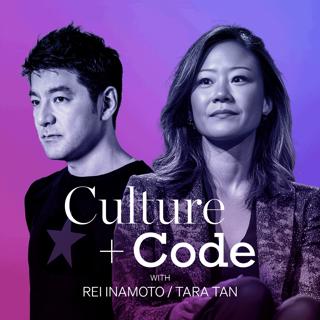
In this episode of Culture and Code, Rei and Tara explore one of the most consequential questions facing the tech industry: whether America can maintain its technological dominance in an era of geopolitical turbulence. Drawing from Tara's analysis of Nvidia's first-ever Washington D.C. summit, they examine historical patterns of technological revolution, the critical role of rare earth minerals in the AI race, and why the relationship between the U.S. and China will define the next 70 years of innovation. Through an anthropological lens spanning 130 years of economic history, they reveal why we may already be living in a "bridge period", an uncomfortable era of chaos that precedes the next great technological leap.

Key Takeaways

The Bridge Period Hypothesis

  • Historical pattern: Major technological revolutions (35-40 years of growth) are separated by bridge periods (30-40 years) of intense social, political, and economic turbulence
  • First Industrial Revolution (1830-1870): European dominance, followed by U.S. agricultural economy
  • Second Industrial Revolution (1870-1915): U.S. emergence through steam engines, railroads, and infrastructure
  • Bridge Period 1 (1915-1950): Two World Wars, extreme turbulence, but also massive technological invention (transistors, foundational science)
  • Information Age Boom (1950-2020s): America's GDP per capita skyrocketed for 70 years
  • Bridge Period 2 (2020s-?): We are likely already in the next bridge period, characterized by AI innovation alongside geopolitical tension

The Rare Earth Reality

  • Rare earth minerals aren't rare. They're just difficult and environmentally toxic to refine
  • China dominates global rare earth supply: 40% of reserves, 69% of mining, 90% of refining
  • U.S. position: Only 1.6% of reserves and less than 5% of refining capacity
  • The U.S. relinquished manufacturing starting in the 1980s, focusing on the "knowledge economy"
  • China made a strategic sacrifice in the 1990s: reduced environmental regulations to monopolize rare earth refining over 30 years
  • This creates a fundamental asymmetry: U.S. owns the "top of the stack" (software, IP, cloud), China owns the "bottom" (manufacturing, materials, processing)

The New Apollo Moment

  • Nvidia's D.C. summit marked a clear pivot: announcing AI factories for government, supercomputers, and quantum initiatives
  • Jensen Huang explicitly framed this as an "Apollo moment"—echoing the 1960s Space Race against the Soviet Union
  • Unlike the Cold War, today's competition is more complex: the U.S. needs China's manufacturing capabilities
  • The next 5-10 years will be "absolutely critical" in determining who leads for the next 70 years
  • We're witnessing not just a tech race, but a simultaneous trade war and battle for technological dominance

Navigating Turbulence

  • The bridge period mindset: "wartime CEO" versus "peacetime CEO"
  • For investors and technologists: stay nimble, understand where the world is heading, identify what technologies will be needed
  • Despite the chaos, there's still work to be done and business to be built
  • Historical lesson: the most uncomfortable periods often yield the greatest technological breakthroughs

The Cultural Paradox

  • Tara's "underrated opinion": Americans and Chinese are surprisingly similar in personality- outgoing, with complementary humor and ways of being
  • This stands in contrast to the structural similarities between Scandinavians and Japanese (formality, tradition, structure)
  • The people-level compatibility suggests potential for collaboration despite political tensions

  • Decoupling is unlikely: interdependence is too deep, especially given...

Jaksot(25)

Post Meh-ification

Post Meh-ification

When algorithm flattens cultural markets, how to create against this backdrop? When everything is “meh,” winners are the surprising, the unexpected, and the different. The problem is, these things suc...

6 Helmi 202546min

Why Brands Need Creative Strategy

Why Brands Need Creative Strategy

Creativity is not just an ideas game. More than anything, it’s a matter of process, organization, and the problem-solving abilities of the “backend” office. McKinsey study found that companies that pr...

23 Tammi 202540min

Who and What Influences Culture?

Who and What Influences Culture?

What is culture? Culture can mean a lot of different things, and in this episode we zero in on our working definitions, along with the brands, consumer behaviors, and trends that we can expect to see ...

9 Tammi 202544min

Happy New Year

Happy New Year

In their last episode of 2024, Ana and Rei talk about predictions. Rather than predicting the future, companies should set themselves out for the future's inherent unpredictability. In this context, w...

26 Joulu 202448min

The Curious Case of Jaguar

The Curious Case of Jaguar

Why some rebrands succeed and why some fail? Why do we usually dislike new logos and then slowly get used to them? What are the best and worst rebrands, and how to tell the difference? We are joined b...

12 Joulu 202454min

Product identity and functionality: friends or foes?

Product identity and functionality: friends or foes?

What are luxury goods good for? How about a pair of socks or sneakers? In this episode, Rei and Ana talk about apparel’s two opposing forces - product identity and functionality - is deeply embedded i...

28 Marras 202443min

How to build a product universe: Utility Driven Brands

How to build a product universe: Utility Driven Brands

What do Banana Republic and Google have in common? By combining brand strategy with merchandising, these brands influenced culture. They grew by building a product universe.In this excerpt from episod...

21 Marras 202414min

How to build a product universe: tactics of product-led branding

How to build a product universe: tactics of product-led branding

What do Banana Republic, McDonald’s, and a 1,800-year-old Japanese shrine have in common? By combining brand strategy with merchandising, these brands influenced culture. They grew by building a produ...

14 Marras 202432min

Suosittua kategoriassa Liike-elämä ja talous

sijotuskasti
psykopodiaa-podcast
mimmit-sijoittaa
rss-rahapodi
rss-rahamania
rss-lahtijat
ostan-asuntoja-podcast
rahapuhetta
rss-neuvottelija-sami-miettinen
rss-h-asselmoilanen
rss-laakispodi
inderespodi
rss-porssipuhetta
rss-startup-ministerio
rss-bisnesta-bebeja
sijoituspodi
rss-strategian-seurassa
asuntoasiaa-paivakirjat
rss-merja-mahkan-rahat
rss-paasipodi