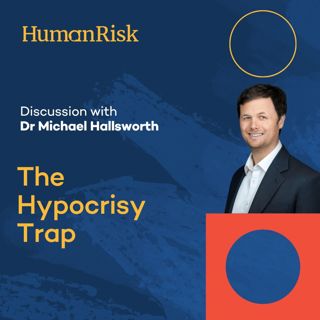

Dr Michael Hallsworth on The Hypocrisy Trap

Dr Michael Hallsworth on The Hypocrisy Trap

We all intuitively know that hypocrisy is a bad thing. But what if it isn’t a flaw, but a feature? But maybe the real problem isn’t hypocrisy, it’s how we think about it.

Episode Summary
On this episode, I'm talking to Dr Michael Hallsworth, a leading behavioural scientist and the author of The Hypocrisy Trap. We explore a topic that’s instantly recognisable but not often properly understood. Hypocrisy is something we’re quick to spot in others, slow to acknowledge in ourselves, and often design around as if it were avoidable or inherently wrong.

What Michael reveals — through personal stories, behavioural experiments, and a careful unpacking of what hypocrisy really means — is that our judgments of hypocrisy say more about us than about the people we’re criticising. In fact, hypocrisy isn’t just common; it’s structurally baked into how we navigate competing priorities, conflicting values and real-world trade-offs. And sometimes, paradoxically, a little hypocrisy might even be useful.

That makes it incredibly relevant to human risk. In compliance, ethics, and organisational culture, we tend to assume people should act consistently with what they believe, and we often penalise them when they don’t. But as Michael explains, this assumption can lead us to build systems that are brittle, punitive or out of touch with how people actually behave. This conversation challenges that frame and offers a more human — and more effective — way of thinking about inconsistency, trust and moral judgment.

Guest Biography - Michael Hallsworth

Dr Michael Hallsworth is Chief Behavioural Scientist at the Behavioural Insights Team (BIT), where he applies behavioural science to policy, organisational design and real‑world behavioural change. He describes himself as someone “helping people apply behavioural science to real‑world problems” and is the author of The Hypocrisy Trap: How Changing What We Criticise Can Improve Our Lives.

At BIT, Michael has led numerous projects spanning government and private sector domains, bridging rigorous academic research with operational behavioural insight. His work is characterised by practical translation of behavioural science and an upfront acknowledgement of human complexity — the grey zones rather than the simple binaries.

His new book brings this lens to the topic of hypocrisy, exploring how our judgments of double standards shape behaviour, institutions and trust in counter‑intuitive ways.

AI-Generated Timestamp Summary
[00:00:00] Intro and framing of hypocrisy as a human behavioural risk
[00:01:00] Why hypocrisy runs deeper than just “saying one thing and doing another”
[00:02:00] Discussion of how organisations treat moral consistency — and the limitations of that approach
[00:03:00] Michael’s background, BIT and the genesis of his book
[00:04:00] Defining hypocrisy: the three‑part structure
[00:06:00] The two‑fold meaning: false image vs double standards
[00:07:00] Michael’s personal story with his daughter + the context of “PartyGate”
[00:09:00] Historical roots: Freud’s view on civilisation and hypocrisy
[00:11:00] Why hypocrisy is a social judgement rather than purely behavioural
[00:13:00] When calling out hypocrisy becomes counterproductive in change efforts
[00:15:00] Real‑world examples: politics, business, everyday life
[00:17:00] The phenomenon of ‘do‑gooder derogation’ and why consistent people make us uneasy
[00:20:00] Hypocrisy as a strategic accusation in social media and organisational life
[00:22:00] The behavioural science of induced hypocrisy and what it tells us about change
[00:25:00] Honest vs. relatable hypocrisy: shifting the narrative
[00:28:00] Michael outlines three categories for navigating hypocrisy
[00:30:00] His reflections on writing the book and the surprises he uncovered
[00:34:00] Balancing moral integrity with public perception and stakeholder expectations
[00:36:00] Hypocrisy in corporate ESG: the tension between expectation and action
[00:39:00] Managing contradictions among stakeholders: the inevitable trade‑offs
[00:41:00] Experiment results: private hypocrisy and moral judge
[00:44:00] The paradox: why we prefer people who are ‘inconsistent but principled’ over ‘consistent and bland’
[00:46:00] Authenticity vs inauthentic leadership — and the hypocrisy dimension
[00:48:00] Is this a practical manual for “how to do hypocrisy well”?
[00:51:00] Final reflections: hypocrisy isn’t always about morality—sometimes it’s about signalling, trust and change
[00:54:00] Michael’s hope for what the book can achieve and closing thoughts
[00:57:00] Wrap‑up, thanks and behavioural nudge for the listener

Links
Michael's website - https://www.michaelhallsworth.com/
The Hypocrisy Trap – https://www.thehypocrisytrap.com/
Behavioural Insights Team - https://www.bi.team/
Michael's IT profile – https://www.bi.team/people/michael-hallsworth/
'Partygate' explainer - https://www.bbc.co.uk/news/uk-politics-59952395

Tämä jakso on lisätty Podme-palveluun avoimen RSS-syötteen kautta eikä se ole Podmen omaa tuotantoa. Siksi jakso saattaa sisältää mainontaa.

Jaksot(368)

Tahira Endean on Joy as a KPI (or why live events need to be more joyful)

Tahira Endean on Joy as a KPI (or why live events need to be more joyful)

What if joy became the most important metric when we organised events? Or, to put it another way, why are so many events uninspiring and not very joyful?Episode SummaryOn this episode, I’m joined by e...

6 Heinä 20251h 2min

Claus Raasted on Getting Shit Done

Claus Raasted on Getting Shit Done

Why is getting shit done so hard, and what can we do about it?Episode Summary Getting shit done isn’t just about motivation or tools, it’s about design. In this episode, I speak to Claus Raasted: cons...

29 Kesä 20251h 10min
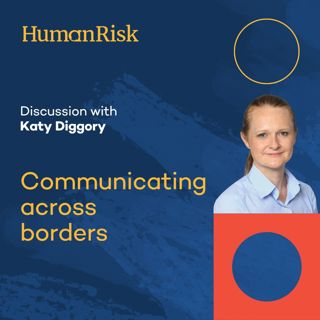
Katy Diggory on communicating across borders

Katy Diggory on communicating across borders

What happens when a British communications expert takes her political instincts and corporate storytelling skills to Germany? 🎙️ Overview On this episode, I speak with Katy Diggory, who’s done exactl...

21 Kesä 202553min
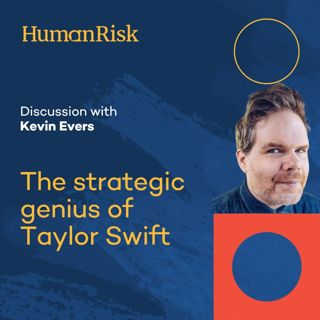
Kevin Evers on The Strategic Genius of Taylor Swift

Kevin Evers on The Strategic Genius of Taylor Swift

What can a global pop icon teach us about business strategy? In the case of Taylor Swift, more than you might think.Episode SummaryOn this episode, I’m joined by Kevin Evers, senior editor at Harvard ...

14 Kesä 20251h 8min

Juliet Rosenfeld on Affairs

Juliet Rosenfeld on Affairs

Why do people have affairs? What lessons can we learn from infidelity?It's estimated that an affair will impact one in five of us, yet it tends to be a taboo subject.  So, on this episode, I'm going t...

7 Kesä 20251h 6min
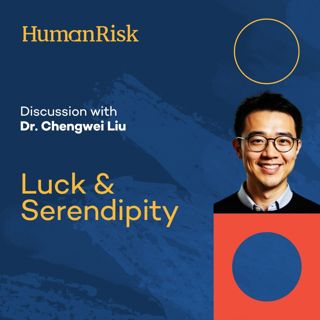
Dr Chengwei Liu on Luck & Serendipity

Dr Chengwei Liu on Luck & Serendipity

Have you ever wondered how much of your success is down to luck? What if the world is far less fair and predictable than we’d like to think? On this episode, I explore the complex and fascinating role...

1 Kesä 20251h 3min

Professor Magda Osman on Psychological Harm

Professor Magda Osman on Psychological Harm

What is psychological harm, and can we really regulate it? Should an AI-companion app be allowed to dump the person who is using it?  📝 Episode Summary On this episode, I’m joined once again by Profe...

24 Touko 20251h 2min

Sarah Ward on Chemistry, Committees & Cooking

Sarah Ward on Chemistry, Committees & Cooking

What do chemistry, committees and cooking have in common?  They’re all things which have formed part of the career of my guest on this episode. She’s Sarah Ward, owner of The Cookery Lab, a unique coo...

18 Touko 20251h 5min

Suosittua kategoriassa Tiede

rss-poliisin-mieli
tiedekulma-podcast
rss-mita-tulisi-tietaa
docemilia
filocast-filosofian-perusteet
menologeja-tutkimusmatka-vaihdevuosiin
rss-duodecim-lehti
rss-tiedetta-vai-tarinaa
sotataidon-ytimessa
rss-lapsuuden-rakentajat-podcast
rss-lihavuudesta-podcast
utelias-mieli
radio-antro
rss-bios-podcast
rss-metsantuntijat-podcast
rss-luontopodi-samuel-glassar-tutkii-luonnon-ihmeita
rss-sosiopodi