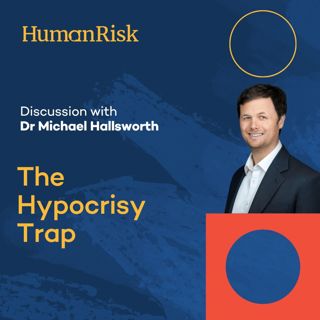
Dr Michael Hallsworth on The Hypocrisy Trap

Dr Michael Hallsworth on The Hypocrisy Trap

We all intuitively know that hypocrisy is a bad thing. But what if it isn’t a flaw, but a feature? But maybe the real problem isn’t hypocrisy, it’s how we think about it.

Episode Summary
On this episode, I'm talking to Dr Michael Hallsworth, a leading behavioural scientist and the author of The Hypocrisy Trap. We explore a topic that’s instantly recognisable but not often properly understood. Hypocrisy is something we’re quick to spot in others, slow to acknowledge in ourselves, and often design around as if it were avoidable or inherently wrong.

What Michael reveals — through personal stories, behavioural experiments, and a careful unpacking of what hypocrisy really means — is that our judgments of hypocrisy say more about us than about the people we’re criticising. In fact, hypocrisy isn’t just common; it’s structurally baked into how we navigate competing priorities, conflicting values and real-world trade-offs. And sometimes, paradoxically, a little hypocrisy might even be useful.

That makes it incredibly relevant to human risk. In compliance, ethics, and organisational culture, we tend to assume people should act consistently with what they believe, and we often penalise them when they don’t. But as Michael explains, this assumption can lead us to build systems that are brittle, punitive or out of touch with how people actually behave. This conversation challenges that frame and offers a more human — and more effective — way of thinking about inconsistency, trust and moral judgment.

Guest Biography - Michael Hallsworth

Dr Michael Hallsworth is Chief Behavioural Scientist at the Behavioural Insights Team (BIT), where he applies behavioural science to policy, organisational design and real‑world behavioural change. He describes himself as someone “helping people apply behavioural science to real‑world problems” and is the author of The Hypocrisy Trap: How Changing What We Criticise Can Improve Our Lives.

At BIT, Michael has led numerous projects spanning government and private sector domains, bridging rigorous academic research with operational behavioural insight. His work is characterised by practical translation of behavioural science and an upfront acknowledgement of human complexity — the grey zones rather than the simple binaries.

His new book brings this lens to the topic of hypocrisy, exploring how our judgments of double standards shape behaviour, institutions and trust in counter‑intuitive ways.

AI-Generated Timestamp Summary
[00:00:00] Intro and framing of hypocrisy as a human behavioural risk
[00:01:00] Why hypocrisy runs deeper than just “saying one thing and doing another”
[00:02:00] Discussion of how organisations treat moral consistency — and the limitations of that approach
[00:03:00] Michael’s background, BIT and the genesis of his book
[00:04:00] Defining hypocrisy: the three‑part structure
[00:06:00] The two‑fold meaning: false image vs double standards
[00:07:00] Michael’s personal story with his daughter + the context of “PartyGate”
[00:09:00] Historical roots: Freud’s view on civilisation and hypocrisy
[00:11:00] Why hypocrisy is a social judgement rather than purely behavioural
[00:13:00] When calling out hypocrisy becomes counterproductive in change efforts
[00:15:00] Real‑world examples: politics, business, everyday life
[00:17:00] The phenomenon of ‘do‑gooder derogation’ and why consistent people make us uneasy
[00:20:00] Hypocrisy as a strategic accusation in social media and organisational life
[00:22:00] The behavioural science of induced hypocrisy and what it tells us about change
[00:25:00] Honest vs. relatable hypocrisy: shifting the narrative
[00:28:00] Michael outlines three categories for navigating hypocrisy
[00:30:00] His reflections on writing the book and the surprises he uncovered
[00:34:00] Balancing moral integrity with public perception and stakeholder expectations
[00:36:00] Hypocrisy in corporate ESG: the tension between expectation and action
[00:39:00] Managing contradictions among stakeholders: the inevitable trade‑offs
[00:41:00] Experiment results: private hypocrisy and moral judge
[00:44:00] The paradox: why we prefer people who are ‘inconsistent but principled’ over ‘consistent and bland’
[00:46:00] Authenticity vs inauthentic leadership — and the hypocrisy dimension
[00:48:00] Is this a practical manual for “how to do hypocrisy well”?
[00:51:00] Final reflections: hypocrisy isn’t always about morality—sometimes it’s about signalling, trust and change
[00:54:00] Michael’s hope for what the book can achieve and closing thoughts
[00:57:00] Wrap‑up, thanks and behavioural nudge for the listener

Links
Michael's website - https://www.michaelhallsworth.com/
The Hypocrisy Trap – https://www.thehypocrisytrap.com/
Behavioural Insights Team - https://www.bi.team/
Michael's IT profile – https://www.bi.team/people/michael-hallsworth/
'Partygate' explainer - https://www.bbc.co.uk/news/uk-politics-59952395

Tämä jakso on lisätty Podme-palveluun avoimen RSS-syötteen kautta eikä se ole Podmen omaa tuotantoa. Siksi jakso saattaa sisältää mainontaa.

Jaksot(368)

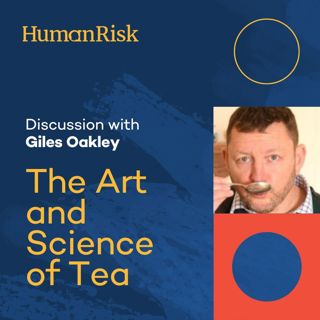
Giles Oakley on The Art & Science of Tea

Giles Oakley on The Art & Science of Tea

What does tea have to do with human behaviour? A lot more than you might think.  On this epusoed, I'm exploring one of the world's most popular drinks and what we can learn from it.SummaryMy guest is ...

15 Helmi 202549min

Pav Gill on Whistleblowing that works

Pav Gill on Whistleblowing that works

How do we create systems that encourage whistleblowing without incentivizing malicious reporting? Should we reward whistleblowers financially? Why is closure important, both for whistleblowers and the...

1 Helmi 20251h 11min
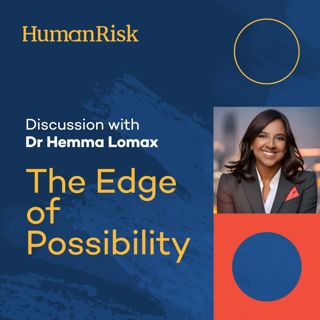
Dr Hemma Lomax on The Edge of Possibility

Dr Hemma Lomax on The Edge of Possibility

What is the edge of possibility and how can storytelling help us to find it?  My guest isn't a storyteller — she's a lawyer, working in compliance — but she's got some fascinating insights to share ab...

25 Tammi 20251h 3min
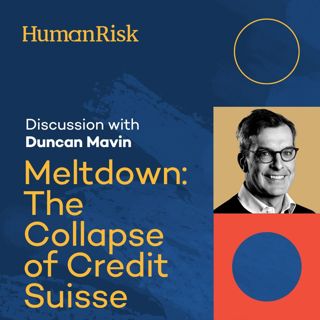
Duncan Mavin on Meltdown: The Collapse of Credit Suisse

Duncan Mavin on Meltdown: The Collapse of Credit Suisse

How does a major global bank keep surviving crises; until it doesn't?Episode SummaryOn this episode, I’m joined by Duncan Mavin, author of Meltdown: Scandal, Sleaze, and the Collapse of Credit Suisse....

12 Tammi 20251h 1min

Kit Holden on Played in Germany -  a footballing journey through a nation's soul

Kit Holden on Played in Germany -  a footballing journey through a nation's soul

What can we learn about a country from its favourite sport?  A lot. Particularly when that country has a history and culture like Germany.  Which is what I'm exploring on this episode.Even if you're n...

5 Tammi 202556min
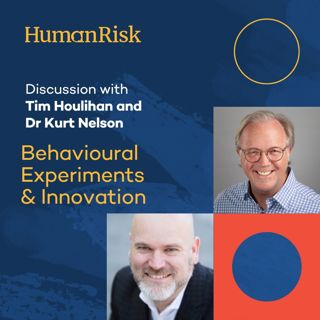
Tim Houlihan & Dr Kurt Nelson on Behavioural Experiments, Podcasting, and Innovation

Tim Houlihan & Dr Kurt Nelson on Behavioural Experiments, Podcasting, and Innovation

What role does experimentation play in making big life and creative decisions? What lessons can podcasters teach us about effective communication in business?Show Summary To answer these questions, in...

27 Joulu 20241h 32min
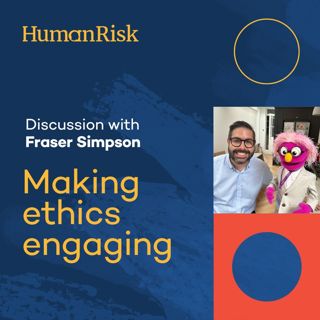
Fraser Simpson on Making Ethics Engaging

Fraser Simpson on Making Ethics Engaging

What does a pink puppet called Connie have to do with ethics? More than you might think. On this episode, I'm speaking with a lawyer, whose innovative approach to getting employees to engage in ethics...

21 Joulu 20241h 38min

Jono Hey on Sketchplanations

Jono Hey on Sketchplanations

Can you distill a complex concept into a single sketch? Jono Hey can and on this episode, he joins me to talk about Sketchplanations —a project that explains the world, one sketch at a time.SummaryI’v...

6 Joulu 20241h 7min

Suosittua kategoriassa Tiede

rss-poliisin-mieli
tiedekulma-podcast
rss-mita-tulisi-tietaa
docemilia
filocast-filosofian-perusteet
menologeja-tutkimusmatka-vaihdevuosiin
rss-duodecim-lehti
rss-tiedetta-vai-tarinaa
sotataidon-ytimessa
rss-lapsuuden-rakentajat-podcast
rss-lihavuudesta-podcast
utelias-mieli
radio-antro
rss-bios-podcast
rss-metsantuntijat-podcast
rss-luontopodi-samuel-glassar-tutkii-luonnon-ihmeita
rss-sosiopodi