
The PanRadio Collaboration’s First Results – The 400-Day Afterglow of GRB 230815A

The PanRadio Collaboration’s First Results – The 400-Day Afterglow of GRB 230815A

This episode dives into the extraordinary 400-day observing campaign of Gamma-ray Burst (GRB) 230815A, the first major result from the Panoptic Radio View of Gamma-ray Bursts (“PanRadio GRB”) program.


**The PanRadio Program**

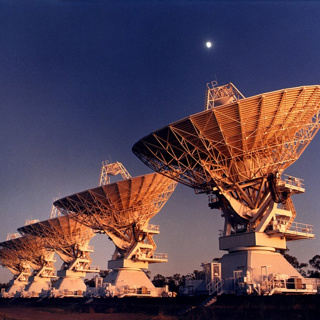
The PanRadio GRB program is a systematic, multi-year radio survey carried out on the Australia Telescope Compact Array (ATCA). Its goal is to provide comprehensive, multi-frequency (1–50 GHz), and high-cadence radio monitoring of all southern *Swift* GRB events, following their afterglow evolution from within an hour to years post-burst. Crucially, this program provides a **more unbiased view** of GRBs, targeting events like GRB 230815A that typically would not receive traditional radio follow-up because they lack known redshifts or comprehensive multi-wavelength coverage due to high line-of-sight extinction ($A_V = 2.3$).


**Key Findings from GRB 230815A**

GRB 230815A was a long-duration GRB, likely originating from a collapsar. The 400-day observing campaign revealed a key conflict in its behavior:


* **The X-ray Afterglow:** An early X-ray jet break was observed at approximately $\sim 0.1$ days post-burst. This implies a very narrow jet opening angle, estimated to be about $2.1^\circ$.

* **The Radio Afterglow:** The radio light curves, traced over an unusually long duration of 400 days, evolved approximately according to the standard self-similar expansion expected for a relativistic blast wave in a homogeneous environment. Critically, the radio evolution was **at odds** with the early X-ray break.

* **The Solution: A Two-Component Jet:** Researchers reconcile this conflict by proposing a **two-component jet structure**. The early X-ray break originated from the **narrow, fast component** ($\sim 2.1^\circ$), while the delayed or absent jet break in the radio light curves stems from a separate, **wider component** with a half-opening angle estimated to be $\gtrsim 35^\circ$.


**Long-Term Impact**

The extensive follow-up confirmed that after 400 days, the blast wave showed no evidence of transitioning to the non-relativistic regime, which constrains the ratio between the blast wave kinetic energy and the circumburst medium (CBM) density. The PanRadio program will build a large, unbiased sample to rigorously inspect the microphysical and dynamical parameters of GRBs, revealing the true diversity of their outflows and environments.


**Article Reference**

These results are published in the draft article: **"First results from the PanRadio GRB Collaboration: the 400-day afterglow of GRB 230815A"**. https://arxiv.org/pdf/2511.07644


Acknowledements: Podcast prepared with Google/NotebookLM. Illustration credits: CSIRO

Tämä jakso on lisätty Podme-palveluun avoimen RSS-syötteen kautta eikä se ole Podmen omaa tuotantoa. Siksi jakso saattaa sisältää mainontaa.

Jaksot(123)

Supernovae, TDEs, and Scintillation: How ASKAP and Rubin Are Mapping the Variable Universe

Supernovae, TDEs, and Scintillation: How ASKAP and Rubin Are Mapping the Variable Universe

In this episode, we dive into how astronomers are combining the power of the Australian Square Kilometre Array Pathfinder (ASKAP) and the Vera C. Rubin Observatory to capture the dynamic, ever-changin...

16 Loka 20min

JWST and MeerKAT Team Up: Uncovering the Most Distant Fast Radio Burst Yet

JWST and MeerKAT Team Up: Uncovering the Most Distant Fast Radio Burst Yet

Fast Radio Bursts (FRBs) are millisecond-duration radio signals originating from deep space. In this episode, we explore the groundbreaking discovery of FRB 20240304B, detected by the MeerKAT radio te...

12 Loka 20min

GRB 221009A: Measuring Relativistic Jets using Radio Interferometry

GRB 221009A: Measuring Relativistic Jets using Radio Interferometry

In this episode, we explore high-precision Very Long Baseline Interferometry (VLBI) radio observations of GRB 221009A, the brightest gamma-ray burst ever detected. Using the Global-VLBI network at 5 G...

8 Loka 21min

Unveiling GRB 240825A: Cosmic Dust, JWST, and a Supernova in Hiding

Unveiling GRB 240825A: Cosmic Dust, JWST, and a Supernova in Hiding

In this episode, we explore the cosmic mystery of GRB 240825A, a gamma-ray burst detected at redshift z = 0.659. Its short rest-frame duration and hard prompt emission initially pointed toward a compa...

5 Loka 14min

From GeV to EeV: A Data-Driven View of Cosmic Rays

From GeV to EeV: A Data-Driven View of Cosmic Rays

How do high-energy particles traveling across the universe reach Earth, and what are they made of? In this episode, we explore the Global Spline Fit (GSF), a comprehensive framework that unifies cosmi...

2 Loka 24min

From Blazars to Supernovae: Fermi’s Deepest High-Energy Sky Survey

From Blazars to Supernovae: Fermi’s Deepest High-Energy Sky Survey

In this episode, we dive into the release of the Fourth Catalog of Hard Fermi-LAT Sources (4FHL). Utilizing 16 years of continuous data from NASA's Fermi Gamma-ray Space Telescope, this catalog provid...

29 Syys 23min

GRB 220706A: The Longest-Lived Gamma-Ray Burst Engine Ever Seen

GRB 220706A: The Longest-Lived Gamma-Ray Burst Engine Ever Seen

In this episode, we explore the extraordinary discovery of GRB 220706A, a record-shattering cosmic explosion at redshift z = 0.8577. While most gamma-ray burst engines die down within minutes, X-ray f...

24 Syys 19min

Chasing Kilonovae: How LIGO-India Multiplies Multimessenger Discoveries

Chasing Kilonovae: How LIGO-India Multiplies Multimessenger Discoveries

In this episode, we explore the future of multimessenger astronomy as neutron star–black hole (NSBH) mergers take center stage. While binary neutron star collisions have delivered iconic multimessenge...

18 Syys 21min

Suosittua kategoriassa Tiede

tiedekulma-podcast
utelias-mieli
rss-mita-tulisi-tietaa
rss-duodecim-lehti
rss-hereilla
docemilia
rss-kasvikutsut
rss-vaasan-yliopiston-podcastit
rss-poliisin-mieli
rss-kasvatuspsykologiaa-kaikille







