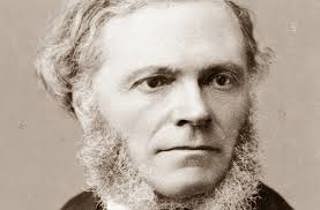
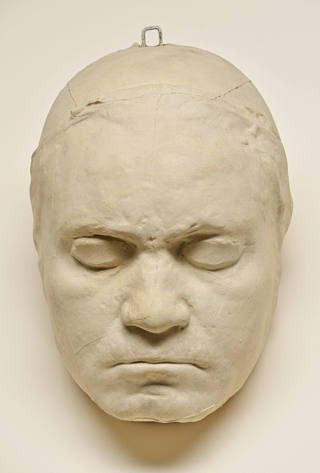
Franck Symphony in D Minor

Franck Symphony in D Minor

In the 1960s, Leonard Bernstein famously helped to popularize the music of a then relatively obscure composer, Gustav Mahler. His work, as well as the work of other conductors, made Mahler into a classical-music household name. Mahler's symphonies are played every year all over the world, and he is firmly ensconced in the so-called canon of standard orchestral repertoire.

Would it surprise you to know that Franck's D Minor Symphony once had the same reputation? It was played almost every year by most major orchestras, it was recorded by all the great conductors, and it was a fixture of the canon just like a Brahms symphony. Nowadays you would be lucky if, outside of France and Belgium, you hear Franck's Symphony once every five years, if that.

The truth is that, other than a short golden period for this symphony, it has either been controversial (around the time it was premiered) or ignored (nowadays), which is a real shame, since it is a glorious piece that I would argue is drastically underrated in our modern world. The symphony was radically innovative for its time, which probably explains some of the more virulent criticism it received, but even though those innovations now sound completely normal to our ears, they are still at the heart of what makes this symphony so profoundly satisfying to listen to.

Ahead of my performances of the symphony in Lille this December, I wanted to dive in and explore this unfairly ignored masterpiece. In about 40 minutes of music in three grand movements, Franck pours his soul into this work. That phrase sounds a bit cliché, I know, but I really mean it; there is an earnestness about this music that I find deeply moving, and it is something we will explore together today.

We will talk about Franck's late entry into the world of composition, his reputation as an organist, and the challenges he faced in finding acceptance as a composer. Along the way, we will discuss this gorgeous piece in all of its passion and intensity. Join us!

Jaksot(275)

Steve Reich: Different Trains

Steve Reich: Different Trains

Steve Reich, the great American contemporary composer, provided this program note about his work Different Trains: "The idea for the piece came from my childhood. When I was one year old my parents separated. My singer, song-writer mother moved to Los Angeles and my attorney father stayed in New York. Since they arranged divided custody, I travelled back and forth by train frequently between New York and Los Angeles from 1939 to 1942 accompanied by my governess. While the trips were exciting and romantic at the time I now look back and think that, if I had been in Europe during this period, as a Jew I would have had to ride very different trains. With this in mind I wanted to make a piece that would accurately reflect the whole situation." Reich went about this piece in a completely innovative way: he recorded voices and then created the musical material for the piece out of the voices themselves, something that had never been done before. Therefore, the text and music material were integrated in a groundbreaking way, and the results are at times unbearably moving. This is a piece that has captured listeners attention in a way that is relatively rare for contemporary music, and it is a piece of immense power and depth. I have always been fascinated by this piece and have wanted to perform an orchestral version of it, but I never have been able to cover it on the show. That is, until AJ contributed enough to my fundraiser last year before the election to sponsor a piece, and he chose Reich's Different Trains. Today we'll talk a bit about Steve Reich generally for those of you unfamiliar with him, and then we'll tackle this remarkable and unique piece in all of its creativity and profound communication. Join us!

17 Huhti 52min

Best of Frenemies: Debussy and Ravel

Best of Frenemies: Debussy and Ravel

Debussy and Ravel are often described as the prototypical musical impressionists. It is often said that the two composers are the closest equivalents to the artistic world of Monet, Renoir, Pisarro, Degas, and others. But both Ravel and Debussy (like Monet for that matter), vehemently rejected the term Impressionism, and they both felt that they were striking out on their own individual paths in their msuic. That didn't stop the public and critics from constantly comparing the music of these two shining lights of French music, despite the fact that Ravel and Debussy are actually quite different. Comparing Ravel and Debussy is a bit like comparing Haydn and Mozart. At first glance, there are many similarities, but if you look and listen more closely, Ravel and Debussy(like Mozart and Haydn) had totally different approaches, goals, and styles. All of the constant comparisons and attempts at making the composers compete with each other had a real impact on Debussy and Ravel. Initially they were friends and mutual admirers of each others work, but they slowly drifted apart over time until they stopped speaking to each other altogether. We'll talk about this complicated personal relationship, as well as looking at these differences in their music, not from a critical standpoint, but from the perspective of bringing out what is so wonderfully unique about their music. We'll also talk about Ravel's arrangements of two Debussy's greatest orchestral works: his two piano arrangement of Debussy's Nocturnes, and his piano 4 hands arrangement of the legendary Prelude to the Afternoon of a Faun. Join us on another collaboration with G Henle Publishers! Recordings: Nocturnes Claudio Abbado with London Symphony Anne Shasby, Richard McMahon, Piano Prelude to the Afternoon of a Faun Ravel arrangement: Jean-Pierre Armengaud and Olivier Chauzu Debussy Arrangement: Charles Badami and Anthony Olson

3 Huhti 52min

Shostakovich Cello Concerto No. 1

Shostakovich Cello Concerto No. 1

It's hard to overstate the depth of the connection between Dmitri Shostakovich and the legendary cellist Mstistlav Rostropovich. Shostakovich and Rostropovich were extremely close friends, and Shostakovich wrote and dedicated several works to him, including the piece we're going to talk about today, the first Cello Concerto. Rostropovich had been desperate to get Shostakovich to write a concerto for him, but Shostakovich's wife had one simple piece of advice: if you want Shostakovich to write something for you, don't talk to him about it or even mention it. So Rostropovich waited and waited, until July of 1959, when he was asked by Shostakovich to come to Leningrad to try out a new Cello Concerto. Shostakovich played through the piece for Rostropovich, turned to him, and asked him if he liked it. Rostropovich apparently told Shostakovich that he "had been shaken to the core." Shostakovich, in his famously modest way, then shakily asked Rostropovich if he could dedicate the concerto to him. Rostropovich immediately agreed, and then rushed off to learn the concerto as quickly as possible. He learned the entire concerto in 3 days, then returned to Shostakovich and played it for him by heart. The concerto is practically stamped with Rostropovich's name, which is why I'll be using a recording of a live performance of Rostropovich during the show today, though I must say I also recommend a pretty great modern recording by a certain cellist who is also my sister, Alisa Weilerstein. This concerto has always been one of my favorites; it is compact, powerful, punchy, beautiful, intense, concentrated, and tremendously exciting. For me, it is one of Shostakovich's most Beethovenian works, in its lean power and its obsession with a single motive. Today on this fundraiser sponsored show, we'll talk through this fantastic concerto, and explore just what makes its momentum so inevitable and so thrilling from start to finish. Join us!

20 Maalis 50min

Ravel, Ravel, Ravel, w/Boris Giltburg and G. Henle Verlag!

Ravel, Ravel, Ravel, w/Boris Giltburg and G. Henle Verlag!

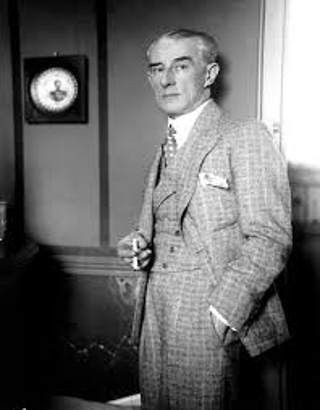
Magician, Swiss Watchmaker, Aloof, Elegant, Precise, Soulful, Childlike, Naive, Warm: these are all words that have been used to describe Maurice Ravel, a man of elegant contradictions. But perhaps these contradictions are why his music remains so beloved and universally appealing to so many musicians and audience members. Ravel has long been one of my favorite composers, and I always adore listening to his music and performing it. For the 150th anniversary of his birth, the legendary publishing house of G Henle has decided to focus on Ravel and his circle this year, calling this series Ravel and Friends. A few months ago, the Henle office contacted me to ask if I would be willing to collaborate with them on a series of Sticky Notes episodes about Ravel, each one focusing on the relationship between Ravel and another composer who was in his circle. This sounded like an amazing idea, and so I jumped at the chance to work with them. So, over the course of the next 5-6 months, you will be seeing 5 episodes under the Ravel and Friends theme. Today's episode will be a chance to do an overview on Ravel himself and to take a look at some major works that I haven't gotten around to covering on the show yet. We'll then finish the show with an interview with the great pianist Boris Giltburg, as we discuss the solo piano verison of Ravel's La Valse, one of the most challenging pieces in the entire repertoire. Later episodes will include a look at Ravel's relationships with Debussy, Gershwin, and De Falla, and much more! This is such an exciting chance to take a deeper look at one of the greatest 19th and 20th century composers, as well as take a look at the broader musical and social trends of that era, something I've always been deeply interested in. Join us!

6 Maalis 59min

Amy Beach, "Gaelic" Symphony

Amy Beach, "Gaelic" Symphony

Amy Beach is a name that might not be familiar to you. She was born in 1867 and died in 1944, and her life was one of the most fascinating and varied in musical history. She was a child prodigy, became a successful pianist, and then pivoted to composing at her husband's request. She was one of the first successful composers without any training from Europeans, and when her Gaelic Symphony was performed for the first time in 1896, it became the first symphony by an American woman to be published or performed. This symphony, and Beach's whole career, is inextricably linked with the history and mores of the time, from the influence of Dvorak on American music, to Beach's stop and start relationship to performing. The Gaelic symphony is a remarkable amalgamation of American symphonic brilliance, some European influence(especially from Dvorak), and the music of Beach's own heritage. It's a symphony that was very popular in its time and then was forgotten, but now is finding itself on the stage more and more often. This week on the show we'll go through this beautiful symphony, a pillar of early American classical music, and a piece that certainly deserves to be better known than it is. Join us!

6 Maalis 1h

Sticky Notes en Français! Shostakovich Symphonie No. 13 (Bonus Episode)

Sticky Notes en Français! Shostakovich Symphonie No. 13 (Bonus Episode)

Voici un épisode bonus spécial de Sticky Notes en français, en avant-première de mes concerts avec l'Orchestre National de Lille, présentant la 13e symphonie de Shostakovich. Si vous souhaitez écouter la version anglaise de cet épisode, elle est disponible dans les archives. Je m'excuse pour toute mauvaise prononciation en cours de route, et j'espère que vous l'apprécierez ! This is a special bonus episode of Sticky Notes in French ahead of my concerts with the Orchestre National de Lille, featuring Shostakovich's 13th symphony. If you would like to listen to the English version of this episode, it is available in the archives. Apologies for any mis-prononciations along the way, and I hope that you enjoy it!

27 Helmi 1h 10min

Smetana: Ma Vlast

Smetana: Ma Vlast

Nationalism, patriotism, cultural identity, a sense of home; these are concepts and ideas whose popularity have ebbed and flowed throughout history. Nationalism has been seen as a natural expression of cultural identity and pride, and it also has been at the core of virulent racism and xenophobia. Patriotism has been used as a cudgel by all sides of the political spectrum for good and evil, and a sense of home has led to cultural explosions and also to some of the bloodiest wars of all time. For Bedrich Smetana, these concepts were extremely multi-layered. He was a proud Bohemian nationalist for much of his life, but he also barely spoke Czech(German was the lingua franca among educated classes in Prague), and he was also disenchanted with the Prague musical establishment due to their cool reception of his Wagnerian/Lisztian style. He even left Prague for a time to work in Gothenburg Sweden, writing curtly to his parents: "Prague did not wish to acknowledge me, so I left it." But only 6 years later, he wrote again to a friend: "My home has rooted itself into my heart so much that only there do I find real contentment. It is to this that I will sacrifice myself." Stirred to patriotic and nationalistic sentiments, Smetana began studying the Czech language in earnest, and his second opera, The Bartered Bride, became the first Czech opera to enter the mainstream repertoire around Europe. It was a piece fully in Czech style, and even though Smetana battled to the end of his life with different members of the Prague musical establishment, he is still thought of today as the founder of the Czech national sound. This is even before we begin talking about the topic for today, Ma Vlast, which is commonly translated to My Fatherland, My Country, or My Homeland. Ma Vlast is a massive, nearly hour and a half long work that amalgamates Wagnerian and Listzian ideas of a tone poem along with nationalistic music that has stirred not only the Czech soul but the souls of people all around the world. As Semyon Bychkov, the great Russian conductor and current Music Director of the Czech Philharmonic says: "The core subject of this piece is home and the meaning of home; everything else is the gravy." Today on the show we'll begin by talking about Smetana's tragic experience of deafness, and then we'll go through each movement of his huge piece, talking about the msuic from the perspecitve of nationalism and also Wagnerian ideas of leitmotifs as well as orchestration and style. Join us! Recording: Czech Philharmonic conducted by Rafael Kubelik

6 Helmi 1h 5min

Berg Violin Concerto

Berg Violin Concerto

In the early 1930s, at the height of the atonal and twelve tone movement in music, the American violinist Louis Krasner commissioned a concerto from the Viennese Composer Alban Berg. Berg declined at first, saying that his idiom was not appropriate to a concerto and that he did not belong in the world of Wienawski and Vieuxtemps, two relatively obscure composers nowadays who wrote virtuoso showpieces for the violin that are very exciting but not particularly deep on a musical level. Krasner countered with the Beethoven and Brahms' violin concertos, which, frankly, is a pretty great argument! Krasner was convinced that Berg was the vessel through which 12 tone/serial music could reach, as the great writer Michael Sternberg called it, "it's expressive potential." The 12 tone/serial technique of writing music was still controversial at the time(and it remains that way now), with many composers and performers embracing atonal music, with others, especially audiences, turning away. Berg finally accepted the commission, and despite his normal slow pace of composing, wrote the concerto in just a few months. The piece fulfilled Krasner's expectations, and more, and it has become almost a standard repertoire piece for violinists. It is in the twelve tone style, but it is also in many ways a fundamentally tonal piece, and the way that Berg passes through atonality to tonality and back again makes this concerto accessible in a way that many other atonal works are not at first hearing. Today on this Patreon and Fundraiser inspired show, we're going to go through this concerto, first by starting with a crash course in 12 tone music. Then we'll walk our way through this concerto, talking about tone rows, tonality within tone rows, Carinthian folk songs, life and death, Manon Gropius, Alma Mahler, Bach, and the memory of angels. All of this is contained inside of this remarkable piece, and we'll talk all about it, and more. Join us!

23 Tammi 48min

Suosittua kategoriassa Viihde

tuplakaak
grekovit
anni-jaajo
hei-baby-3
dear-shirly
tervo-halme
antin-palautepalvelu
terveisia-perheesta
the-harlin-show
antin-elokuvakerho
bella-table
ootsa-kuullut-tasta-2
verhon-takaa
tahtitehdas
nonsensepodi
dear-shirly-ja-arttu
get-jassud
hollywood-love-stories-2
teen-spirit
suomen-suosituin-podcast