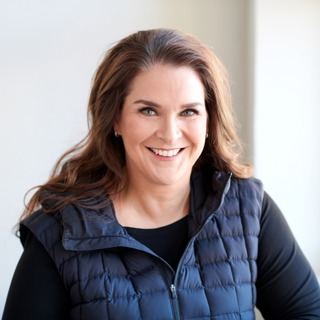
#228 – Eileen Yam on how we're completely out of touch with what the public thinks about AI
80,000 Hours Podcast20 Marras 2025

#228 – Eileen Yam on how we're completely out of touch with what the public thinks about AI

If you work in AI, you probably think it’s going to boost productivity, create wealth, advance science, and improve your life. If you’re a member of the American public, you probably strongly disagree.

In three major reports released over the last year, the Pew Research Center surveyed over 5,000 US adults and 1,000 AI experts. They found that the general public holds many beliefs about AI that are virtually nonexistent in Silicon Valley, and that the tech industry’s pitch about the likely benefits of their work has thus far failed to convince many people at all. AI is, in fact, a rare topic that mostly unites Americans — regardless of politics, race, age, or gender.

Links to learn more, video, and full transcript: https://80k.info/ey

Today’s guest, Eileen Yam, director of science and society research at Pew, walks us through some of the eye-watering gaps in perception:

  • Jobs: 73% of AI experts see a positive impact on how people do their jobs. Only 23% of the public agrees.
  • Productivity: 74% of experts say AI is very likely to make humans more productive. Just 17% of the public agrees.
  • Personal benefit: 76% of experts expect AI to benefit them personally. Only 24% of the public expects the same (while 43% expect it to harm them).
  • Happiness: 22% of experts think AI is very likely to make humans happier, which is already surprisingly low — but a mere 6% of the public expects the same.

For the experts building these systems, the vision is one of human empowerment and efficiency. But outside the Silicon Valley bubble, the mood is more one of anxiety — not only about Terminator scenarios, but about AI denying their children “curiosity, problem-solving skills, critical thinking skills and creativity,” while they themselves are replaced and devalued:

  • 53% of Americans say AI will worsen people’s ability to think creatively.
  • 50% believe it will hurt our ability to form meaningful relationships.
  • 38% think it will worsen our ability to solve problems.

Open-ended responses to the surveys reveal a poignant fear: that by offloading cognitive work to algorithms we are changing childhood to a point we no longer know what adults will result. As one teacher quoted in the study noted, we risk raising a generation that relies on AI so much it never “grows its own curiosity, problem-solving skills, critical thinking skills and creativity.”

If the people building the future are this out of sync with the people living in it, the impending “techlash” might be more severe than industry anticipates.

In this episode, Eileen and host Rob Wiblin break down the data on where these groups disagree, where they actually align (nobody trusts the government or companies to regulate this), and why the “digital natives” might actually be the most worried of all.

This episode was recorded on September 25, 2025.

Chapters:

  • Cold open (00:00:00)
  • Who’s Eileen Yam? (00:01:30)
  • Is it premature to care what the public says about AI? (00:02:26)
  • The top few feelings the US public has about AI (00:06:34)
  • The public and AI insiders disagree enormously on some things (00:16:25)
  • Fear #1: Erosion of human abilities and connections (00:20:03)
  • Fear #2: Loss of control of AI (00:28:50)
  • Americans don't want AI in their personal lives (00:33:13)
  • AI at work and job loss (00:40:56)
  • Does the public always feel this way about new things? (00:44:52)
  • The public doesn't think AI is overhyped (00:51:49)
  • The AI industry seems on a collision course with the public (00:58:16)
  • Is the survey methodology good? (01:05:26)
  • Where people are positive about AI: saving time, policing, and science (01:12:51)
  • Biggest gaps between experts and the general public, and where they agree (01:18:44)
  • Demographic groups agree to a surprising degree (01:28:58)
  • Eileen’s favourite bits of the survey and what Pew will ask next (01:37:29)

Video and audio editing: Dominic Armstrong, Milo McGuire, Luke Monsour, and Simon Monsour
Music: CORBIT
Coordination, transcripts, and web: Katy Moore

Jaksot(325)

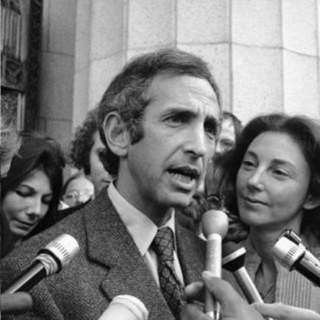
#43 - Daniel Ellsberg on the institutional insanity that maintains nuclear doomsday machines

#43 - Daniel Ellsberg on the institutional insanity that maintains nuclear doomsday machines

In Stanley Kubrick’s iconic film Dr. Strangelove, the American president is informed that the Soviet Union has created a secret deterrence system which will automatically wipe out humanity upon detect...

25 Syys 20182h 44min
#42 - Amanda Askell on moral empathy, the value of information & the ethics of infinity

#42 - Amanda Askell on moral empathy, the value of information & the ethics of infinity

Consider two familiar moments at a family reunion. Our host, Uncle Bill, takes pride in his barbecuing skills. But his niece Becky says that she now refuses to eat meat. A groan goes round the table; ...

11 Syys 20182h 46min

#41 - David Roodman on incarceration, geomagnetic storms, & becoming a world-class researcher

#41 - David Roodman on incarceration, geomagnetic storms, & becoming a world-class researcher

With 698 inmates per 100,000 citizens, the U.S. is by far the leader among large wealthy nations in incarceration. But what effect does imprisonment actually have on crime? According to David Roodman...

28 Elo 20182h 18min

#40 - Katja Grace on forecasting future technology & how much we should trust expert predictions

#40 - Katja Grace on forecasting future technology & how much we should trust expert predictions

Experts believe that artificial intelligence will be better than humans at driving trucks by 2027, working in retail by 2031, writing bestselling books by 2049, and working as surgeons by 2053. But ho...

21 Elo 20182h 11min

#39 - Spencer Greenberg on the scientific approach to solving difficult everyday questions

#39 - Spencer Greenberg on the scientific approach to solving difficult everyday questions

Will Trump be re-elected? Will North Korea give up their nuclear weapons? Will your friend turn up to dinner? Spencer Greenberg, founder of ClearerThinking.org has a process for working out such real...

7 Elo 20182h 17min

#38 - Yew-Kwang Ng on anticipating effective altruism decades ago & how to make a much happier world

#38 - Yew-Kwang Ng on anticipating effective altruism decades ago & how to make a much happier world

Will people who think carefully about how to maximize welfare eventually converge on the same views? The effective altruism community has spent a lot of time over the past 10 years debating how best t...

26 Heinä 20181h 59min

#37 - GiveWell picks top charities by estimating the unknowable. James Snowden on how they do it.

#37 - GiveWell picks top charities by estimating the unknowable. James Snowden on how they do it.

What’s the value of preventing the death of a 5-year-old child, compared to a 20-year-old, or an 80-year-old? The global health community has generally regarded the value as proportional to the numbe...

16 Heinä 20181h 44min

#36 - Tanya Singh on ending the operations management bottleneck in effective altruism

#36 - Tanya Singh on ending the operations management bottleneck in effective altruism

Almost nobody is able to do groundbreaking physics research themselves, and by the time his brilliance was appreciated, Einstein was hardly limited by funding. But what if you could find a way to unlo...

11 Heinä 20182h 4min

Suosittua kategoriassa Koulutus

rss-murhan-anatomia
voi-hyvin-meditaatiot-2
rss-narsisti
adhd-podi
psykopodiaa-podcast
rss-rahamania
rss-valo-minussa-2
rss-uskonto-on-tylsaa
rss-niinku-asia-on
mielipaivakirja
rss-vapaudu-voimaasi
rss-duodecim-lehti
rahapuhetta
ilona-rauhala
aamukahvilla
kesken
dear-ladies
rss-eron-alkemiaa
rss-arkea-ja-aurinkoa-podcast-espanjasta
rss-koira-haudattuna