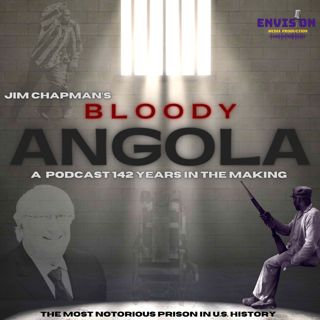
The Escape of Joe Williams
In this episode of "Bloody Angola," we share Joe Williams' daring escape from Angola prison, detailing his evasion for four days fueled by mushroom tea. Timestamps:08:17 A Desperate Decision15:54 Early Life and Upbringing25:20 Revisiting Clemency27:14 Recent News: Drug Trafficking Conspiracy30:06 Smuggling Contraband: Washington Parish JailSponsors:Badlands RanchAir-Dried Nutritious Dog Food Superfood Complete contains some of the healthiest foods on Earth — humanely raised beef, nutrient-dense organ meat, omega-packed salmon, and gut-healthy vegetables. And of course, a variety of our favorite superfoods, chosen to help support your dog’s smooth digestion, healthy energy level, and easy-moving joints. These ingredients are cooked responsibly at low temperatures and air-dried for maximum nutrition. Superfood Complete contains no meat meal, byproduct, or preservatives known to cause health issues in many dogs — it’s all of the good stuff your dog needs to thrive, with none of the bad.Check out the video below!https://www.badlandsfood.com/BloodyAngolaOur Sponsors:* Go to badlandsfood.com/BLOODYANGOLA to learn how you can see incredible changes in your dog’s health!Advertising Inquiries: https://redcircle.com/brandsPrivacy & Opt-Out: https://redcircle.com/privacy
9 Touko 202440min
Part 2 | The Deathmen
In this episode we include 'The Deathmen" series and tell you unknown facts regarding Louisiana's executioners including "The hangman of New Orleans" Harry Meyer and Louisiana State Penitentiary at Angola executioners Grady Jarrett and Sam Jones.Timestamps:02:24 Louisiana's First Legal Execution04:28 The Hangman of New Orleans11:42 Transition to the Electric Chair19:12 The Search for a New Executioner20:41 Sam Jones: The New Executioner24:03 Reflection on Historical Execution Methods#Podcast #prison #crime #bloodyangolaSpecial Listener Deals!Badlands Ranch:Go watch this 20 Minute Video presented by Katherine Heigl and learn some amazing tips on the health of your dog.Click Here to watch now!Advertising Inquiries: https://redcircle.com/brandsPrivacy & Opt-Out: https://redcircle.com/privacy
2 Touko 202433min
"C-Murder Killed My Brother" | George Thomas, No Limit & Corey Miller
George Thomas shares his family story of dealing with the tragic death of his brother Steve Thomas at the hands of rap star and No Limit Records recording artist Corey Miller also known as C-Murder, the brother of founder Master P.George goes into detail with Woody Overton and Jim Chapman on Bloody Angola Podcast regarding the case itself, responds to calls from Kim Kardashian to "Free C-Murder" and the impact the case has had on his entire family.Timestamps02:15 Diverse Crime Stories03:42 Personal Backgrounds and Music Influence05:07 Upbringing in New Orleans06:54 Temptation of Street Life08:51 Military Influence10:20 Life in Leavenworth15:39 Shocking News of Brother's Murder18:16 Involvement of C-Murder20:48 Brother's Love for Rap Battles22:13 Fond Memories of Brother32:46 Concealed Information and Media Control35:53 Emotions in Courtroom35:56 Uncovering the Truth38:32 The Wine Flowers Incident39:31 The Emotional Testimony40:09 Dealing with Threats40:53 Unveiling the Industry42:06 Facing Public Scrutiny46:32 Reflections on Remorse46:56 Remembering the Victim52:39 Seeking Justice54:15 Seeking the Truth55:10 Respecting Intentions56:30 Unexpected Apologies59:07 Sharing the Story59:57 Choosing Redemption1:00:41 Making Life Choices1:03:14 Making a Difference1:03:55 Sharing Personal Journeys1:05:22 Seeking Peace1:08:45 Speaking Hard Truths#kimkardashian #cmurder #nolimitrecords #stevethomas #rap #podcast #masterp #deathrow #bloodyangolaAdvertising Inquiries: https://redcircle.com/brandsPrivacy & Opt-Out: https://redcircle.com/privacy
25 Huhti 20241h 11min
Part One | The Deathmen
In this episode of Bloody Angola Podcast, we explore the dark history of executioners throughout civilizations, from their origins to their roles under tribal leaders and monarchs. Woody and Jim delve into the lives of infamous executioners like Derek and John Crosland, revealing chilling details of their deeds. Various methods of execution over the centuries are discussed, including the guillotine's introduction by Dr. Joseph Guillotine, transforming the landscape and speed of executions.01:30 Introduction03:45 Origins of Executioners12:48 Unique Identification Methods19:27 Love in the DungeonAdvertising Inquiries: https://redcircle.com/brandsPrivacy & Opt-Out: https://redcircle.com/privacy
11 Huhti 202430min
The Legend of Lead Belly
In this episode, we explore the life of Lead Belly, a prominent blues singer originating from the infamous Bloody Angola prison. Spanning the 1930s, we witness Lead Belly's turbulent journey from incarceration to musical stardom, showcasing his exceptional 12-string guitar skills and prestigious performances at locales like Carnegie Hall and induction into the Rock and Roll Hall of Fame. We delve into the harsh realities of life in Bloody Angola during the Great Depression, shedding light on inmate challenges and the vital role of correctional officers in maintaining order. Additionally, we touch upon the evolving landscape of law enforcement, the complexities detectives encounter, and the significance of adequate funding for police departments. Timestamps0:53 Lead Belly's Story Begins14:23 Lead Belly's Violent Altercations15:53 Lead Belly's Murder Conviction20:58 Lead Belly's Recording Opportunity21:57Lead Belly's Release and Musical Success26:14 Lead Belly's Hit Song30:24 Reflections on Lead Belly's Legacy36:51 Challenges Faced by Correctional Officers42:45 Law Enforcement Challenges44:00 Investigative PrioritizationAdvertising Inquiries: https://redcircle.com/brandsPrivacy & Opt-Out: https://redcircle.com/privacy
4 Huhti 202449min
Horror Show
Woody and Jim into the history of the electric chair, discussing various executions that took place in the past. William Kemmler's execution in New York in 1890 marked the first time the electric chair was used, aiming to replace the gruesome public hangings of the time. The podcast highlights the mishaps that occurred during electrocutions, such as William Taylor's legs ripping off during the process. It also explores how Louisiana transitioned from hangings to using the electric chair in 1940 and eventually to lethal injection in 1991.Additionally, we want to acknowledge the support of Lori Johnson, a Louisiana community figure participating in a fundraising event for the Big Buddy Program. If you would like contribute to the cause and show support for Lori, we provide her specific link below.https://dancingforbigbuddy.com/dancer/lori-johnson/?fbclid=IwAR0aHVAqaX_u_kCMjAn4mw_7E1eY5MXNUifV8mpKfHEdkT2VCmbJaEtHgigTimestamps0:03:57 The History of the Electric Chair0:06:49 Public Executions and the Shift to Electric Chair0:14:19 Transition to Electric Chair in Louisiana0:15:31 Introduction of Portable Electric Chair in Louisiana0:19:44 Increase in Louisiana Executions via Electric Chair0:28:05 History of Executioners in the US and Bloody Angola0:29:30 Exploring Alternate Forms of Execution0:33:11 Reflections on the Justice System and Executions0:35:22 Shout-Out to Lori Johnson's Fundraiser0:37:24 Wrapping Up and Rodeo PlansAdvertising Inquiries: https://redcircle.com/brandsPrivacy & Opt-Out: https://redcircle.com/privacy
21 Maalis 202441min
Part 2 | The Richest Man In Bloody Angola: Wilbert Rideau
In this Part 2 we wraps up this series "The Richest Man in Bloody Angola" .In this episode, we dive into the story of Wilbert Rideau, a man who spent 44 years in prison for a crime he committed in 1961. We explore his journey from a young man involved in a tragic incident to his time in prison, including solitary confinement and his reflections on regret and survival. We discuss his various trials, legal battles, and ultimately his release after being found guilty of manslaughter in his fourth trial. Wilbert's transformation during his time in prison, his accomplishments as a journalist, filmmaker, and author post-release, and the challenges he faced reintegrating into society are all highlighted. We also touch on the perspectives of the victims' families and the complexities of forgiveness and redemption. The episode explores the question of rehabilitation and whether Wilbert Rideau, now a successful author and consultant, has truly changed from the person he was in 1961. Ultimately, we reflect on Wilbert Rideau's journey and the contrasting feelings of justice, forgiveness, and the ongoing impact of his release.Timestamps:0:01:51 Facing Regrets and Solitary Confinement0:03:37 Hope in Solitude0:06:30 The Hope of Clemency0:09:39 Linda LaBranche's Support0:13:55 Legal Dream Team with Johnny Cochran0:16:47 Judicial Rollercoaster0:21:33 Opening Statements of Fourth Trial0:26:01 Conclusion of Fourth Trial0:28:44 Rideau's Release and Community Divide0:37:00 Concerns and Plans Post-Prison0:39:14 Wilbert Rideau's Biographical Success0:41:58 The Richest Man in Bloody AngolaAdvertising Inquiries: https://redcircle.com/brandsPrivacy & Opt-Out: https://redcircle.com/privacy
14 Maalis 202444min
Part 1 | The Richest Man In Bloody Angola: Wilbert Rideau
In this episode of Bloody Angola, Jim Chapman delves into the story of Wilbert Rideau, a prisoner with a remarkable journey. Rideau achieved significant accomplishments behind bars, winning prestigious journalism awards and making substantial reforms within the Angola prison. Chapman vividly describes Rideau's background, including his upbringing in Louisiana and his involvement in a fateful armed bank robbery in 1961. The detailed account of the robbery and its consequences on Rideau's life are presented, highlighting the tragic events that unfolded that night.Chapman delves into Rideau's multiple trials, each resulting in a first-degree murder conviction and a death sentence. Despite Rideau's claims of panic and lack of premeditation, the courts repeatedly found him guilty. The emotional impact on the victims, especially Dora McCain, a surviving bank teller, is powerfully portrayed through their statements during Rideau's clemency hearings. The tension between Rideau's rehabilitation and the severity of his crime is a central theme throughout the episode.The episode captures the complex emotions and moral dilemmas surrounding Rideau's case, including insights from journalists, D.A., and Rideau's mother. Despite his outstanding achievements in journalism and documentary filmmaking while in prison, Rideau faces the ongoing challenge of seeking clemency and ultimate release. The episode ends with a hint of a forthcoming episode, promising a continuation of Rideau's story and the surprising turns it takes. Throughout the episode, Chapman's narrative style immerses the listeners in the compelling and controversial story of Wilbert Rideau and the Angola prison.Timestamps:0:03:20 Rideau's Accomplishments and Reforms0:04:53 Recognition and Fame0:05:13 Wilbert Rideau's Upbringing0:06:50 The Bank Robbery0:11:54 The Bank Robbery - Confrontation0:14:30 The Bank Robbery - Panic Sets In0:20:32 Publicity Surrounding Rideau's Case0:23:16 Legal Battles and Appeals0:26:47 Interview Reflection on the Crime0:33:54 Rideau's Notable Achievements0:38:19 Rideau as Editor of Angola0:41:04 Rideau's Clemency Hearing0:45:29 Public Response to Rideau's Clemency0:47:11 Clemency Decision0:50:41 Rideau's Success in PrisonAdvertising Inquiries: https://redcircle.com/brandsPrivacy & Opt-Out: https://redcircle.com/privacy
7 Maalis 202457min