When Evil Escapes | The Crimes of Casey White & Vickie White
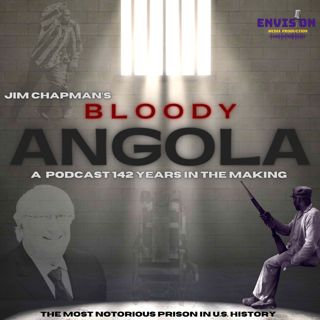
Woody Overton and Jim Chapman tell the story of Casey White and Vickie White who just last year led authorities on an 11 day manhunt following Casey White's escape from prison in one of the most adrenaline filled escapes in United States history.#CaseyWhite #VickieWhite #PrisonEscape #Podcast #WhenEvilEscapesCheck out past episodes on our website by clicking hereFULL TRANSCRIPTJim: Hey, everyone. Welcome back to another edition of Bloody-Woody: -Angola.Jim: A podcast 142 years in the making.Woody: The Complete Story of America's Bloodiest Prison.Jim: And I'm Jim Chapman.Woody: And I'm Woody Overton.Jim: And we're back with a new episode.Woody: We're back, y'all. And, hey, patrons, thank y'all so much for supporting us. And as any show does, eventually, we took, what, a two-week hiatus? Jim: Yeah, we dropped just for patrons for a couple of weeks.Woody: Right. But we've had meanwhile-- it's funny, we take the little break, and we go to number five again and we're kind of going viral on Bloody Angola and we won't take much time off, y'all, but sometimes it is what it is. That being said, we want to thank everybody and we welcome all you new listeners to this edition of Bloody Angola. What we told y'all, or I've told y'all in every episode of Bloody Angola, is you're always going to get something different. Today's case is really different, because while the story is not directly related to Angola, I can tell you it's directly related to Angola.Jim: [laughs]Woody: The case is about a guy named Casey White, who was a convict, and Vicky White, who was a correctional officer. And we're going to get into it but let me tell you this. I can tell you, I've seen it, I've arrested people inside the prison for doing it. What it boils down to is correctional officers and inmates fucking. Jim: Yeah.Woody: You wouldn't think, Jim, that that would happen, but it probably happens more than inmates doing it. I think the convicts use-- certainly some of the people locked up in prison are geniuses and they are master manipulators for whatever the crimes may have been. They find that weak person, male or female. We've done an episode on Bloody Angola about the lieutenant who was banging a convict. But it happens, male and female. So, it's a very real deal inside the prison. I told you, anytime you go behind those gates or the walls, that that normal rules don't apply. And it is what it is.Y'all, I've actually seen it. I'll tell you one case that really sticks in my head. There was a politician's daughter, and she was an attractive female, who was a correctional officer. Now, naturally, he got her the job and they gave her a cush job. She was in the canteen. She worked where they got all the snacks and shit from. She had an orderly who worked with her when-- we called him, really working her from behind, literally. Jim: [laughs] Woody: And somebody else had snitched on them. So, we set it up and waited for the opportunity and busted in. They were butt naked, and he was balls deep. She didn't get arrested because of who she was, but she got fired, and he got swung to the working cell block. Jim: Oh, very nice.Woody: But this story is super, super interesting. You know what? I told you correctional officers, some of the best people in the world, and then some of them that you work with that are worse than inmates. This story really shows how the human psyche can roll out, because you can be the best correctional officer for years and then sugar turns into shit. Jim: That’s right. This is a good example of it. As Woody just told you, it's one hell of a story. The best place to start is, I want to give you guys and gals an idea of the background of these two subjects that we're going to talk about. The first one is Casey White, y'all. Now, to call this guy a stone-cold killer would really be putting it mildly. The first thing you notice when you see Casey White is his size. He's just flat out a giant of a human being. Woody: Like a freak of nature giant.Jim: Freak of nature, 6'9", weighed 330-- [crosstalk] Woody: There's not that many players in the NBA that are 6'9". Jim: There's probably not a bunch of people on Earth that are 6'9" and 330 pounds. And, y'all, this ain't fat. This is solid prison muscle. And prison muscle, as you've heard Woody talk about many times on Real Life Real Crime, is different than free people muscle. [laughs] Woody: Jim and I have been here before, and somebody came in to be a guest on the show, and I was like, "Oh, shit, that's prison muscle." Jim: Oh, yeah. You spot it right off, and that's what he had. The next thing you'll notice about this guy is his tattoos. Now, he has tons of them, but this isn't your typical barbed wire or if you're in the navy, you've got an anchor on your bicep or something. These are mostly white supremacist related tattoos. He was associated with the Alabama-based white supremacist prison gang, Southern Brotherhood. So, not a nice individual. In addition to being a freaking Jolly Green Giant. Woody: We need to cover this one day, and we will on prison gangs, different ones, maybe episode on each one. Let me tell you about the Aryan-based prison gangs. They're like the military. On your yard time, you have to work out. They work out in formation. They stay to themselves, etc. The prison muscle deal, if you don't work out and you're not swole, they'll beat your ass. If you don't do what they order you to do, they'll kill you. But at 6'9", 330 pounds, I bet you he was a shot caller.Jim: Oh, yeah. What we're trying to do here is paint y'all a picture of how intimidating this guy is before you even know even a shred of his criminal record. Now, you may wonder what's that look like. Well, get ready for this. Woody: Well, in 2006, Casey White was arrested on a domestic violence charge. But, Jim, it wasn't his wife. Domestic violence doesn't mean it's your spouse. In this case, he was arrested for beating his mama's ass. His own mother. Four years later, in 2010, he pled guilty to attacking his brother, another domestic violence, with an axe handle, and was sentenced to six years in prison.And, y'all, in December 2015, Mr. White went on another crime spree where he tracked down and tried to kill his ex-girlfriend. The rampage spanned both Alabama and Tennessee as he held victims at gunpoint, shot one woman in arm, killed a dog, and carried out a home invasion and staged multiple carjackings before he was finally captured in a dramatic police chase. Now, this spree unfolded on the morning of December 1st, 2015, when he broke into a home and stole two guns. Later that night, he turned up at his girlfriend's house armed with the stolen guns and opened fire on her and two men inside the home.Jim: Didn't even hesitate.Woody: He had it on his mind. After that, White then broke into another home and stole a man's car and another gun. Around an hour later, he shot another woman in the arm in an attempted carjacking in Tennessee before carjacking another person at gunpoint.Jim: This is all the same freaking weekend.Woody: He's just rolling. I mean, he's just straight up thug life. White was finally captured in a dramatic 100-mile-an-hour police chase that ended in a standoff back over the border in Alabama. Now, he's in a standoff. And during the standoff, he demands to speak to the sheriff and threatened to shoot himself in the head. He asked for a pack of Marlboro cigarettes and a Sun Drop soda before he surrendered. Jim: [laughs] Got to have them Marlboros. Woody: Got to get me them reds. Jim: That’s crazy.Woody: Got to get that voice right. Well, he knew he was going back to prison. In 2019, White was convicted on multiple charges over the rampage, including attempted murder of his ex-girlfriend, and he got 75 years in prison. Jim: So, that's what kind of guy we're dealing with here. Woody: Real winner.Jim: I guess you could say, walks the walk and talks the talk when it comes to it. Woody: When you tat yourself up with Swastikas and shit, you're pretty much not going to get a job as a whatever, as an accountant. I mean, you're in for the thug life. He's proven it, and he has total disregard for the law and anything going on with it.Jim: Yeah, so he's right where he belongs. And while serving this 75--Woody: He's the reason they build Bloody Angolas. Jim: Yeah, that's right. While serving this sentence of 75 years, he's also awaiting a trial for the 2015 stabbing and murder of a 58-year-old mother of two named Connie Ridgeway. Now shortly after he got locked up for that 75-year stint, he provided a confession for that particular murder. Now, she was found stabbed to death in her apartment. This was in Rogersville, Alabama on the 23rd October of 2015. The case went unsolved for five years until White sent a letter to the Lauderdale County Sheriff's Office confessing to the crime. During a subsequent interview with authorities, he allegedly gave details about the crime that had not been made public which only the killer, y'all, would have known. Prosecutors say he was paid to carry out that hit. Woody: Got to make a living. Jim: Got to make a living. Look, his whole life, that's how he generated money, I'm sure. In 2020, he was charged with two counts of capital murder. Now, after confessing to the murder in which he initially pled guilty, he changes his plea to not guilty by reason of mental illness. Woody: See how that works out for him.Jim: Yeah, primarily because they were going for the death penalty if he was convicted in that case. So, there's no way at that point he's going to plead just straight up guilty. Now, if tha
4 Touko 202353min
The Rise & Fall of C-Murder | Bloody Angola Podcast
This Thursday on Bloody Angola: A Prison Podcast by Woody Overton and Jim Chapman We bring you the story of Corey Miller, the brother of famed rap entrepreneur Master P and sibling to a business dynasty known as No Limit Entertainment.In 2009 C-Murder was sentenced to life in prison with no parole and made his way to Louisiana State Penitentiary at Angola but has always maintained his innocence.With stars such as Kim Kardashian and Monica advocating for his release, Woody and Jim bring you not only the case itself but some information you will hear for the very first time.#nolimitrecords#masterp#CMurder#truecrimepodcast#rap#truecrime#kimkardashian#louisianastatepenitentiary#angola#woodyovertonpodcast#bloodyangola #JimChapmanPodcast #WoodyOverton #RealLifeRealCrimeThe Rise and Fall of C-Murder!FULL TRANSCRIPTJim: Hey, everyone. Welcome to this edition of Bloody-Woody: Angola.Jim: A podcast 142 years in the making.Woody: The Complete Story of America's Bloodiest Prison.Jim: And I'm Jim Chapman.Woody: And I'm Woody Overton.Jim: Look, we've gotten more requests of this really in the past couple of months than we've ever had.Woody: Right. It's a really, really interesting case, actually born out of Louisiana, but known worldwide.Jim: Global.Woody: We're going to tie it into Bloody Angola but let's tell you about the case first. See, y'all today we're going to be talking about Corey Miller, also known as C-Murder, and he was a famous Deep South rapper. Corey was part of No Limit Records, and his brothers include the founder of No Limit and rapper Percy Miller known as Master P. And Vyshonn Miller known as Silkk the Shocker, and his nephew, Romeo Miller, known as Lil' Romeo.Before we tell you the full story regarding C-Murder, we have to tell you where he came from. He was born and raised in the very rough 3rd Ward Calliope Projects of New Orleans. His oldest brother, Percy, known as Master P, was a basketball star in high school and received a basketball scholarship to play for the University of Houston. However, Percy dropped out months into his freshman year and transferred to Merritt College in Oakland, California, to major in business. After the death of his grandfather, Percy inherited $10,000 as part of a malpractice settlement and opened up a record store called No Limit Records. Jim: That's right. In 1990, his older brother Percy released his first cassette tape. Yep, cassette tapes, remember, y'all?Woody: Cassette tape. [crosstalk] Jim: It was called Mind of a Psychopath. In that same year, he became Master P.Woody: Master P.Jim: Now, that same year, Corey's brother Kevin was killed in New Orleans. Master P, he kind of used that as motivation to get his record label off the ground and get his family out of the New Orleans projects where they were from, y'all, in the third world, the Calliope Projects. Very, very, tough, tough neighborhood. Woody: Let me tell you about this real quick. Let me interject. In the prison system in Angola or DCI, wherever you're at, all the convicts will refer to-- someone asking, I'll say, "Where are you from?" "The city." Well, the city means New Orleans. They automatically say, "What ward?" New Orleans is broken down into wards, most famously known for the 9th Ward. But each ward had its own project. Now, that's not a derogatory term. Back then, before Katrina, you literally couldn't go two blocks in any direction, even if you were on St. Charles in the richest neighborhood and you hit--Jim: Where Mike lives.Woody: Right, where Mike Agovino lives, and you hit projects. These are big high-rise buildings that the government used for low-income housing. They had their own police force even though they're part of NOPD, but they wouldn't even go in there for a shots fired call unless they had two or more units. Jim: That's right. Woody: It was rough. Jim: Yeah, it was rough. Obviously, oldest brother Percy, known as Master P, it was his goal to get his family out of the ghettos of New Orleans. It was kind of from this start that No Limit Records became a full-blown empire. Master P, in particular, became a beast in the way of business investments. I mean, just about everything this guy touched turned into gold. He was no idiot at all. No Limit invested in all kinds of successful ventures. They had an energy drink company, a sports management company, a publishing company, fast food companies. No Limit Enterprises became so successful, in fact, that in 1998 alone, the company grossed $110,000,000. Woody: That's a lot of duckies.Jim: That is a lot.Woody: Homegrown, right? Jim: Yep.Woody: Corey Miller was growing, y'all, at this time as a rapper, and his rap name was C-Murder. I know y'all have heard of that. Corey was the top of his game, and he had been the focal point of No Limited Records, and he was one of the wealthiest and most popular artists on the label until February 12th, 2002, when a Jefferson Parish grand jury indicted him for the murder of 16-year-old Steve Thomas in a New Orleans nightclub. In the early morning hours of January 12th, 2002, Deputy Brian Singleton received a call to respond to a shooting at the Platinum Club in Harvey, Louisiana, y'all, which is a suburban yours. When he arrived, Officer Singleton observed a large crowd of over 100 people screaming and running out the door of the club in a hectic state. As he made his way through the crowd, he observed over 100 to 150 people still inside. It was at this time he saw the victim, later identified as 16-year-old Steve Thomas, lying on his back, suffering a single gunshot wound to his chest. Deputy Singleton leaned down and tried to speak to the victim, but the victim was unresponsive, and the deputy radioed for medical assistance. Jim: Now, other deputies, they started to arrive, and Deputy Singleton then requested that all the doors be locked and all the officers start canvassing the club. They were going to get statements. Woody: Right. It's an active crime scene.Jim: Darnell Jordan, he worked security at the club that night, and he stated that a fight broke out between the pool table and the dance floor, and 15 to 20 people were beating down the victim. He said the victim was lying on his back and kind of trying to cover himself up. Turtling, as we call it. He was getting kicked and punched. That is when he kind of ran in and he tried to break up the fight.He said he grabbed C-Murder and told him, "Hey, man, chill out." C-Murder responded, "Aight." He then said he heard a gunshot. He also stated he never saw C-Murder kick or punch the victim, but he was about a foot away when C-Murder reached his hand into the pile of people, and the next thing he knew, he saw a flash at the end of it. In the 911 call, it's important to mention that Darnell never mentioned knowing who the shooter was. It's also important to mention that his story has changed many times regarding the identity of the shooter. Woody: Right. Which makes his testimony not worth a shit. But Denise Williams, who was also interviewed that night and said that the shooter was an individual named Derek Taylor. Detective Donald Clogher, who had been handed the lead in the case, stated that he could tell she was not being truthful, and later she admitted to having lied. She stated it was because she was fearful for her own safety, although she never identified C-Murder as the shooter. Corey Miller agreed to give a statement but was not willing to offer a recorded statement. He said he was, in fact, at the Platinum Club the night of the shooting, and he was talking to the DJ when heard the shot and was pushed out of the club at that point by an unknown individual.One of the key points, y'all, is that the detectives made note of during the questioning was that he asked about specific facts of investigation, inquired as to if witnesses were cooperating and was fishing to find out who they were. The detectives believed he was asking all these questions so that he could ascertain anyone who was cooperating with police to make threats upon them if they talk. They're talking about C-Murder, y'all.Jim: Yeah. And, Woody, you've interrogated countless amounts of individuals. Is that something that would raise a flag with you if they were asking--?Woody: Yeah. That's almost like people coming back to revisit the crime scene to watch or whatever and interjecting themselves in an investigation. The fact that he's coming back in and he's like, "Who's talking? Who's talking?"Jim: Yeah. "Y'all got any information on the case?"Woody: "Who's talking?" That's definitely the right red flag. Jim: Almost showing too much interest in what's going on. Kenneth Jordan was also a witness at the club that night. Now, he stated that the celebs, they get to skip the line and that although a metal wand is used for weapons checks, y'all have all seen that, the airport or whatever, they scan you up and down with that metal wand. He stated they don't really do that for celebrities, of which C-Murder was one. At this time, y'all, he was big. He was killing it everywhere, everything he touched.Woody: No pun intended.Jim: Yeah, [chuckles] no pun intended. He stated there was a rap contest that night, and the victim was in the contest. He said after the victim got off the stage, someone in a CP3 hoodie ran up and attacked the victim. And, y'all, let me tell you about CP3. CP3 stands for the Calliope Projects. It's basically CP and then 3 is for Third Ward, which is what hood C-Murder grew up in. Kenneth Jordan continued to say that the victim was fighting for his life when he got jumped by six or seven people and that C-Murder was not throwing punches and just watching the fight. He said once the fight was over, Corey Miller stood over the victim and s
13 Huhti 202340min
Breaking the Chains!
In this episode of Bloody Angola: A Podcast by Woody Overton and Jim Chapman we bring you an amazing interview by our friends at The P2P Podcast (Penitentiaries to Penthouses)At 16, Kiana was convicted & sentenced to 2 life sentences without parole. While physically he was incarcerated, mentally he was FREE. Resilience is his name and after 17 years of living in the can God made a way for him to be in physical freedom.#formerlyincarcerated #prisonstories #redemption #secondchances #bloodyangolapodcast #woodyoverton #jimchapman #truecrime #realliferealcrimeBREAKING THE CHAINS - FULL TRANSCRIPT - BLOODY ANGOLA PODCASTJim: Hey, everyone, and welcome to Bloody Angola. A podcast 142 years in the making. The Complete Story of America's Bloodiest Prison. And I am Jim Chapman. Woody Everton cannot join us today. He is on assignment. But we're bringing you something different today. We did a two-part series, if you haven't checked it out yet, it's called Second Chances. It features a former inmate at Louisiana State Penitentiary at Angola. He was actually the first juvenile released when the Supreme Court passed a law making it possible for juveniles who were sentenced to life in prison without parole to get a parole hearing after 25 years. If you haven't seen that episode yet, go check it out.This week, we have a very special episode. The guy we brought you the story of and who actually joined us for the two episodes of Second Chances, we met through our friends at Penitentiaries 2 Penthouses. It's a podcast known as P2P, and they interview formerly incarcerated people that are doing well as they acclimate back into society. When we did the Second Chances episodes, they were a big part of that, certainly a big part of making the introduction to the gentleman that came on the show. So, thank you so much to P2P.And they have an amazing podcast. So, we have decided that we're going to bring y'all one of their episodes and we're going to share it on our feed. We thought y'all would really enjoy it. We have some really, really big stuff about to pop off for Bloody Angola. I know that y'all are going to be real excited as we go through that process, but I think y'all will love this episode. It is with a gentleman by the name of Kiana Calloway who was in Angola for a very long time and has quite a story that you need to hear or that you will enjoy hearing. Without further ado, here's the P2P Podcast in their interview with Kiana Calloway. [P2P theme]Scott: Welcome, everybody. This is Scott with Penitentiaries 2 Penthouse Podcast. Shane: Yes, sir.Scott: I'm your host. To the left of me, we got Mr. Beatty.Beatty: Your best friend in real estate. Scott: To the right of me, we've got our guest, Mr. Kiana Calloway. Kiana: Swag out. What's happening? Scott: Special gentleman he is. And then, we got my partner over here to the left, Mr. Shane Johnson. Beatty: Big Shane.Shane: Yes, sir. 24 years successful now. Scott: There you go. We look forward to digging into today's message. Kiana, man has a powerful story. How I know Kiana is we work on a project together through the Justice and Accountability Center of Louisiana. Basically, that's nonprofit organization full of attorneys and policy people who march down to the state capitol every year.Kiana: Shoutout, JAC.Scott: JAC. And they do legislative work, so they propose bills, work with lobbyists, senators, representatives to pass criminal legal reform bills. The specific focus though is usually expungement legislation. For those of you who don't know what expungement legislation is, expungements are the things that guys like myself, Kiana, Mr. Shane over there need once we come home for opportunities. Whether it's employment, housing, life insurance, you name it, there's hundreds of things that we get denied for on a regular basis based on the fact that we made some mistakes in our lives and we've paid our time, we've paid our debt, and we're trying to get past that. So, the work that we're doing revolves around expungements. A, changing expungement law, but B, getting the knowledge and information out there because the average Joe that comes home from prison-Kiana: Don't even know about it.Scott: -don't know about expungements, don't know how to go about getting expungements. Furthermore--Shane: I am one.Scott: Yeah, exactly. And they're expensive as hell. You could easily rack up if you have multiple felonies, several thousand dollars just in paying the state, the district attorneys, and the clerks of court's office, not even including legal counsel. That's the work that the Justice and Accountability Center does. Me and Kiana are working on a project to get the expungement app through Justice and Accountability Center, the information there out. So, we're going to be traveling, presenting workshops, getting the information out there so that people can access expungements equitably.Kiana: Plug in, man, we're going to be in your areas very, very soon. Just being able to alleviate one of the collateral consequences that come after incarceration, I think that we're doing our part. And we'll be doing ourself a disservice, God, if we're not traveling, educating people about the work that we're putting in the state capitol. Keeping them informed that there's issues that you can get plugged into, but you just need to reach out. We can't do this in our silos. It's an honor to have run into a like-minded brother that's putting in work outside the bars because you are what you do, even when the camera is not on. [chuckles]Scott: Yeah, for sure. It's easy to look good on camera. It's harder to make it happen on the outside. But that's what I like to do. I'm just passionate about-- and just like you, passionate about making sure that people have opportunities, man, because I was given opportunities and I've had a lot of challenges, man, and I just want to see people be able to breeze through that process instead of getting caught in the hiccups.I do want to highlight a very successful human being today. As I said, I had the fortunate privilege of watching Kiana's documentary that's coming out real soon on a very, very national level. I told him today, and it's hard to get me to break down. And I told him, man-- [Shane laughs] Man, I watched it, dude, and they had some parts in it, I was just like [inhales deeply] and it'll really hit you. He's had a very, very challenged life, a lot of injustices, and I'm going to let him explain that. A lot of people see the part of the justice system that WAFB, whatever your local news channel post out there about people who commit crimes and their wrongs or whatever, but they don't talk about all those mugshots that they post where guys really didn't do what they were being accused of.I'm going to let Kiana take it from here, but if you don't mind, could you just kind of share a little bit about your upbringing and then what caused you or what led to the prison? And then we'll just kind of take it from thereKiana: Well, actually, the system led me to prison. Scott: Right. Kiana: We have to understand that the system was built to do exactly what it's doing. People say the system messed up. No, it's not messed up. It's doing exactly what it was scripted to do. We must always bring that energy back into the space. Just so happened that I have been resilient enough to really surpass the test that the system has caused upon my life. I've seen individuals in the same space, same situation, same cell, and six months later, they hung themselves because they can't handle the stresses or the traumatic expressions about being, one, either fomerly accused and convicted of a crime, or, two, just trying to figure out, like, "Man, is this my life? Is this what I'm supposed to be?" Not to get too deep into that, because my documentary, it basically shows resiliency. It shows the true test of time. Like, you can go through these hard spaces, but you have to be prepared to bounce back because everybody bounces back. Shane: Amen. Scott: What you're referring to is the school-to-prison pipeline? Kiana: Yes. Scott: Okay. Got you. Kiana: Everybody bounces back. Beatty: Explain the school-to-prison pipeline. Kiana: School-to-prison pipeline. Okay, I'm going to give it to you in layman terms. Beatty: Let's go. I am layman.[laughter] Scott: That sounds like a good movie title. [crosstalk] Beatty: I am he.Kiana: Okay, definitely. So, school-of-prison pipelines. I went to prison at 16 years old. If I was tested in the second or third grade and I read below a certain level, they built another cell for me. Just the way that it planned out, I ended up in that cell, that school-to-prison pipeline. If we understand the way that our America is functioning, three main attributes of human survival. Education, travel, and should I say-- I'll throw manufacturing and the building. Planes, the way planes first started, it crunk up, but now the evolution of planes is that it just takes off. They could probably put it on autopilot, ain't got nothing but to do the landing. And it's crazy, man. The car, it crunk up. Now, you pushed on. Why? Education is still the same. You sit in a single-file line. They teach you ABC, one, two, three and it never gives the whole individuality of the person. So, when we speak about school-to-prison pipeline, I walked through a metal detector when I was going to elementary school. If this is an educational institution, they should be focused on my education and not my protection or not my apprehension in so many different ways. We learn how to sta
6 Huhti 20231h 21min
Laying out the WIRE in the Penitentiary
Woody and Jim discuss the facilities at Louisiana State Penitentiary at Angola and cover the entire 18,000 Acres of devices available there, some of which may surprise you!#LouisianaStatePenitentiary #AngolaPrision #BloodyAngolaPodcast #PodcastAdvertising Inquiries: https://redcircle.com/brandsPrivacy & Opt-Out: https://redcircle.com/privacy
30 Maalis 202359min
Second Chances Part 2 | A Juvenile Lifers Story
Part 2 of this amazing story is here!In June 2016, Andrew Hundley became the FIRST juvenile lifer in Louisiana to be paroled following the U.S. Supreme Court’s Miller and Montgomery decisions that prohibited the mandatory sentencing of children to life without parole. It was clear that he was not the same 15-year-old who went to prison in 1997 to the parole board who approved his release.Since his release from Angola, Andrew has earned a Masters degree in Criminology, is founder of the Louisiana Parole Project and is known in all circles of justice as the real life Andy Dufrane.Whatever side of this issue you sit, you will not want to miss this episode.In this episode Woody and Jim sit down with him for an in depth interview you are not going to believe on Bloody Angola Podcast.#BloodyAngolaPodcast #LouisianaParoleProject #AndrewHundleyLouisiana Parole Project website:https://www.paroleproject.org/Check out P2P Podcast (Penitentiaries to Penthouses) Here:https://podcasts.apple.com/us/podcast/the-p2p-podcast-penitentiaries-2-penthouses/id1646270646?i=1000586120763SECOND CHANCES PART 2 TRANSCRIPTJim: Hey, everyone, and welcome back to another edition of Bloody- Woody: -Angola.Jim: A podcast 142 years in the making.Woody: The Complete Story of America's Bloodiest Prison.Jim: I'm Jim Chapman.Woody: I'm Woody Overton.Jim: And we're back for Part 2, Woody Overton.Woody: Part 2, Second Chances with our main man.Jim: Andrew Hundley. How are you?Andrew: I'm well.Jim: I feel like we just talked to you. [laughs]Andrew: Thanks for having me back.Woody: Yeah, [crosstalk] right. Andrew, I just want to say that it's an amazing story, y'all. You've got to go listen to Part 1. I don't think we've maybe done one or two series on Bloody Angola that-- actually series, one or two episodes that went past episode 1.Jim: The only one that we did was Archie Williams.Woody: No. Brent Miller.Jim: Yeah.Woody: So, two, you'll be the third. Thank you for being here, I really appreciate it. Y'all go back and listen to the first one if you haven't.Jim: Yes, please do.Woody: When we left off last, you were at state police barracks out at JESTC, and you gotto finish telling me how you got swung.Andrew: Yeah, I had unauthorized female visitor, to keep it PG. [laughter]Andrew: I had a female friend who visited me at the office I worked at one evening. I knew that wasn't supposed to happen. It happened. And I understand that you keep visitors off of the premises because you never know who's going to be coming out there, what they're going to be bringing out there.Jim: I ain't hating on it. I don't blame you. [laughs]Woody: [crosstalk]Andrew: [crosstalk] -I'm not the first guy to get in trouble and probably not going to be thelast guy that got into that kind of trouble. Jim: Some things are just worth it. [laughs]Woody: Everybody you see today and the rest of your life got there because two people had sex.[laughter]Andrew: But it was against the rules. They actually didn't move me immediately because my job that I had--Woody: They didn’t want to release you.Andrew: I had to finish some job responsibilities. But they said, "Hey, you're going to have togo." I said, "I want to go to Angola."Jim: And wow. Before you say anything else, that's just like-- Woody: You're one of the only people ever said that--[crosstalk] Jim: Yeah, you might be the only one to utter that sentence.Andrew: Well, and I recognize and I had done enough time and met enough people who had been to Angola and who, in prison speak, were successful at Angola. They had done well. And I wanted to be a trustee. At state police barracks, I was a trustee but the only place as a lifer going if we say back into DOC, I couldn't go to DCI or Wade or Hunt or any of these other prisons [crosstalk] have to go to Angola.Jim: What year was this?Andrew: Oh, that was in 2012, 2013. Jim: So, it was post Burl Cain? Andrew: No, Burl was still there. Woody: Burl was still there.Jim: Okay.Andrew: When I first get there, I actually go to Bass. For my first couple of months, I was a cell block orderly at Bass, paying my penance. As soon as I got there, they told me, "Look, keep your nose clean, out of sight, out of mind for a couple of months, and we've got a job for you." They told me this as soon as I got there.Woody: That's really cool.Jim: Your reputation preceded you some way probably.Woody: Another unique thing about what you're saying is, I don't think people understand-- I would say you might have a better number on than me. Most people at Angola are nevergetting out, like 80% or something like that. But to go in and have to do 10 years to make trustee without a low court or high court writeup, holy shit, bro, that's almost impossible. So basically, they're telling you, "Keep your nose clean, lay low for a couple of months and you shake it out, we got a job for you," basically, you almost were like getting credit for time served already.Andrew: Right. They gave me credit. Look, I had a unique experience. Woody: Meaning, credit under the trustee program.Andrew: I used to tell people I did my time like Benjamin Button. [laughter]Jim: In reverse.Andrew: Yeah, I did my time in reverse. Most people start at Angola and they're either going to die there or there are some old timers who after they've been there for a few decades, they'll allow a transfer to a prison closer to their home if they request it, if they have space. For me, I ended at Angola and did my last few years there.Woody: I got to interrupt because I'm visual. You ask to go to Angola, and had you ever been to Angola before?Andrew: I'd been only for boxing matches. I had been there for those kind of trips.Woody: So, you're taking that ride up, or they giving you the ride up and you hit the gates and you go inside the wire the first time. Do you have any different impression? What was your impression?Andrew: I was thinking, "Oh, man, I hope I made the right decision." [laughter]Woody: Right, because this is like the Harvard of convicts.Andrew: Yeah, because I'm starting to second guess because it's like, well, if I would have gone back to the smaller prison, I was big fish in a small pond. And now, I was telling myself, "You're just another lifer here. You're going to be lost in the shuffle." But thankfully, I wasn't lost in the shuffle. Thankfully, my reputation did-- I did have a good reputation.Woody: I'm sure somebody called and gave them a heads-up and say that, "You better get your hands on this dude because he's the bomb."Andrew: I got there. You go on this review board as soon as you get there, and it's medical, mental health, security, classification, and they're trying to figure out where they're going to send you. A lot of guys will start off in a cell block, or some guys will go into medical facilities. Some guys will be under mental health observation. And never having lived at Angola but new Camp J is not the place to be.Woody: Right.Jim: Don't send me to Camp J.Andrew: The major who was on the review board is like, "Hey, I got a call about you. Let me see what they want--" He's telling pretty much everyone on the review board like, "Someone's about to make a decision where this guy's going to go. We're not going to make the decision." He gets off the phone and says, "We're sending him to Bass." And I was like, "Okay. Where is that?" He's like, "You're going to Camp J." And I'm like, "Oh, my God. I thought I'm coming here to be a trustee."Jim: You're sending me to lockdown.Andrew: And I'm going to lockdown because you go to J when guys on death row screw up. They get sent to J, to the cell blocks at J because people would rather be in their cell on death row-Woody: Absolutely.Andrew: -than be at J because J is wild. Now look, today J has been shut down for a fewyears because of talk about-- Jim: [crosstalk] -reason for that.Andrew: Look, Camp J is four cell blocks and one dorm. They have a few guys in a dorm that are cooking for the guys there. They're taking care of the place, taking care of the yard. You hear J, you assume the cell block. Just having worked in the cell blocks, these are guys with significant mental health issues.Woody: Most of them, yeah.Andrew: They're throwing feces on each other. They're throwing stuff on the guards. They're guys who've been back there so long and there's this mentality in prison, bar fighting. And you make enemies in a cell and you throw stuff on so many people. You've seen this guy, he comes out on the tier for his shower. Y'all stay up all night cursing at each other because that's just how time is done. And then, you get into it with so many people, you're back there a couple of years and they say, "Okay, it's your time to come out." Like, "Oh, no, I can't go into population because I've threw crap on so many people."What these guys don't realize is, look, all y'all have thrown crap on each other. Y'all cursed each other out, talked about threatened to kill each other. You get out, chances are, "All right, man. We're in population now, we're going to put that stuff behind us." But so many of those guys, they've developed these enemies, and then they just dig their hole deeper and deeper. There are guys who've been back there decades and refuse to come out of their cells.Jim: Damn.Woody: The listeners know, like you're talking about, to get sent to Camp J, not the dormitory, but to get housing and cell on Camp J, you had to break a rule in prison. Not just regular fist fighting. It's fighting with weapons or attacking an officer or raping someone or whatever it may be, it's a serious infraction. You don't get classified and sent to Camp J immediately, most people. You get sent to wherever, and then if you're so bad that you can't foll
23 Maalis 20231h 5min
Second Chances Part 1 | A Juvenile Lifers Story
In June 2016, Andrew Hundley became the FIRST juvenile lifer in Louisiana to be paroled following the U.S. Supreme Court’s Miller and Montgomery decisions that prohibited the mandatory sentencing of children to life without parole. It was clear that he was not the same 15-year-old who went to prison in 1997 to the parole board who approved his release.Since his release from Angola, Andrew has earned a Masters degree in Criminology, is founder of the Louisiana Parole Project and is known in all circles of justice as the real life Andy Dufrane.Whatever side of this issue you sit, you will not want to miss this episode.In this episode of Bloody Angola Podcast Woody and Jim sit down with him for an in depth interview you are not going to believe on Bloody Angola Podcast.#BloodyAngolaPodcast #LouisianaParoleProject #AndrewHundleycheck us out on the web for past episodes!https://www.bloodyangolapodcast.comJoin our patreon for bonus episodes plus early commercial free drops!https://www.patreon.com/bloodyangolapodcastAdvertising Inquiries: https://redcircle.com/brandsPrivacy & Opt-Out: https://redcircle.com/privacy
16 Maalis 202354min
Sons of Guns | The Story of Rapist Will Hayden
At one point Sons of Guns was the most watched television show on TV.The show which centered around the Hayden family gun shop Red Jacket Firearms, was headed towards a lifetime of income from the season renewals and growing popularity.however all that was soon to change!After five seasons, the show was cancelled on August 27, 2014, as a direct result of William Hayden's arrest on various sexual charges.On April 7, 2017, Hayden was convicted on two counts of aggravated rape and one count of forcible rape. On May 11, 2017, Hayden was sentenced to two life sentences plus 40 years in prison to be served consecutively, for rape of two girls between ages of 11 and 13.Bloody Angola host (s) Woody Overton and Jim Chapman break down the case, and give you the truth of this monster you will not hear anywhere else!#Sonsofguns #Williamhayden #BloodyAngolapodcastAdvertising Inquiries: https://redcircle.com/brandsPrivacy & Opt-Out: https://redcircle.com/privacy
9 Maalis 202348min