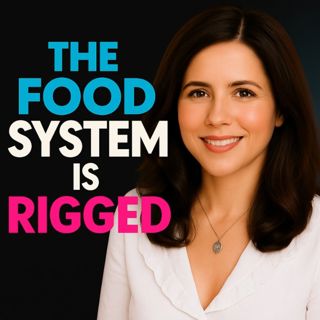
E169: Why Diets Fail: The Hidden Forces Controlling What You Eat - Julia Belluz
El Podcast27 Nov 2025

E169: Why Diets Fail: The Hidden Forces Controlling What You Eat - Julia Belluz

Investigative health journalist Julia Belluz breaks down what really drives obesity and chronic disease—metabolism myths, ultra-processed food, bad incentives, and why our entire food environment is quietly rigged against us.

Guest bio:
Julia Belluz is a Paris-based health and science journalist and co-author of Food Intelligence: The Science of How Food Both Nourishes and Harms Us, written with NIH researcher Dr. Kevin Hall. Over more than a decade reporting for outlets like Vox and The New York Times, she’s become one of the sharpest explainers of nutrition science, chronic disease, and the politics of the global food system.

Topics discussed:

  • The Biggest Loser study: what Kevin Hall actually discovered about extreme weight loss and metabolic slowdown
  • Why “a slow metabolism” is not destiny—and why the biggest losers had the biggest metabolic drops
  • Is a calorie a calorie? Low-carb vs low-fat when calories are controlled
  • Protein “maximization,” the protein appetite, and why excess protein isn’t magic
  • Vitamins, supplements, kidney stones, and the $2T wellness industry
  • The 10,000+ chemicals in the U.S. food supply and the GRAS loophole
  • Ultra-processed foods, added salt/sugar/fat, and the simple math of calorie surplus
  • Food environments vs willpower: why it’s so hard to “eat right” in the U.S.
  • What France gets right on markets, school lunches, and prepared foods
  • Industry funding, NIH underinvestment in nutrition, and government’s failure to regulate
  • Practical strategies: reshaping your home food environment and demanding better policy

Main points:

  • Extreme weight loss = extreme metabolic slowdown
  • Biggest Loser contestants showed huge willpower and lost enormous amounts of weight—but the biggest losers had the largest and most persistent drops in metabolic rate, even six years later.
  • Metabolism followed weight loss; it didn’t cause it. “Slow metabolism” is not a life sentence, and it’s not the main driver of the obesity epidemic.
  • For fat loss, calories still mostly rule
  • When Kevin Hall tightly controls calories in the lab, low-carb vs low-fat leads to almost identical fat loss, with only a trivial edge for low-fat.
  • Macro wars are wildly overstated; total calories and food environment matter far more than whether you’re Team Carbs or Team Fat.
  • Protein is essential, but not a cheat code
  • Humans (and many animals) seem to have a “protein appetite” that keeps intake in a fairly narrow range worldwide.
  • Overshooting that range doesn’t give you free fat loss—you essentially excrete the extra nitrogen and keep the calories.
  • Supplements are often useless—or harmful
  • Routine multivitamins rarely help people who aren’t deficient and can sometimes increase risk.
  • Under-regulated “metabolism boosters” and weight-loss pills are a real source of ER visits and kidney issues.
  • The chemicals loophole is real—and alarming
  • Since 1958, and especially after 1997, U.S. companies have been allowed to classify new food chemicals as “generally recognized as safe” without real FDA oversight, independent review, or even notification.
  • We don’t yet know how much these chemicals contribute to disease, but we already have more than enough evidence to indict excess calories and the salt–sugar–fat trifecta.
  • It’s the food environment, not your moral character
  • Obesity has risen across ages and countries as food environments have shifted—cheap, omnipresent, ultra-processed, aggressively marketed calories.
  • France shows what policy can do: strong school-meal standards, protected fresh markets, and widely available healthy prepared foods all make “the default choice” less toxic.
  • Policy and leadership, not just personal hacks
  • Less than ~5% of NIH funding goes to nutrition research, while industry funding quietly shapes what gets studied.
  • Individual strategies (cooking more, controlling home food, simplifying meals) matter—but large-scale change requires political pressure and better rules of the game.

Top quotes:

  • “The people who lost the most weight on The Biggest Loser ended up with the greatest metabolic slowdown—and that slowdown was still there six years later.”
  • “We don’t need conspiratorial chemicals to explain the obesity epidemic—an endless supply of cheap, ultra-processed food high in salt, sugar, and fat is plenty.”
  • “Obesity is not a mass failure of willpower. It’s what happens when entire populations are dropped into toxic food environments and then told the problem is their character.”

🎙 The Pod is hosted by Jesse Wright
💬 For guest suggestions, questions, or media inquiries, reach out at https://elpodcast.media/
📬 Never miss an episode – subscribe and follow wherever you get your podcasts.
⭐️ If you enjoyed this episode, please rate and review the show. It helps others find us.

Thanks for listening!

Denne episoden er hentet fra en åpen RSS-feed og er ikke publisert av Podme. Den kan derfor inneholde annonser.

Episoder(210)

Everything You Know About Sleep Is Wrong (E211)

Everything You Know About Sleep Is Wrong (E211)

Humans aren't suffering from a sleep epidemic—we're suffering from a circadian rhythm epidemic, and understanding the difference could transform how we think about sleep, health, and human evolution. ...

21 Jul 0s

I Asked a Mexico Real Estate Expert About Retiring in Mexico (E210)

I Asked a Mexico Real Estate Expert About Retiring in Mexico (E210)

Guest Bio Greg Gunter is the Founder and Broker/Owner of Berkshire Hathaway HomeServices Mexico. A 17-year resident of San Miguel de Allende, he specializes in helping Americans and Canadians relocate...

15 Jul 1h

Britain's Collapse Is Happening Faster Than You Think (E209)

Britain's Collapse Is Happening Faster Than You Think (E209)

Dr. Ben Jones explains how mass migration, multiculturalism, and declining free speech are reshaping Britain—and why he believes the country's future is at a turning point. Guest Bio Dr. Ben Jones is...

7 Jul 59min

The Education System Is Still Trapped in 1893 (E208)

The Education System Is Still Trapped in 1893 (E208)

Former venture capitalist and education reformer Ted Dintersmith explains why America's 19th-century education system is failing students in the AI era—and how schools can better prepare young people ...

30 Jun 1h 16min

Why Pickleball Is Growing Faster Than Any Other Sport (E207)

Why Pickleball Is Growing Faster Than Any Other Sport (E207)

Former world No. 1 pickleball player Zane Navratil explains why pickleball is exploding globally, how pro players actually make money, and what the future of the sport looks like. Guest Bio Zane Navra...

23 Jun 54min

AI Slop Is Flooding Science

AI Slop Is Flooding Science

An AI developer and researcher argues that large language models are accelerating the collapse of academic gatekeeping, flooding science with low-quality research, and creating a potential "epistemic ...

16 Jun 1h 17min

AI Is Replacing Hollywood (E205)

AI Is Replacing Hollywood (E205)

A Hollywood veteran with 56 years in the industry explains why AI, streaming, and changing audience habits are disrupting the traditional film business and what comes next for creators. Guest Bio Chri...

12 Jun 1h 32min

I Thought I Was Studying Literature. I Was Wrong (E204)

I Thought I Was Studying Literature. I Was Wrong (E204)

Writer and Columbia English graduate Liza Libes argues that modern English departments and publishing houses have replaced the study of literature with ideology, leaving classic works filtered through...

9 Jun 1h 16min

Populært innen Business og økonomi

stopp-verden
lydartikler-fra-aftenposten
dine-penger-pengeradet
e24-podden
rss-penger-polser-og-politikk
rss-pa-konto
rss-borsmorgen-okonominyhetene
pengepodden-2
tid-er-penger-en-podcast-med-peter-warren
utbytte
morgenkaffen-med-finansavisen
livet-pa-veien-med-jan-erik-larssen
finansredaksjonen
rss-skravla-gar
liberal-halvtime
pengesnakk
rss-kron-podden
lederpodden
paretopodden
rss-impressions-2