
Remember When They Fed Radioactive Oatmeal to Children — And Called It Science?
Between 1946 and 1953, at a Massachusetts institution called the Walter E. Fernald State School, dozens of boys were recruited into something called a “Science Club.” They were promised special perks — better food, baseball games, trips to the beach. What they weren’t told was that their breakfast oatmeal and milk were secretly laced with radioactive iron and calcium. The so-called nutritional study was designed by scientists from MIT, funded in part by the U.S. Atomic Energy Commission, and co-sponsored by Quaker Oats, which supplied the cereal. The goal was to measure how well the body absorbed minerals from food — but the method violated every basic rule of ethics and consent. The children, many labeled “feebleminded” or “morons” by the state, were wards of Massachusetts — boys without parents, without rights, and without the ability to refuse. Some were even injected with radioactive materials in follow-up experiments. None were told what was happening to them. When the truth came out decades later, public outrage was immediate. Survivors like Fred Boyce came forward, saying the greatest harm wasn’t the radiation — it was being treated like an object, not a person. In 1998, MIT and Quaker Oats settled a class-action lawsuit for $1.85 million, and President Bill Clinton issued an apology on behalf of the federal government for Cold War-era human radiation testing. But behind the headlines is a bigger story — about power, secrecy, and the belief that science justifies anything. In this episode, we dig deep into the Fernald radioactive oatmeal experiments — what really happened, who was responsible, what became of the victims, and how it changed human-subject research forever. Hosted by Tony Brueski. Subscribe for more longform true-crime investigations that expose the hidden side of power, psychology, and justice. #HiddenKillers #TrueCrimePodcast #FernaldExperiment #RadioactiveOatmeal #ColdWarHistory #HumanExperimentation #MIT #QuakerOats #InstitutionalAbuse #ScienceEthics Want to comment and watch this podcast as a video? Check out our YouTube Channel. https://www.youtube.com/@hiddenkillerspod Instagram https://www.instagram.com/hiddenkillerspod/ Facebook https://www.facebook.com/hiddenkillerspod/ Tik-Tok https://www.tiktok.com/@hiddenkillerspod X Twitter https://x.com/tonybpod Listen Ad-Free On Apple Podcasts Here: https://podcasts.apple.com/us/podcast/true-crime-today-premium-plus-ad-free-advance-episode/id1705422872
7 Okt 14min
FBI Profiler Explains the Shocking Silence in the Celeste Rivas Tesla Case
A teenage girl is found dead in the front trunk of a Tesla registered to a rising music star. She was never reported missing. The car sat in public view for weeks. And when the body was discovered—there was no statement. No arrests. No public outrage. Just silence. On today’s episode of Hidden Killers, we’re joined by Robin Dreeke, retired FBI Special Agent and former Chief of the Bureau’s Counterintelligence Behavioral Analysis Program, to dissect what that silence really means. This isn’t just a case of tragedy—it’s a case of narrative control. From the decision to place Celeste Rivas Hernandez’s body in the front trunk of a Tesla, to the legal firepower that arrived before any charges were filed, to the digital vanishing acts and cancelled appearances, every move—or lack of one—is behavior that tells a deeper story. Dreeke walks us through critical psychological insights: What does it mean when a person shows both concealment and carelessness? Why does someone lawyer up fast but never speak for themselves? How does celebrity and charisma protect people from scrutiny—even when a child is found dead? And what does the absence of a missing persons report tell us about the people around Celeste—and the man whose car she was found in? This conversation unpacks power dynamics, grooming patterns, reputation management tactics, and the chilling reality of what happens when truth is optional and image is everything. If you've been watching this case and wondering why no one is saying anything—this episode breaks the silence. Robin Dreeke provides expert behavioral analysis that cuts through the PR and goes straight to the human behavior beneath it. 🔔 Subscribe for more expert breakdowns, forensic psychology, and true crime investigations from the people who’ve worked these cases in real life. #CelesteRivas #d4vd #TrueCrime #HiddenKillers #TeslaFrunk #RobinDreeke #BehavioralAnalysis #FBIProfiler #MusicIndustryCoverup #JusticeForCeleste Want to comment and watch this podcast as a video? Check out our YouTube Channel. https://www.youtube.com/@hiddenkillerspod Instagram https://www.instagram.com/hiddenkillerspod/ Facebook https://www.facebook.com/hiddenkillerspod/ Tik-Tok https://www.tiktok.com/@hiddenkillerspod X Twitter https://x.com/tonybpod Listen Ad-Free On Apple Podcasts Here: https://podcasts.apple.com/us/podcast/true-crime-today-premium-plus-ad-free-advance-episode/id1705422872
7 Okt 32min
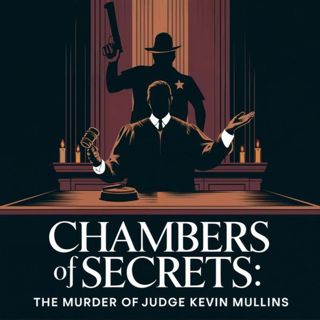
The Sheriff, the Judge & the Courthouse Murder: What Really Happened in Letcher County?
In one of the most shocking criminal cases in recent memory, a sitting sheriff walked into a Kentucky courthouse and executed a judge in his own chambers. But this wasn’t a random act of violence — it was the detonation point of a system that had been rotting from the inside out. On this episode of Hidden Killers with Tony Brueski, we dig into the case of Sheriff Shawn “Mickey” Stines, now indicted for the murder of Judge Kevin Mullins inside the Letcher County Courthouse in 2024. Surveillance captured the whole thing. He walked in. He shut the door. He opened fire. But this isn’t just about a single shooting. Three days earlier, Stines had been deposed in a federal civil rights case — Adkins v. Fields — alleging rampant sexual coercion, abuse of power, and misconduct inside that same courthouse. One official has already pleaded guilty to rape and sodomy. Others, including Judge Mullins, were named in the lawsuit. Some of the alleged misconduct? Took place inside Mullins’ chambers. Now, Robin Dreeke, retired FBI Special Agent and former chief of the Bureau’s Counterintelligence Behavioral Analysis Program, joins us to break down the behavioral spiral that may have led a law enforcement officer to kill a judge — and what it reveals about power, silence, and systemic corruption. We’ll examine post-arrest bodycam footage, explore how intimidation keeps victims quiet, and ask the hard question: Was this murder an act of madness — or of reckoning? This case isn’t just about Kentucky. It’s about what happens when power protects itself, and justice becomes a commodity. Don’t miss this one. 🔔 Subscribe for more true crime investigations, expert analysis, and courtroom breakdowns. #HiddenKillers #TrueCrimePodcast #JudgeMurder #ShawnStines #KevinMullins #LetcherCounty #RobinDreeke #CourthouseScandal #AbuseOfPower #JusticeSystemFail Want to comment and watch this podcast as a video? Check out our YouTube Channel. https://www.youtube.com/@hiddenkillerspod Instagram https://www.instagram.com/hiddenkillerspod/ Facebook https://www.facebook.com/hiddenkillerspod/ Tik-Tok https://www.tiktok.com/@hiddenkillerspod X Twitter https://x.com/tonybpod Listen Ad-Free On Apple Podcasts Here: https://podcasts.apple.com/us/podcast/true-crime-today-premium-plus-ad-free-advance-episode/id1705422872
7 Okt 30min

Buried in a Box: Bryan Kohberger’s Miserable Life Behind Bars
What does life look like for Bryan Kohberger now that he’s off the front page and locked inside one of Idaho’s most restrictive prisons? In this episode of Hidden Killers with Tony Brueski, we go inside the Idaho Maximum Security Institution—home to death row, long-term restrictive housing, and now, Bryan Kohberger. This is not general population. This is J Block. And the reality of Kohberger’s existence there is bleak. We break down every confirmed detail of his day-to-day life: • 23 hours a day in a single cell • One hour of solo outdoor rec • Showers every other day • Movement only in full restraints • Commissary as his only “task” of the week • Surveillance on all calls, messages, and mail • Visitation through glass, if allowed at all Using official records from the Idaho Department of Correction and verified reporting, this is a deeply researched, fact-driven look at the institutional monotony, isolation, and psychological erosion that defines Kohberger’s life today. This isn’t a story of redemption, revenge, or rehabilitation. It’s the slow, bureaucratic erasure of a man from public view—no longer a suspect, no longer a student, no longer in control. Tony Brueski guides you through this haunting portrait with the signature Hidden Killers voice: sharp, emotionally grounded, and relentlessly focused on truth over spectacle. Subscribe now for more deep dives into America’s most disturbing criminal cases and what justice looks like after the trial ends. #BryanKohberger #IdahoMurders #TrueCrime #HiddenKillers #JBlock #PrisonLife #LifeWithoutParole #Criminology #JusticeSystem #TonyBrueski Want to comment and watch this podcast as a video? Check out our YouTube Channel. https://www.youtube.com/@hiddenkillerspod Instagram https://www.instagram.com/hiddenkillerspod/ Facebook https://www.facebook.com/hiddenkillerspod/ Tik-Tok https://www.tiktok.com/@hiddenkillerspod X Twitter https://x.com/tonybpod Listen Ad-Free On Apple Podcasts Here: https://podcasts.apple.com/us/podcast/true-crime-today-premium-plus-ad-free-advance-episode/id1705422872
7 Okt 15min