
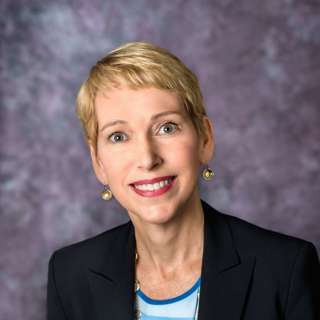
#232 – Andreas Mogensen on what we owe 'philosophical Vulcans' and unconscious beings

#232 – Andreas Mogensen on what we owe 'philosophical Vulcans' and unconscious beings

Most debates about the moral status of AI systems circle the same question: is there something that it feels like to be them? But what if that’s the wrong question to ask? Andreas Mogensen — a senior researcher in moral philosophy at the University of Oxford — argues that so-called 'phenomenal consciousness' might be neither necessary nor sufficient for a being to deserve moral consideration.

Links to learn more and full transcript: https://80k.info/am25

For instance, a creature on the sea floor that experiences nothing but faint brightness from the sun might have no moral claim on us, despite being conscious.

Meanwhile, any being with real desires that can be fulfilled or not fulfilled can arguably be benefited or harmed. Such beings arguably have a capacity for welfare, which means they might matter morally. And, Andreas argues, desire may not require subjective experience.

Desire may need to be backed by positive or negative emotions — but as Andreas explains, there are some reasons to think a being could also have emotions without being conscious.

There’s another underexplored route to moral patienthood: autonomy. If a being can rationally reflect on its goals and direct its own existence, we might have a moral duty to avoid interfering with its choices — even if it has no capacity for welfare.

However, Andreas suspects genuine autonomy might require consciousness after all. To be a rational agent, your beliefs probably need to be justified by something, and conscious experience might be what does the justifying. But even this isn’t clear.

The upshot? There’s a chance we could just be really mistaken about what it would take for an AI to matter morally. And with AI systems potentially proliferating at massive scale, getting this wrong could be among the largest moral errors in history.

In today’s interview, Andreas and host Zershaaneh Qureshi confront all these confusing ideas, challenging their intuitions about consciousness, welfare, and morality along the way. They also grapple with a few seemingly attractive arguments which share a very unsettling conclusion: that human extinction (or even the extinction of all sentient life) could actually be a morally desirable thing.

This episode was recorded on December 3, 2025.

Chapters:

  • Cold open (00:00:00)
  • Introducing Zershaaneh (00:00:55)
  • The puzzle of moral patienthood (00:03:20)
  • Is subjective experience necessary? (00:05:52)
  • What is it to desire? (00:10:42)
  • Desiring without experiencing (00:17:56)
  • What would make AIs moral patients? (00:28:17)
  • Another route entirely: deserving autonomy (00:45:12)
  • Maybe there's no objective truth about any of this (01:12:06)
  • Practical implications (01:29:21)
  • Why not just let superintelligence figure this out for us? (01:38:07)
  • How could human extinction be a good thing? (01:47:30)
  • Lexical threshold negative utilitarianism (02:12:30)
  • So... should we still try to prevent extinction? (02:25:22)
  • What are the most important questions for people to address here? (02:32:16)
  • Is God GDPR compliant? (02:35:32)

Video and audio editing: Dominic Armstrong, Milo McGuire, Luke Monsour, and Simon Monsour
Coordination, transcripts, and web: Katy Moore

Denne episoden er hentet fra en åpen RSS-feed og er ikke publisert av Podme. Den kan derfor inneholde annonser.

Episoder(334)

#125 – Joan Rohlfing on how to avoid catastrophic nuclear blunders

#125 – Joan Rohlfing on how to avoid catastrophic nuclear blunders

Since the Soviet Union split into different countries in 1991, the pervasive fear of catastrophe that people lived with for decades has gradually faded from memory, and nuclear warhead stockpiles have...

29 Mar 20222h 13min

#124 – Karen Levy on fads and misaligned incentives in global development, and scaling deworming to reach hundreds of millions

#124 – Karen Levy on fads and misaligned incentives in global development, and scaling deworming to reach hundreds of millions

If someone said a global health and development programme was sustainable, participatory, and holistic, you'd have to guess that they were saying something positive. But according to today's guest Kar...

21 Mar 20223h 9min
#123 – Samuel Charap on why Putin invaded Ukraine, the risk of escalation, and how to prevent disaster

#123 – Samuel Charap on why Putin invaded Ukraine, the risk of escalation, and how to prevent disaster

Russia's invasion of Ukraine is devastating the lives of Ukrainians, and so long as it continues there's a risk that the conflict could escalate to include other countries or the use of nuclear weapon...

14 Mar 202259min

#122 – Michelle Hutchinson & Habiba Islam on balancing competing priorities and other themes from our 1-on-1 careers advising

#122 – Michelle Hutchinson & Habiba Islam on balancing competing priorities and other themes from our 1-on-1 careers advising

One of 80,000 Hours' main services is our free one-on-one careers advising, which we provide to around 1,000 people a year. Today we speak to two of our advisors, who have each spoken to hundreds of p...

9 Mar 20221h 36min

Introducing 80k After Hours

Introducing 80k After Hours

Today we're launching a new podcast called 80k After Hours. Like this show it’ll mostly still explore the best ways to do good — and some episodes will be even more laser-focused on careers than mos...

1 Mar 202213min

#121 – Matthew Yglesias on avoiding the pundit's fallacy and how much military intervention can be used for good

#121 – Matthew Yglesias on avoiding the pundit's fallacy and how much military intervention can be used for good

If you read polls saying that the public supports a carbon tax, should you believe them? According to today's guest — journalist and blogger Matthew Yglesias — it's complicated, but probably not. Link...

16 Feb 20223h 4min

#120 – Audrey Tang on what we can learn from Taiwan’s experiments with how to do democracy

#120 – Audrey Tang on what we can learn from Taiwan’s experiments with how to do democracy

In 2014 Taiwan was rocked by mass protests against a proposed trade agreement with China that was about to be agreed without the usual Parliamentary hearings. Students invaded and took over the Parlia...

2 Feb 20222h 5min

#43 Classic episode - Daniel Ellsberg on the institutional insanity that maintains nuclear doomsday machines

#43 Classic episode - Daniel Ellsberg on the institutional insanity that maintains nuclear doomsday machines

Rebroadcast: this episode was originally released in September 2018.In Stanley Kubrick’s iconic film Dr. Strangelove, the American president is informed that the Soviet Union has created a secret dete...

18 Jan 20222h 35min

Populært innen Fakta

fastlegen
dine-penger-pengeradet
relasjonspodden-med-dora-thorhallsdottir-kjersti-idem
rss-strid-de-norske-borgerkrigene
foreldreradet
treningspodden
rss-bisarr-historie
mikkels-paskenotter
jakt-og-fiskepodden
rss-sunn-okonomi
sinnsyn
rss-sarbar-med-lotte-erik
hverdagspsyken
hagespiren-podcast
rss-bak-luftfarten
rss-kull
rss-kunsten-a-leve
gravid-uke-for-uke
fryktlos
lrerrommet