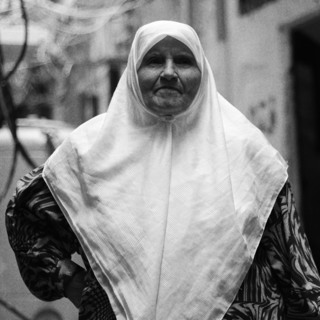
Nakba #16 - Fayza Abed Bayrakji
Överlevarna30 Des 2025

Nakba #16 - Fayza Abed Bayrakji

1946 “My father owned a lot of land where he grew grapes, figs, olives, and other crops. We also had livestock. Many people worked for us during the harvest season. My father died when I was three years old. I remember the olive harvests. The men stood on ladders picking olives, and the ones that fell to the ground were gathered by the women and carried back to the village. There were no Jews living in our village. They lived in the neighboring town of Nahariya. There was a doctor there whom one of my sisters-in-law visited. She underwent a minor eye operation there. We had many Jewish friends in Nahariya: Shlomo, Auerbach, and Jitzchak. They worked together with my brothers. They were Palestinian Jews, not like the Jews who came from Russia and Poland.” - Did you go to school? “No, we did not have a school for beginners in the village, only for older children. There were only four girls in my village who studied.” 1948 “The Israelis demanded that the village mukhtar surrender. If he did not, we would be expelled. Auerbach, my brothers’ Jewish friend, advised us not to leave the village. But if we were forced to flee, he promised he would help us return. When the mukhtar refused to surrender, the Israelis attacked the village with heavy artillery. The men defended the village for a week against the Israeli army. One of my brothers sought out Auerbach to ask him to keep his promise. He objected, saying that because they had fought the Israelis for a week, his promise was no longer valid. The Israelis killed 45 people, mostly elderly people and women. Kuwaykat was surrounded and eventually fell. The Israelis gave us safe passage eastward so that we could flee in that direction. We fled during the night. Young resistance fighters returned the next day and found elderly people killed in the streets. Their bodies were dragged to the well and lowered into it so that wild animals would not eat them. One old man was found killed in his home. He was buried outside the house. We walked on foot to the other side of the Lebanese border. After a month, some kind of ceasefire was declared, so we returned to Kuwaykat to collect our belongings. But the Israelis broke the agreement, and we were forced to flee a second time. Once again, we fled on foot. Again, we arrived in a village on the Lebanese side of the border. My brother bought three fig trees from a man so that the Lebanese would not say that we had stolen their trees. The trees became our homes. A few years later, we moved to Beirut and to Burj al-Barajna. At that time, it was nothing but desert. I have lived here ever since.” - Who bears responsibility for your situation? “It is like the story of Yusuf in the Qur’an, where his brothers conspired against him. Arabs, Jews, and the English—all of them conspired against us. In the past, we lived with dignity and honor in our land. We used to invite Jews into our homes and share our food with them. If Israel were to open its borders, I would want to return and work the land. I want to sit in my own country and build my own house. I do not need electricity. I have hidden an antique oil lamp that I could take with me. I would rather be eaten by snakes than remain here. Lebanon is not our land. We want our land back.”

Denne episoden er hentet fra en åpen RSS-feed og er ikke publisert av Podme. Den kan derfor inneholde annonser.

Episoder(323)

Nakba #26 - Assad Ammya

Nakba #26 - Assad Ammya

“We lived in a small house on Mount Carmel. It was a mixed area with Muslims and Jews. My father worked at a cigarette factory and also sold olive oil. My brother started working at Spinneys supermark...

31 Des 202539min
Nakba #25 - Abdullah Taleb El Salhane

Nakba #25 - Abdullah Taleb El Salhane

“My father was a farmer. He grew, among other things, potatoes and tomatoes. I used to tend his sheep.” - What do you remember of your home village? “Your question is wrongly put. You should ask who k...

31 Des 202544min
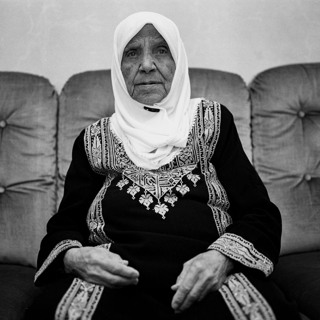
Nakba #24 - Safia Mohammad Alawis

Nakba #24 - Safia Mohammad Alawis

1947 “Near us was the Jewish village of Nesher. They visited our olive groves and we visited their homes. We were almost like siblings.”

31 Des 202558min
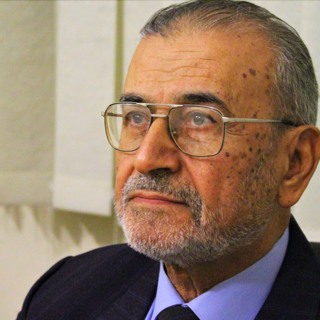
Nakba #23 - Khalid Jameel Saed Mosmar

Nakba #23 - Khalid Jameel Saed Mosmar

1948 “Men, women, children, and the elderly arrived in Nablus by truck. They had been expelled from villages and towns in the surrounding area. The refugees were housed in a school. Inside, many famil...

31 Des 20251h 14min
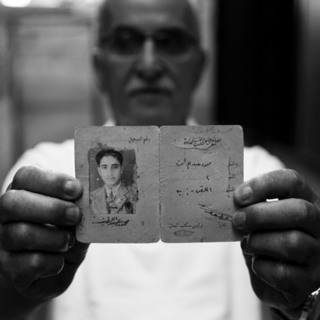
Nakba #22 - Mahmud Khalil ‘Abdallatif

Nakba #22 - Mahmud Khalil ‘Abdallatif

1946 “I grew up in Akka. We had a shop where my father sold timber. I was part of a scout band that played music in the streets. When we passed by my father’s shop, he would come out and watch. When h...

31 Des 202558min
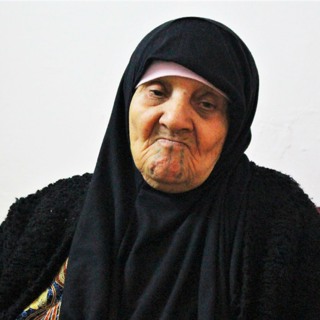
Nakba #21- Hisen Farea al-Sabour

Nakba #21- Hisen Farea al-Sabour

1936 “I don’t know exactly what year I was born. We didn’t use dates or years. We were illiterate. We used to say that someone was born the same year someone else died.” 1940 “My mother died when I wa...

31 Des 20251h
Nakba #20 - Lee Mahmud Musa

Nakba #20 - Lee Mahmud Musa

1943 “My father was a simple man who worked in all kinds of construction jobs. He was the kindest person in the world. Every time my mother chased us, he yelled at her. My father also had a cart from ...

31 Des 20251h 17min
Nakba #19 - Kazim al Zu‘ubi

Nakba #19 - Kazim al Zu‘ubi

1943 “Palestinian Jews and Arabs lived side by side, like one family. Arabs married Jews and Jews married Arabs. They were our friends, our relatives—we protected them.”

30 Des 202555min

Populært innen Fakta

fastlegen
dine-penger-pengeradet
rss-bisarr-historie
relasjonspodden-med-dora-thorhallsdottir-kjersti-idem
rss-strid-de-norske-borgerkrigene
foreldreradet
treningspodden
jakt-og-fiskepodden
rss-kunsten-a-leve
mikkels-paskenotter
rss-sunn-okonomi
sinnsyn
hverdagspsyken
rss-kull
rss-sarbar-med-lotte-erik
gravid-uke-for-uke
hagespiren-podcast
rss-bak-luftfarten
fryktlos
rss-impressions-2