Brain Balls
Radiolab9 Jan

Brain Balls

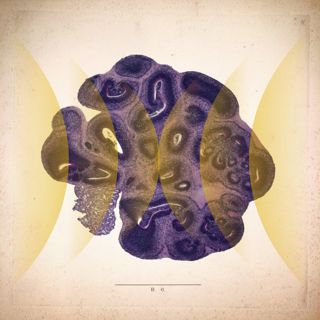
When neuroscientist Madeline Lancaster was a brand new postdoc, she accidentally used an expired protein gel in a lab experiment and noticed something weird. The stem cells she was trying to grow in a dish were self-assembling. The result? Madeline was the first person ever to grow what she called a “cerebral organoid,” a tiny, 3D version of a human brain the size of a peppercorn.

In about a decade, these mini human brain balls were everywhere. They were revealing bombshell secrets about how our brains develop in the womb, helping treat advanced cancer patients, being implanted into animals, even playing the video game Pong. But what are they? Are these brain balls capable of sensing, feeling, learning, being? Are they tiny, trapped humans? And if they were, how would we know?

Special thanks to Lynn Levy, Jason Yamada-Hanff, David Fajgenbaum, Andrew Verstein, Anne Hamilton, Christopher Mason, Madeline Mason-Moriarty, the team at the Boston Museum of Science, and Howard Fine, Stefano Cirigliano, and the team at Weill-Cornell.

EPISODE CREDITS:
Reported by - Latif Nasser
with help from - Mona Madgavkar
Produced by - Annie McEwen, Mona Madgavkar, and Pat Walters
with mixing help from - Jeremy Bloom
Fact-checking by - Natalie Middleton and Rebecca Rand
and Edited by - Alex Neason and Pat Walters

EPISODE CITATIONS:

Videos -

Articles -


Books -
Carl Zimmer Life’s Edge: The Search for What it Means to be Alive (https://carlzimmer.com/books/lifes-edge/)


Sign up for our newsletter!! It includes short essays, recommendations, and details about other ways to interact with the show. Signup (https://radiolab.org/newsletter)!

Radiolab is supported by listeners like you. Support Radiolab by becoming a member of The Lab (https://members.radiolab.org/) today.

Follow our show on Instagram, Twitter and Facebook @radiolab, and share your thoughts with us by emailing radiolab@wnyc.org.

Leadership support for Radiolab’s science programming is provided by the Simons Foundation and the John Templeton Foundation. Foundational support for Radiolab was provided by the Alfred P. Sloan Foundation.


Hosted by Simplecast, an AdsWizz company. See pcm.adswizz.com for information about our collection and use of personal data for advertising.

Denne episoden er hentet fra en åpen RSS-feed og er ikke publisert av Podme. Den kan derfor inneholde annonser.

Episoder(652)

The Wright Brothers

The Wright Brothers

104 years ago this week, Wilbur and Orville Wright managed to coax their spruce biplane off the North Carolina sand for twelve seconds, and those twelve seconds started a revolution in flight. We exam...

18 Des 200710min
Contact

Contact

This week, a look at the different ways that people connect to each other, and how they act once they’re together. NOTE: This episode contains EXPLICIT language about sex. Hosted by Simplecast, an Ads...

4 Des 200757min
Space Capsules

Space Capsules

How would you describe life on Earth to an alien? In 1977, the Voyager spacecraft launched into space. And with it, went the Golden Record-- a sort time capsule, a collection of sounds and images that...

20 Nov 200718min
Making Radiolab

Making Radiolab

In spring of 2006, Jad and Robert took the stage at the SoHo Apple Store to talk about the making of Radiolab. Jad geeks out on the nitty-gritty of digital sound editing, and Robert discusses the edit...

9 Nov 200733min

Musical Language

Musical Language

In this hour of Radiolab, we examine the line between language and music. Hosted by Simplecast, an AdsWizz company. See pcm.adswizz.com for information about our collection and use of personal data fo...

24 Sep 200759min

Detective Stories

Detective Stories

Forensics, archeology, genealogy, and genetics are devoted to figuring out what really happened. In this hour of Radiolab, digging up the past leads to some very unexpected finds. Hosted by Simplecast...

10 Sep 200756min
This is Your Brain On Love

This is Your Brain On Love

Radiolab is given the charge to put on a Singles Night. That's right. 'Jad,' they said, 'stand on a stage and make strangers fall in love! Or, at least, you know, exchange a few phone numbers with eac...

28 Aug 200724min

Emergence

Emergence

What happens when there is no leader? Starlings, bees, and ants manage just fine. In fact, they form staggeringly complicated societies -- all without a Toscanini to conduct them into harmony. This ho...

14 Aug 200757min

Populært innen Vitenskap

fastlegen
tingenes-tilstand
jss
rss-zahid-ali-hjelper-deg
liberal-halvtime
sinnsyn
rekommandert
forskningno
villmarksliv
rss-paradigmepodden
vett-og-vitenskap-med-gaute-einevoll
rss-overskuddsliv
nordnorsk-historie
tidlose-historier
rss-inn-til-kjernen-med-sunniva-rose
dekodet-2
kvinnehelsepodden
grunnstoffene
fjellsportpodden
rss-nysgjerrige-norge