From Restraint to Reward: What to Add When You Drink Less

From Restraint to Reward: What to Add When You Drink Less

If you’ve ever said, “I deserve a drink,” that thought may feel small, but it reflects something deeper — a powerful belief that alcohol is your reward.

In this episode, Molly explores Alcohol Core Belief #4: Alcohol is my reward, and how this unconscious narrative can quietly fuel your desire to drink. The episode offers a new way forward — not through willpower or restriction, but by intentionally creating new, satisfying reward rituals.

You’ll learn:

  • Why the brain links alcohol with reward — and what to do about it
  • How removing alcohol without adding new sources of pleasure leads to resistance
  • The importance of building emotional reward systems that reinforce the habit of drinking less
  • Why this work isn’t about deprivation, but about creating lasting satisfaction and peace

Topics and Takeaways

  • How “reward thinking” fuels the desire to drink
  • The role of dopamine and learned associations
  • How to create alcohol-free rewards that actually feel good
  • What to do instead of white-knuckling your way through dry days
  • The mindset shift from “restriction” to “reinforcement”

Resources Mentioned


Alcohol Core Beliefs Episodes:

Rewards Rewired Worksheet

Low risk drinking guidelines from the NIAAA:

Healthy men under 65:

No more than 4 drinks in one day and no more than 14 drinks per week.

Healthy women (all ages) and healthy men 65 and older:
No more than 3 drinks in one day and no more than 7 drinks per week.

One drink is defined as 12 ounces of beer, 5 ounces of wine, or 1.5 ounces of 80-proof liquor. So remember that a mixed drink or full glass of wine are probably more than one drink.

Abstinence from alcohol
Abstinence from alcohol is the best choice for people who take medication(s) that interact with alcohol, have health conditions that could be exacerbated by alcohol (e.g. liver disease), are pregnant or may become pregnant or have had a problem with alcohol or another substance in the past.

Benefits of “low-risk” drinking
Following these guidelines reduces the risk of health problems such as cancer, liver disease, reduced immunity, ulcers, sleep problems, complications of existing conditions, and more. It also reduces the risk of depression, social problems, and difficulties at school or work.

★ Support this podcast ★

Denne episoden er hentet fra en åpen RSS-feed og er ikke publisert av Podme. Den kan derfor inneholde annonser.

Episoder(374)

Revisiting-Think Thursday: How Mindset Impact's the Body's Biology

Revisiting-Think Thursday: How Mindset Impact's the Body's Biology

In this Think Thursday episode, Molly revisits a timely conversation on mindset, neuroscience, and the biology of belief. Drawing on the work of Stanford health psychologist Dr. Alia Crum, she explore...

16 Apr 18min
Alcohol Awareness Month: 8 Facts Everyone Should Know About Alcohol

Alcohol Awareness Month: 8 Facts Everyone Should Know About Alcohol

In this episode of the Alcohol Minimalist Podcast, Molly shares 8 evidence-based facts everyone should know about alcohol. From cancer risk and “safe” drinking limits to binge drinking, sleep, toleran...

13 Apr 19min
Think Thursday: Paradox-The Power of "Both/And"

Think Thursday: Paradox-The Power of "Both/And"

In this Think Thursday episode, Molly explores Brené Brown’s ideas on paradox and why emotional resilience is less about certainty and more about our capacity to hold two truths at once. When we stop ...

9 Apr 16min
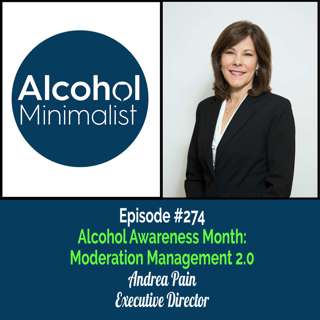
Alcohol Awareness Month:  Moderation Management 2.0 with Andrea Pain, Executive Director

Alcohol Awareness Month: Moderation Management 2.0 with Andrea Pain, Executive Director

In this episode of The Alcohol Minimalist Podcast, Molly talks with Andrea Pain, Executive Director of Moderation Management, about alcohol support options for people who want to drink less, explore m...

6 Apr 41min
Revisiting: Think Thursday-The Neuroscience of New Habit Formation

Revisiting: Think Thursday-The Neuroscience of New Habit Formation

In this revisited Think Thursday episode, Molly explains why March may be a better time than January to build lasting habits. If your New Year’s goals have faded, this conversation offers a science-ba...

2 Apr 18min
Why Your Partner Doesn't Have to Change for You to Change Your Drinking with Matt Wing

Why Your Partner Doesn't Have to Change for You to Change Your Drinking with Matt Wing

What happens when you want to drink less—but your partner doesn’t?In this episode, Molly talks with midlife sobriety coach Matt Wing about how to change your relationship with alcohol, even when your ...

30 Mar 40min
Think Thursday: The Zeigarnik Effect: Why Your Brain Won’t Let Things Go

Think Thursday: The Zeigarnik Effect: Why Your Brain Won’t Let Things Go

Episode SummaryWhy does your brain keep bringing things back up—especially when you’re trying to relax?In this Think Thursday episode, Molly expands on the Zeigarnik Effect, a psychological principle ...

26 Mar 9min
March Madness Series:  Play Until the Clock Says 0:00

March Madness Series: Play Until the Clock Says 0:00

In this final installment of the March Madness series, Molly brings the conversation full circle by focusing on the long game.After exploring your playbook, your scoreboard, and how to rebound when yo...

23 Mar 14min

Populært innen Fakta

fastlegen
dine-penger-pengeradet
rss-bisarr-historie
relasjonspodden-med-dora-thorhallsdottir-kjersti-idem
foreldreradet
treningspodden
rss-strid-de-norske-borgerkrigene
rss-kunsten-a-leve
jakt-og-fiskepodden
rss-sunn-okonomi
mikkels-paskenotter
sinnsyn
hverdagspsyken
gravid-uke-for-uke
rss-bak-luftfarten
rss-sarbar-med-lotte-erik
hagespiren-podcast
rss-kull
fryktlos
rss-mind-body-podden