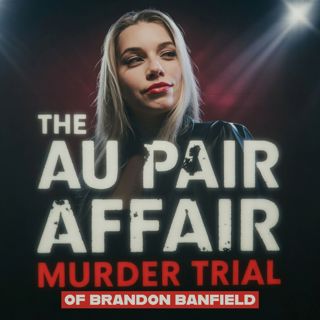

Banfield Trial: Defense Attorney Bob Motta On Attacking Juliana's Testimony | What The Jury Needs To Know

Banfield Trial: Defense Attorney Bob Motta On Attacking Juliana's Testimony | What The Jury Needs To Know

True Crime Today brings you the defense strategy for the most important witness in the Brendan Banfield murder trial. Juliana Peres Magalhaes is the prosecution's case. Without her testimony, they have a forensics expert who contradicted their theory, investigators who were transferred, and 19 months of spinning theories. Defense attorney Bob Motta explains how you destroy her credibility.

Juliana spent a year in jail maintaining the same story Brendan told police. Then she flipped. She pleaded to manslaughter. She gets time served. She goes home to Brazil. Her sentencing is scheduled after Banfield's trial — to ensure she continues to cooperate. From jail, she wrote to her mother that she was "heartbroken for doing this to Brendan" and that she loved him.

Motta breaks down how you use that letter on cross-examination. He explains how to frame her year-long lie for the jury — is she someone who finally told the truth, or someone who changed lies when the deal was right?

The prosecution reduced her charge from second-degree murder to involuntary manslaughter. Motta explains how to make the jury understand the magnitude of what she received in exchange for her testimony.

The prosecution is positioning Juliana as a reluctant participant. Motta dismantles that framing. He identifies the biggest mistakes defense attorneys make with cooperating witnesses — and what happens to the state's case if Juliana falls apart on the stand.

#BrendanBanfield #JulianaPeresMagalhaes #TrueCrimeToday #BobMotta #DefenseAttorney #StarWitness #CrossExamination #AuPairMurder #PleaDeal #MurderTrial

Join Our SubStack For AD-FREE ADVANCE EPISDOES & EXTRAS!: https://hiddenkillers.substack.com/

Want to comment and watch this podcast as a video? Check out our YouTube Channel. https://www.youtube.com/@hiddenkillerspod

Instagram https://www.instagram.com/hiddenkillerspod/
Facebook https://www.facebook.com/hiddenkillerspod/
Tik-Tok https://www.tiktok.com/@hiddenkillerspod
X Twitter https://x.com/tonybpod

Listen Ad-Free On Apple Podcasts Here: https://podcasts.apple.com/us/podcast/true-crime-today-premium-plus-ad-free-advance-episode/id1705422872

This publication contains commentary and opinion based on publicly available information. All individuals are presumed innocent until proven guilty in a court of law. Nothing published here should be taken as a statement of fact, health or legal advice.

Episoder(500)

The Delphi Timeline Is Falling Apart — What Investigators Said Under Oath

The Delphi Timeline Is Falling Apart — What Investigators Said Under Oath

In this episode, I sit down with defense attorney and trial analyst Bob Motta to examine the most explosive development yet in the Delphi case: the collapse of the timeline investigators built around the murders of Abby and Libby. For years, the timeline was treated as settled. But when you read the depositions, the cracks spread fast. Bob and I break down how witness statements were reshaped, how the search-warrant affidavit reframed crucial descriptions, and how timelines were tightened or loosened depending on who was writing the report. This isn’t conjecture — it’s sworn testimony. Bob walks us through the most glaring issues: a witness who described a young man and an older car, yet was portrayed to the judge as having seen something “consistent” with Richard Allen; investigators who can’t agree on when the FBI was involved; conflicting testimony about the time of death; missing documentation around the bullet that ties Allen’s gun to the case; symbolic elements at the crime scene ignored or downplayed; and third-party suspects whose movements and statements were never thoroughly pursued. This interview digs into why these inconsistencies matter — not emotionally, but legally. How does a conviction stand when the foundation beneath it shifts every time you compare one deposition to another? How does an affidavit remain valid when key information was omitted or altered? And how does the public reconcile the clean version of the case with the messy, disjointed reality revealed behind closed doors? This isn’t about guilt or innocence — it’s about whether the system followed its own rules. And according to the depositions, the timeline wasn’t built on solid ground. It was built on selective memory, contradictory claims, and investigative shortcuts that now threaten the entire structure of the case. #DelphiCase #TrueCrimeNews #LegalBreakdown #RichardAllenCase #Depositions #CourtRecords #CrimeInvestigation #TimelineAnalysis #HiddenKillers #JusticeReview Want to comment and watch this podcast as a video? Check out our YouTube Channel. https://www.youtube.com/@hiddenkillerspod Instagram https://www.instagram.com/hiddenkillerspod/ Facebook https://www.facebook.com/hiddenkillerspod/ Tik-Tok https://www.tiktok.com/@hiddenkillerspod X Twitter https://x.com/tonybpod Listen Ad-Free On Apple Podcasts Here: https://podcasts.apple.com/us/podcast/true-crime-today-premium-plus-ad-free-advance-episode/id1705422872

19 Nov 202535min

Delphi Investigators’ Behavior Makes No Sense — Ret FBI Robin Dreeke Breaks It Down

Delphi Investigators’ Behavior Makes No Sense — Ret FBI Robin Dreeke Breaks It Down

In today’s episode, former FBI Special Agent and Chief of the Counterintelligence Behavioral Analysis Program, Robin Dreeke, joins me for a breakdown unlike anything you’ve heard about the Delphi case. Forget the sanitized, press-conference version of this investigation. Robin and I go deep into the human psychology behind the breakdown — the way investigators acted, reacted, remembered, forgot, contradicted each other, shut out certain leads, and emotionally locked onto others. The depositions don’t just reveal evidence issues. They reveal behavioral issues. And Robin reads those better than anyone. Why did two lead investigators swear under oath to completely opposite stories about the FBI’s involvement? How does a team forget or “not recall” something as significant as an early BAU ritual-indicator assessment? Why would symbolic elements at the crime scene be brushed aside? Why would red-flag behavior from potential suspects be minimized? Why were sticks left for days, evidence untested, witness statements reframed, and major investigative steps glossed over? Robin walks us through the behavioral patterns that show up when an investigative system is overwhelmed — from narrative lock, to tunnel vision, to fear-based decision making, to the emotional need to force coherence onto an incoherent case. We discuss cognitive contamination, leadership collapse, internal factioning, memory distortion, and the psychological pressure that quietly reshapes how investigators interpret facts. This episode isn’t about guilt or innocence. It’s about how the people behind the Delphi investigation functioned — and dysfunctioned. And why that matters. If you want to understand why this investigation feels so fractured, and what the depositions really reveal about the team that built the case, Robin’s analysis is absolutely essential. #Delphi #DelphiMurders #BehavioralAnalysis #RobinDreeke #TrueCrime #InvestigationBreakdown #Psychology #JusticeSystem #HiddenKillers #RichardAllen Want to comment and watch this podcast as a video? Check out our YouTube Channel. https://www.youtube.com/@hiddenkillerspod Instagram https://www.instagram.com/hiddenkillerspod/ Facebook https://www.facebook.com/hiddenkillerspod/ Tik-Tok https://www.tiktok.com/@hiddenkillerspod X Twitter https://x.com/tonybpod Listen Ad-Free On Apple Podcasts Here: https://podcasts.apple.com/us/podcast/true-crime-today-premium-plus-ad-free-advance-episode/id1705422872

19 Nov 202522min

Kohberger Ordered to Pay Families With The Blood Money He’s Lied About Making

Kohberger Ordered to Pay Families With The Blood Money He’s Lied About Making

Bryan Kohberger has just been ordered to pay for another part of the aftermath he created — this time, roughly $3,000 for two victims’ urns, on top of the more than $30,000 restitution outlined in his agreement. On the surface, it feels like a moment of overdue accountability in a case where nothing has moved fast enough, clean enough, or confidently enough. But as always in the Kohberger saga… the fine print tells a very different story. In this episode of Hidden Killers, Tony Brueski dives into the judge’s ruling — not just what it means for restitution, but what it quietly unlocks. Because the judge didn’t just say “pay up.” He said Kohberger can get a job in prison or ask for donations to raise the money. Let that sink in. When the court says “donations,” that opens the door to an entire ecosystem of online supporters, fringe communities, contrarians, and high-profile-case obsessives who will absolutely try to send him money. And legally? They can. As long as it goes toward restitution. But here’s the real problem: What happens once the restitution is paid off? That’s where things get uncomfortable. Because any money that comes in after his debt is satisfied becomes fair game under prison regulations. Commissary. Comfort. Influence. Power. Even long-term financial positioning. And then there’s the big, ugly question most people don’t want to touch: Can he someday legally profit from his story? “Son of Sam” laws were gutted years ago. The restrictions people assume exist… often don’t. Third-party deals, “creative packaging,” and legally gray revenue channels have helped other high-profile offenders monetize their notoriety. And with this ruling, Kohberger now has the first ingredient he needs — a pathway for money to flow toward him legally. Tony breaks down what’s fair, what’s dangerous, and what the system just opened the door to. Accountability is one thing. What comes after it? That’s the part nobody’s ready for. #HiddenKillers #BryanKohberger #IdahoCase #TrueCrimeNews #JusticeSystem #CrimeAnalysis #LegalBreakdown #TonyBrueski #CrimeUpdates #CourtRulings Want to comment and watch this podcast as a video? Check out our YouTube Channel. https://www.youtube.com/@hiddenkillerspod Instagram https://www.instagram.com/hiddenkillerspod/ Facebook https://www.facebook.com/hiddenkillerspod/ Tik-Tok https://www.tiktok.com/@hiddenkillerspod X Twitter https://x.com/tonybpod Listen Ad-Free On Apple Podcasts Here: https://podcasts.apple.com/us/podcast/true-crime-today-premium-plus-ad-free-advance-episode/id1705422872

19 Nov 202513min

Delphi Investigators Implode Under Oath — The Depositions Change Everything

Delphi Investigators Implode Under Oath — The Depositions Change Everything

In our latest interview, defense attorney Bob Motta joins me to dissect the one thing the public never truly got to see in the Delphi murders case: the investigators themselves, speaking under oath. And what those depositions reveal isn’t a unified, focused, evidence-driven investigative team — it’s a fractured, inconsistent, internally conflicted system struggling under the weight of its own decisions. For years, the Delphi narrative has been kept clean and simple on the surface. But beneath that exterior is a record full of contradictions: investigators who cannot agree on whether the FBI was removed from the case… conflicting recollections about the Behavioral Analysis Unit’s early assessment… witness statements reshaped in the search-warrant affidavit… third-party suspects dismissed despite disturbing statements and behavior… symbolic evidence at the crime scene left unexplored… and forensic gaps that defy basic homicide protocol. Bob walks us through all of it — the timeline manipulation, the altered witness descriptions, the failure to pursue leads, the missing documentation around the bullet, the sticks left in the woods for days, and the Odinism material that sat in the prosecutor’s office for months before being disclosed. These are not minor mistakes. These are systemic failures with massive implications for Richard Allen’s appeal. If you're looking for the polished, sanitized version of this case, this isn’t it. This is the raw underside — the part the public didn’t see, the part juries never heard, and the part that may very well determine whether this conviction withstands appellate scrutiny. When investigators contradict each other, forget key events, minimize crucial evidence, and reshape witness statements to fit a narrative, it’s not just bad optics — it’s a crisis of investigative integrity. And today, Bob and I break that crisis wide open. #Delphi #DelphiMurders #RichardAllen #TrueCrime #Depositions #LegalAnalysis #JusticeSystem #Investigations #CourtFilings #HiddenKillers Want to comment and watch this podcast as a video? Check out our YouTube Channel. https://www.youtube.com/@hiddenkillerspod Instagram https://www.instagram.com/hiddenkillerspod/ Facebook https://www.facebook.com/hiddenkillerspod/ Tik-Tok https://www.tiktok.com/@hiddenkillerspod X Twitter https://x.com/tonybpod Listen Ad-Free On Apple Podcasts Here: https://podcasts.apple.com/us/podcast/true-crime-today-premium-plus-ad-free-advance-episode/id1705422872

19 Nov 202524min

Populært innen Politikk og nyheter

giver-og-gjengen-vg
aftenpodden
aftenpodden-usa
forklart
popradet
stopp-verden
dine-penger-pengeradet
nokon-ma-ga
det-store-bildet
lydartikler-fra-aftenposten
rss-gukild-johaug
fotballpodden-2
hanna-de-heldige
unitedno
bt-dokumentar-2
frokostshowet-pa-p5
e24-podden
rss-ness
aftenbla-bla
rss-penger-polser-og-politikk