55% of MIT Faculty Self-Censor — Here’s Why (E184)

55% of MIT Faculty Self-Censor — Here’s Why (E184)

MIT Free Speech Alliance president Wayne Stargardt explains how a few high-profile cancellations can drive widespread faculty self-censorship—even at a STEM powerhouse like MIT.

Guest bio:

Wayne Stargardt is the president of the MIT Free Speech Alliance (independent of MIT) and an MIT alumnus (Class of 1974) who focuses on academic freedom, free expression, and open debate at STEM universities.

Topics discussed
  • “Silencing Science at MIT” and what MIT faculty surveys suggest about self-censorship
  • The Dorian Abbott Carlson Lecture cancellation (2021) and the alumni response
  • Why faculty fear student retaliation (bias reporting, administrative escalation)
  • FIRE campus free-speech rankings and what they measure
  • MIT’s revenue model (research/endowment vs tuition) and why incentives differ from most schools
  • K–12 socialization, in loco parentis, and why students arrive primed for “shout-down” norms
  • DEI rebranding (“community and belonging”) and the claim that pressures went underground
  • Risks to MIT: recruiting/retaining top faculty and research dollars
  • MIT reinstating SAT requirements (post-2020 test disruption)
  • MIT vs Harvard: data/analysis vs decision-making under uncertainty (“intuition”)
  • AI as a tool: value depends on the questions/tasks you set
Main points:
  • Multiple MIT faculty surveys—asked different ways—cluster around ~50–55% reporting some self-censorship in at least some settings.
  • You don’t need “many” cancellations: a few public examples can trigger self-protective silence across a campus.
  • The Abbott episode was a catalyst: MIT was “caught by surprise,” and faculty + alumni backlash made repeat events less likely—but speakers may be quietly filtered out earlier.
  • FIRE rankings reflect student attitudes + institutional policies; MIT’s rank improved partly because others worsened, not because MIT’s score surged.
  • MIT’s finances reduce tuition dependence; the bigger vulnerability is faculty environment → research strength → prestige/funding.
  • Administrative culture shift (more “professional administrators”) can amplify complaint systems when they’re sympathetic to activist norms.
  • Stargardt is cautiously optimistic: broader American free-speech culture pushes universities either to course-correct or fade amid demographic headwinds.
Best 3 quotes:
  • You don't have to cancel too many professors at a university… they catch on real quick… and… self-censor.
  • MIT is a multidisciplinary research institute, which happened to have a small specialized trade school attached to it.
  • You don't have to cancel a whole lot of people to scare the faculty. You just have to cancel a few.

🎙 The Pod is hosted by Jesse Wright
💬 For guest suggestions, questions, or media inquiries, reach out at https://elpodcast.media/
📬 Never miss an episode – subscribe and follow wherever you get your podcasts.
⭐️ If you enjoyed this episode, please rate and review the show. It helps others find us.

Thanks for listening!

Episoder(189)

E181: Politics Is the Best Predictor of Academic Research — Prof Mark Horowitz

E181: Politics Is the Best Predictor of Academic Research — Prof Mark Horowitz

Political beliefs often matter more than data or methods in shaping how social scientists think about controversial issues. In this episode, sociologist Dr. Mark Horowitz explains why many professors ...

27 Jan 1h 8min
E180: Attraction & Disgust: Evolutionary Psychology Explained (Dr. Deb Lieberman)

E180: Attraction & Disgust: Evolutionary Psychology Explained (Dr. Deb Lieberman)

Evolutionary psychologist Debra Lieberman explains how “disgust” and other built-in mental programs shape attraction, kinship, morality, and even law—while modern technology and social media scramble ...

20 Jan 1h 3min

E179: Breaking the Gerontocracy: How Amanda Litman Is Getting Young People into Office

E179: Breaking the Gerontocracy: How Amanda Litman Is Getting Young People into Office

Amanda Litman argues U.S. leadership is too old, local races are dangerously uncontested, and the fastest fix is getting more young people to run—backed by better pay and campaign-finance reform.Guest...

16 Jan 50min
E178: Social Media Isn’t Toxic: Here’s What the Data Says - Dr. Jeff Hall

E178: Social Media Isn’t Toxic: Here’s What the Data Says - Dr. Jeff Hall

Social media isn’t “crack for your brain” for most people—Jeffrey Hall argues the best evidence shows tiny average effects on wellbeing, lots of measurement mess, and a bigger story about relationship...

13 Jan 59min
E177: Why Bankers Got Paid and Europe Recovered: The London Debt Agreement Explained

E177: Why Bankers Got Paid and Europe Recovered: The London Debt Agreement Explained

Economic historian Tobias Straumann breaks down how Germany’s debt meltdown in 1931 crashed the global economy—and how a surprisingly generous 1953 debt deal helped spark the German economic miracle b...

9 Jan 54min
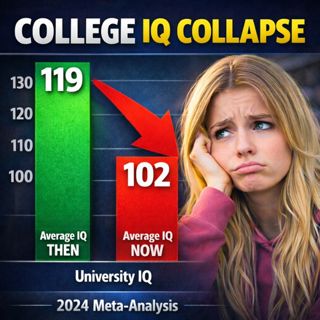
E176: College Student IQ Has Collapsed: Researcher Breaks Down His New Meta-Analysis - Dr. Bob Uttl

E176: College Student IQ Has Collapsed: Researcher Breaks Down His New Meta-Analysis - Dr. Bob Uttl

A cognitive psychologist explains why college student IQ now averages about 102, why that shift is mathematically inevitable as enrollment expands, and how outdated testing norms and student-evals can...

6 Jan 1h 15min
E175: Roads Are Bankrupt: New Car Fees Are Coming - Jeff Davis

E175: Roads Are Bankrupt: New Car Fees Are Coming - Jeff Davis

Jeff Davis breaks down why the Highway Trust Fund has been insolvent since 2008 and what fixes (and tradeoffs) are realistic as EVs grow.GUEST BIOJeff Davis is a Senior Fellow at the Eno Center for Tr...

30 Des 20251h
E174: Acquired Broke Every Podcast Rule: Harvard Business School Professor Explains Why

E174: Acquired Broke Every Podcast Rule: Harvard Business School Professor Explains Why

Harvard’s Shane Greenstein explains why Acquired wins by treating each episode like an audiobook—high-signal, audience-first, and built for durable value.GUEST BIO: Dr. Shane M. Greenstein is a Profes...

23 Des 20251h 4min

Populært innen Business og økonomi

lydartikler-fra-aftenposten
stopp-verden
dine-penger-pengeradet
e24-podden
rss-penger-polser-og-politikk
rss-borsmorgen-okonominyhetene
livet-pa-veien-med-jan-erik-larssen
finansredaksjonen
pengesnakk
pengepodden-2
tid-er-penger-en-podcast-med-peter-warren
utbytte
rss-sunn-okonomi
morgenkaffen-med-finansavisen
liberal-halvtime
stormkast-med-valebrokk-stordalen
lederpodden
rss-markedspuls-2
okonomiamatorene
rss-politisk-preik